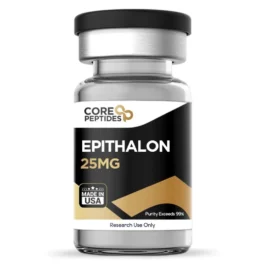
Epithalon (25mg)
$98.00$90.00
Epithalon, also known as AEDG peptide, is a synthetic tetrapeptide that's being researched for its potential anti-aging and regenerative properties. Derived from the naturally occurring peptide Epithalamin, Epithalon is thought to regulate the function of the brain, pineal gland, and retina. The peptide is being studied for its potential to stimulate telomerase, act as an antioxidant, and influence gene expression.
Product Specifications
Specification | Details |
SKU | P-EPITALON-25 |
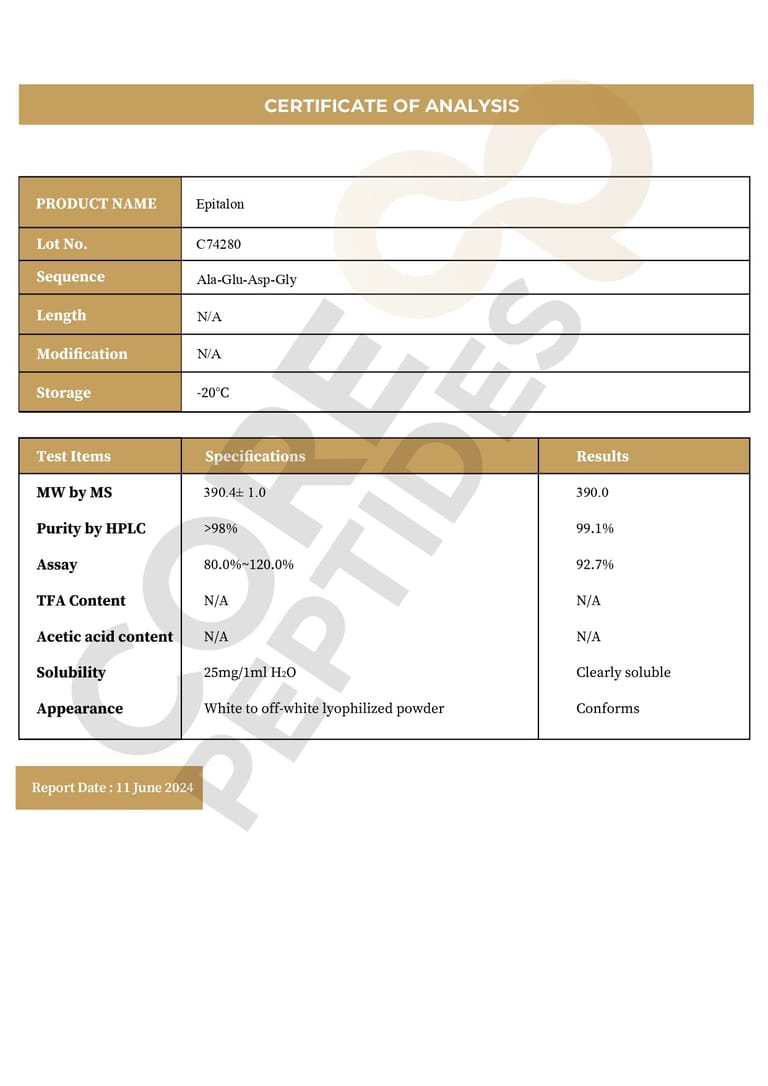
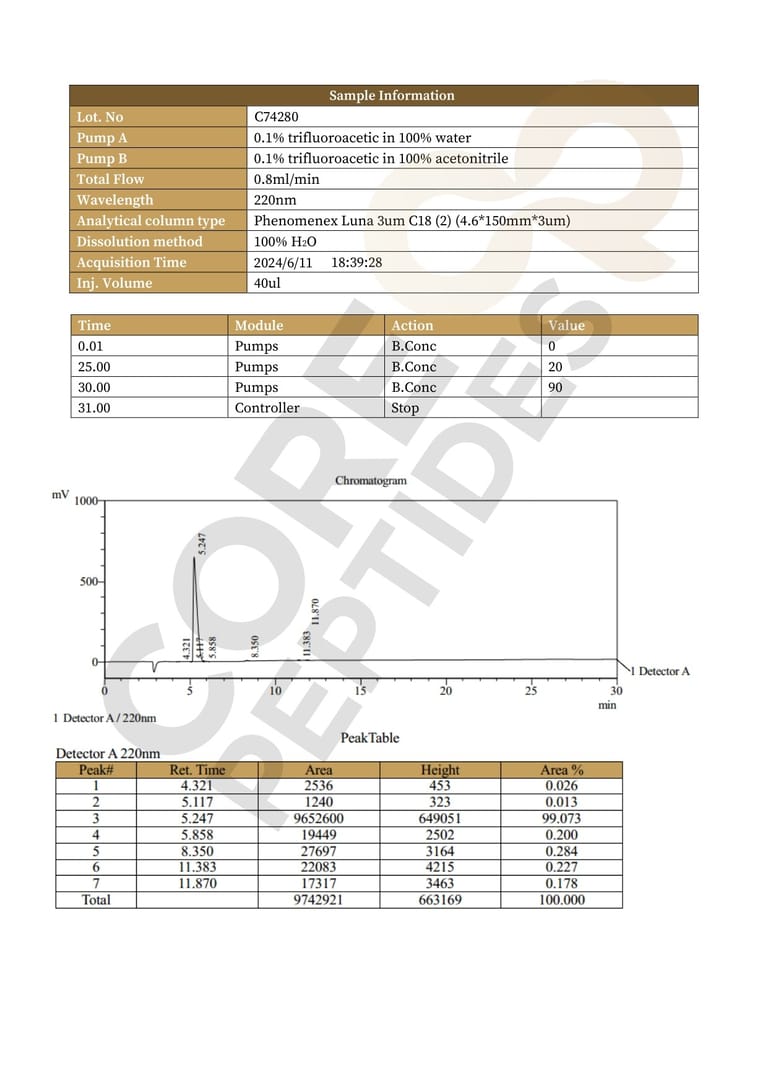
Purity | >99% |
Form | Lyophilized Powder |
Size | 25 mg |
Contents | Epitalon (25 mg) |
Pricing
Free shipping on all orders over $200!
Quantity | Discount | Price (USD) |
5 - 8 | 5% | $85.50 |
9+ | 10% | $81.00 |
Chemical Makeup
Specification | Details |
Molecular Formula | C14H22N4O9 |
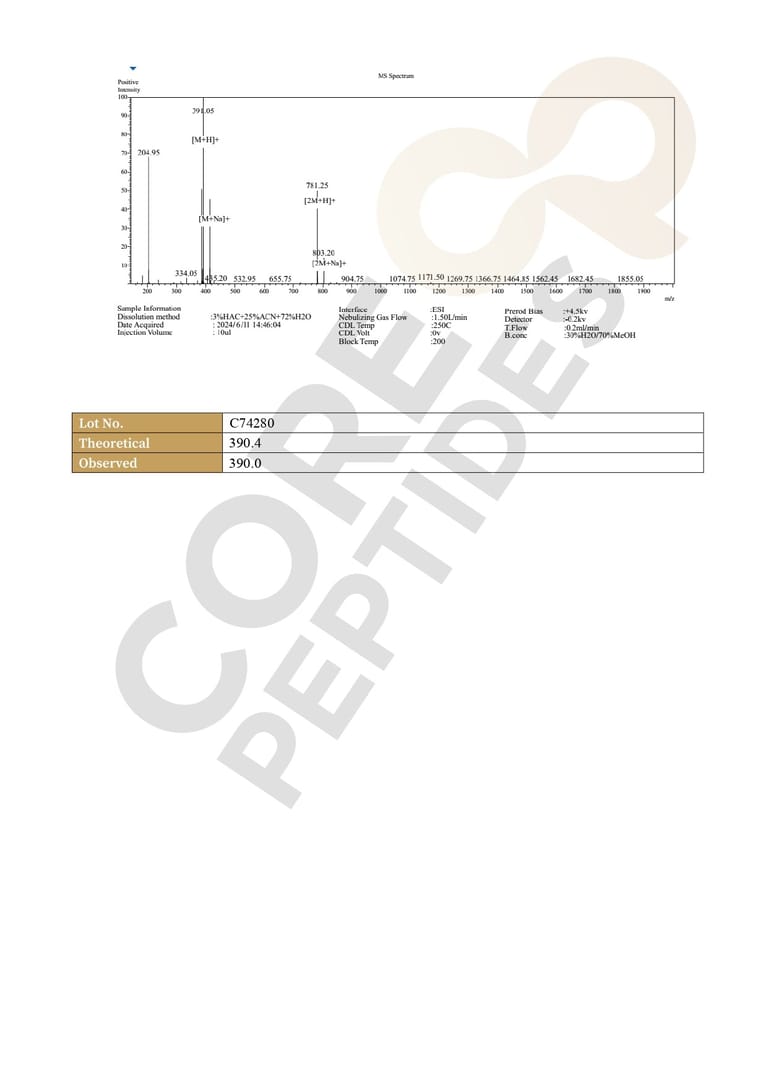
Molecular Weight | 390.34 g/mol |
Other Known Titles | Epitalon, Epithalone |
Research and Clinical Studies
Longevity & Anti-Aging
Research suggests that Epithalon may influence longevity by interacting with histones to modulate gene expression. A study on fetal fibroblastic cells showed that Epithalon appeared to stimulate the development of telomeres, causing them to elongate and allowing for 10 extra cell divisions. This suggests that Epithalon may overcome the Hayflick limit and extend the normal cell cycle in cells.
Studies also indicate that Epithalon may exhibit strong antioxidative properties. A study on aged oocyte cells suggested that the peptide significantly reduced reactive oxygen species (ROS) levels and mitigated oxidative stress. Epithalon also appeared to reduce DNA damage and apoptosis (cell death) in these cells, which may enhance oocyte survival.
Endocrine & Nervous Systems
Melatonin Levels: A study on aging monkeys suggested that Epithalon may stimulate the pineal gland, increasing melatonin levels to "normal" ranges. This could potentially help with age-related sleep regulation issues.
Retinal Cells: In a clinical study on geriatric subjects, Epithalon appeared to elevate the bioelectric and functional activities in the retina, potentially reversing age-related retinal degeneration.
Lymphocytic Cells: A study on lymphocytic cells from elderly subjects suggested that Epithalon might have the potential to restore cellular activities by activating ribosomal genes and decondensing heterochromatin, which is often suppressed in aging cells.
Other Research
Anti-Mutagenic Action: A study on mice models suggested that Epithalon may possess anti-mutagenic potential by decreasing the incidence of chromosomal aberrations in bone marrow.
Cancer Cells: In a study on mice with mammary and ovarian tumors, Epithalon appeared to inhibit the process of metastasis and reduce the number of tumor cells.
Geroprotective Properties: A long-term study on elderly subjects suggested that Epithalon may restore basic bodily functions, improve cardiovascular and immune systems, and decrease the mortality rate by 1.8-fold.
Disclaimer: Epithalon peptide is available for research and laboratory purposes only.