
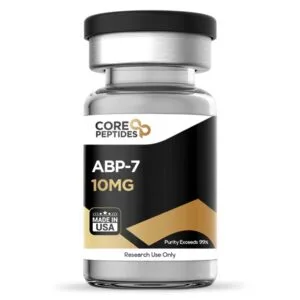
ABP-7 10mg
High-purity research peptide by Core Peptides
$105.00$92.00
ABP-7 (actin binding peptide-7), a synthetic heptapeptide, is a research chemical that's a fragment of the larger molecule Thymosin Beta 4 (TB-4). Its sequence, Acetyl-LKKTETQ, is considered a central actin-binding domain of TB-4. Produced via solid-phase peptide synthesis, ABP-7 is believed to share similar functions with its parent molecule, especially in regulating cellular actin. It's thought to inhibit the polymerization of globular actin (G-actin) into filamentous actin (F-actin), a process known as actin sequestration. This action may stabilize actin in its monomeric form, potentially impacting cell motility, shape, and other critical biological processes where the cytoskeleton is involved.
Product Specifications
Specification | Details |
SKU | P-ABP-7 |
Purity | >99% |
Form | Lyophilized Powder |
Size | 10 mg |
Contents | ABP-7 |
Export to Sheets
Pricing
Free shipping on all orders over $200!
Quantity | Discount | Price (USD) |
5 - 8 | 5% | $87.40 |
9+ | 10% | $82.80 |
Export to Sheets
Chemical Makeup
Specification | Details |
Molecular Formula | C38H81N9O20 |
Molecular Weight | 889.5 g/mol |
Other Known Titles | TB-500 Fragment, Ac-LKKTETQ |
Export to Sheets
Research and Clinical Studies
ABP-7 and Wound Healing
Studies suggest that ABP-7 may promote wound healing by enhancing keratinocyte migration, a vital process for wound closure. In aged murine models, ABP-7 appears to encourage epidermal cell migration and increase collagen deposition within the wound site, effects considered comparable to those of its parent molecule, TB-4.
One proposed mechanism involves ABP-7's potential interaction with purinergic receptors, which may increase intracellular calcium levels. This calcium influx could stimulate cellular pathways that facilitate wound closure. Additionally, by binding to actin, ABP-7 might influence cytoskeletal dynamics, further affecting cell migration and tissue repair.
ABP-7 and Tissue Scarring (Fibrosis)
Research has explored the potential anti-fibrotic properties of ABP-7, particularly its effects on hepatic stellate cells (HSC), which are key drivers of liver fibrosis.
Preliminary findings indicate that ABP-7 might inhibit the PDGF-BB-dependent upregulation of crucial biomarkers like the PDGFβ receptor, α-smooth muscle actin (α-SMA), and collagen type I. These biomarkers are associated with the activation of HSCs and the subsequent accumulation of extracellular matrix, which defines fibrosis.
Furthermore, ABP-7 may obstruct the phosphorylation of Akt, a key step in cellular signaling pathways that regulate cell proliferation and migration. By disrupting these pathways, ABP-7 could potentially play a role in mitigating the fibrotic response.
ABP-7 and Angiogenesis
ABP-7 is being studied for its potential role in angiogenesis, the process of forming new blood vessels. In vitro and ex vivo assays suggest it may facilitate key endothelial cell behaviors, such as migration and tube formation, which are essential for new vessel formation.
It's hypothesized that ABP-7, through its actin-binding activity, might reduce the interaction of actin with other cellular components, thereby freeing it to participate in the dynamic structural changes required for angiogenesis. This modulation of the cytoskeleton could influence the cellular architecture in a way that favors the formation of new vascular structures.
Disclaimer: ABP-7 peptide is available for research and laboratory purposes only and is not intended for human or animal use.