
ACE-031 (1mg)
$153.00 $113.00
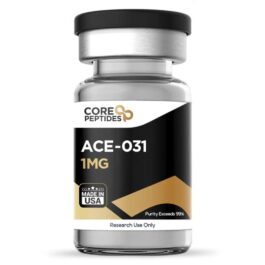
Size: 1mg
Contents: ACE-031 (1mg)
Form: Lyophilized powder
Purity: >99%
SKU: P-ACE031-1
FREE Shipping on $200+ orders
ACE-031 Peptide: A Focus on Muscle and Metabolic Regulation 🧬
What is ACE-031?
ACE-031, also known as ActRIIB-IgG1 peptide, is a myostatin inhibitor. Structurally, it is a fusion compound consisting of the activin receptor type IIB (ACV2RB) and recombinant immunoglobulin IgG1 FC. This soluble peptide is believed to work by binding to circulating myostatin, a protein that acts as a negative regulator of muscle growth. By inhibiting myostatin, ACE-031 may prevent it from binding to its native ACV2RB receptors, which is thought to result in muscle hypertrophy and an increase in skeletal muscle tissue size.
Myostatin, also known as growth and differentiation factor 8 (GDF8), primarily affects skeletal muscle and has no apparent impact on cardiac or smooth muscle tissues. Its discovery in 1997 was linked to its potential to inhibit muscle growth. Myostatin binds to the ActR2B receptors with a high affinity, initiating a signaling cascade involving Smad2/3, which is critical for muscle mass regulation. ACE-031 is posited to bind to various circulating members of the TGF-β superfamily, most notably myostatin, leaving the ACV2RB receptors on muscle cells uninhibited.
Key Areas of Scientific Research 🧪
1. ACE-031 and Muscle Cell Hypertrophy
A double-blind, placebo-controlled research study investigated ACE-031's potential for muscle growth. The pharmacokinetics analysis revealed a half-life of 10 to 15 days. The study's results suggested a potential increase in muscle mass after a single administration of ACE-031. After 29 days, measurements showed a 3.3% increase in total body lean mass and a 5.1% increase in quadriceps femoris muscle volume. These findings point to the peptide's potential to stimulate muscle hypertrophy.
2. ACE-031 and Fat Metabolism
Research suggests a possible link between myostatin and obesity. Studies on murine models for obesity have indicated that high levels of myostatin and its receptor, ActR2b, may be associated with decreased muscle mass and increased fat mass. Conversely, a deficiency of myostatin in these models was linked to a reduction in age-related adipose tissue mass and obesity phenotypes. The absence of myostatin in mice on a high-calorie diet appeared to result in reduced fat accumulation, which was attributed to the potential upregulation of enzymes involved in lipolysis and the promotion of brown (beige) fat formation, which is involved in fat burning. In one study, the use of ACE-031 in murine models on a high-fat diet appeared to prevent and reduce obesity.
3. ACE-031 and Muscle Contractile Force
Beyond myostatin inhibition, research suggests that ACE-031 may improve muscle tissue's capacity to generate force by preventing oxidative stress. In murine models, exposure to ACE-031 was associated with a 33% increase in muscle volume without altering muscle fiber type distribution. The models also showed an increase in basal oxygen consumption and energy expenditure, indicating a potential rise in metabolic activity. During fatiguing exercise, the ACE-031 group demonstrated a 40% increase in maximum contractile force and a 24% increase in total contractile force compared to the control group.
4. ACE-031 and Bone Density
Another study explored ACE-031's potential to impact bone tissue in murine models of Duchenne Muscular Dystrophy (DMD). The research suggested that ACE-031 led to an apparent increase in both body and muscle weights. Notably, micro-CT analysis of the femurs indicated an 80% increase in bone volume and a 70% increase in trabecular bone number in the ACE-031 groups. This increase in bone mass translated to enhanced bone strength, with significant elevations in maximum force and stiffness. Additionally, the study suggested a potential reduction in osteoclast numbers and an increased expression of osteoblast marker genes, which could point to a decrease in bone resorption and an increase in bone formation.
Important Notice: ACE-031 peptide is intended solely for laboratory and research purposes. It is not intended for human or veterinary use. All information provided is for educational and scientific reference only and has not been evaluated by the FDA or any medical regulatory body.
Support
© 2025. All rights reserved.
WEIGHT LOSS