
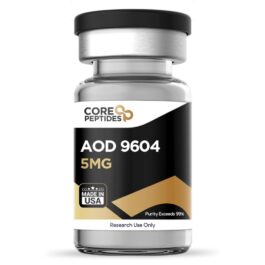
AOD 9604 (5mg)
$31.00 $21.00
Size: 5mg
Contents: AOD 9604 (5mg)
Form: Lyophilized powder
Purity: >99%
SKU: P-AOD9604-5
FREE Shipping on $200+ orders
AOD 9604 Peptide: A Focus on Metabolism and Tissue Repair 🔬
What is AOD 9604?
AOD 9604 (also known as GH Fragment 176-191) is a synthetic analog of human growth hormone (hGH). It's a modified fragment of hGH, reproducing the last 16 amino acids (176-191) with an added tyrosine residue for stability. This peptide is considered the lipolytic fragment of GH, as different parts of the hGH molecule appear to have different functions. It is primarily researched for its potential to mitigate obesity and aid in weight loss by influencing the process of lipolysis, where stored fats in fat cells are broken down for energy.
Key Areas of Scientific Research 🧪
1. AOD 9604 and Lipolytic Activity
Early studies in obese mice suggested that AOD 9604 led to a reduction in weight and excess fat. This was directly correlated with increased levels of lipolytic receptors, specifically beta(3)-adrenergic receptors (beta(3)-AR), in fat cells. While AOD 9604 appeared to elevate the expression of these receptors, further research suggested that the peptide's lipolytic action might also involve increased energy expenditure and fat oxidation. This indicates that AOD 9604's effects are not solely dependent on the beta(3)-AR pathway. In a study on obese Zucker rats, daily administration of AOD 9604 for 19 days resulted in a reported over 50% reduction in weight.
2. AOD 9604 and Obesity
Clinical trials conducted in 2004 on 300 obese subjects found that AOD 9604 led to a consistent rate of weight loss over a 12-week period. The trial results also noted minor improvements in the subjects' cholesterol profiles and glucose tolerance levels. Researchers have suggested that AOD 9604 may significantly induce lipolysis and possibly prevent lipogenesis (fat storage) by mimicking the natural actions of hGH.
3. AOD 9604 and Cell Regeneration
Additional research has explored AOD 9604's potential in tissue regeneration, particularly in cartilage repair. In a study on rabbits, a combination of AOD 9604 and hyaluronic acid appeared to exhibit the least cartilage degeneration, suggesting a potential to enhance cartilage repair. The peptide may also influence the differentiation of stem cells into different cell types; for example, an in vitro study suggests that AOD 9604 may enhance the differentiation of adipose mesenchymal stem cells into bone cells. Experiments with isolated bovine chondrocytes also showed a potential increase in the production of proteoglycan and collagen, which are vital components of cartilage.
4. AOD 9604 and Cancer Cell Research
The peptide is also being researched for its potential in cancer cell studies. It has been observed to enhance the anti-cancer efficacy of doxorubicin, a common chemotherapeutic agent. One study found that when loaded onto chitosan nanoparticles with doxorubicin, AOD 9604 appeared to enhance doxorubicin's binding to multiple breast cancer cell protein targets, which led to a greater anti-proliferative activity against the MCF-7 breast cancer cell line.
Product Specifications 📊
Molecular Formula: C78H123N23O23S2
Molecular Weight: 1815.12 g/mol
Other Known Titles: Tyr-hGH Fragment 177-191
Important Notice: AOD 9604 peptide is available for research and laboratory purposes only. It is not intended for human or veterinary use. All information provided is for educational and scientific reference only and has not been evaluated by the FDA or any medical regulatory body.
Support
© 2025. All rights reserved.
WEIGHT LOSS