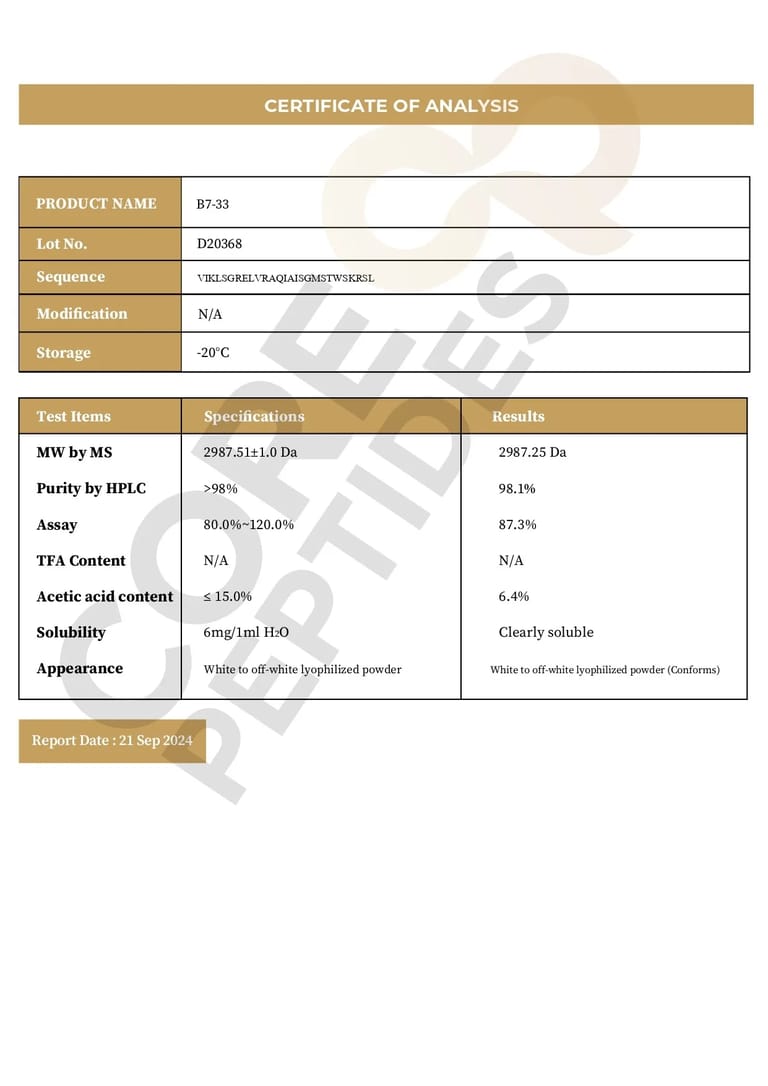
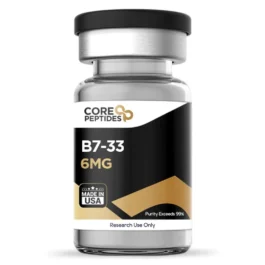
B7-33 (6mg)
$70.00$60.00
B7-33 is a synthetic, single-chain peptide that's a smaller analog of the endogenous protein H2-relaxin. While H2-relaxin is being researched for its various biological actions, including its potential effects on the reproductive, musculoskeletal, and cardiovascular systems, B7-33 is specifically being studied for its potential anti-fibrotic properties. Researchers believe it may work by binding to the RXFP-1 receptor, which then activates the pERK signaling pathway instead of the cAMP pathway. This action is thought to increase the production of MMP-2, an enzyme that breaks down proteins and helps prevent the formation of scar tissue (fibrosis).
Product Specifications
Specification | Details |
SKU | P-B733-6 |
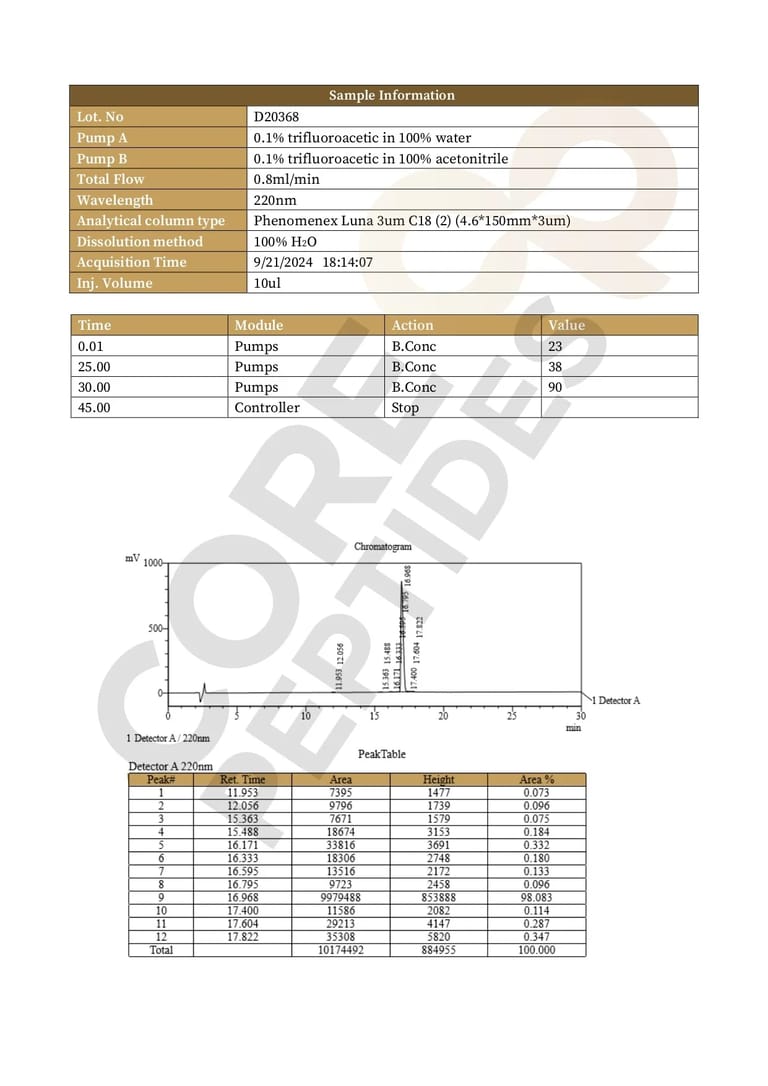
Purity | >99% |
Form | Lyophilized Powder |
Size | 6 mg |
Contents | B7-33 (6 mg) |
Pricing
Free shipping on all orders over $200!
Quantity | Discount | Price (USD) |
5 - 8 | 5% | $57.00 |
9+ | 10% | $54.00 |
Chemical Makeup
Specification | Details |
Molecular Formula | C131H228N40O37S |
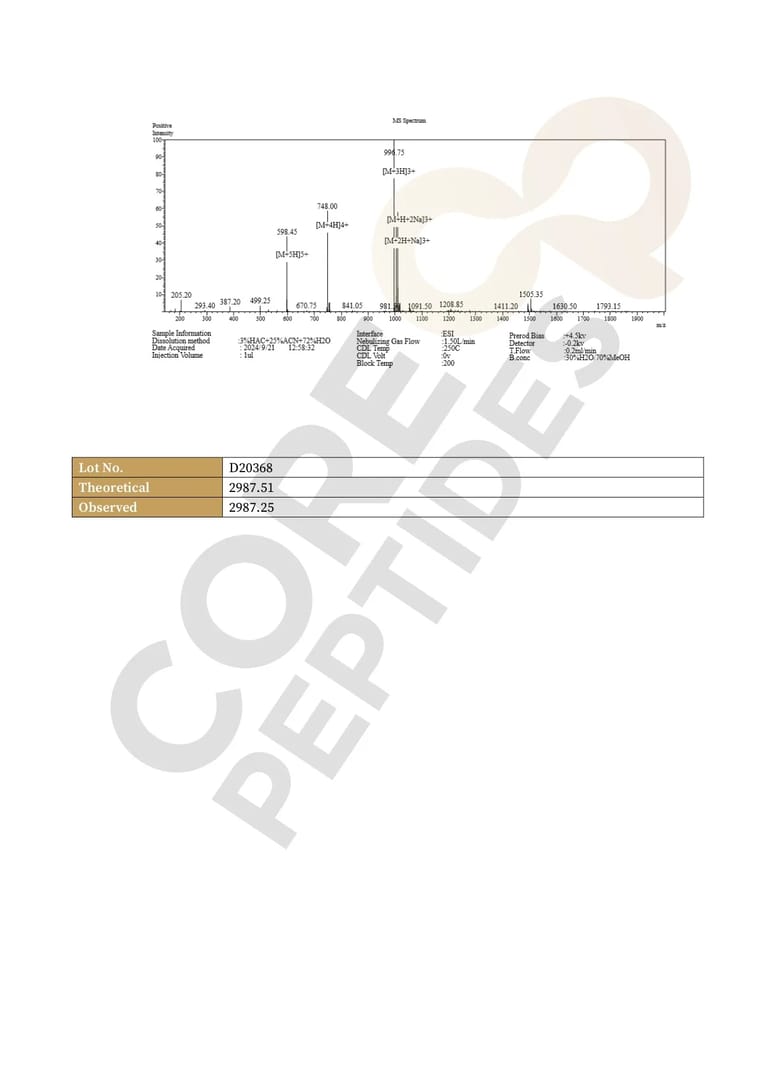
Molecular Weight | 2987.75 g/mol |
Other Known Titles | (B7-33)H2, GTPL9321 |
Research and Clinical Studies
B7-33 and Anti-Fibrosis
H2-relaxin, the natural counterpart of B7-33, is known to produce anti-fibrotic effects but may also activate the cAMP pathway, which is linked to tumor growth. B7-33, however, is thought to activate the pERK pathway, which may provide the desired anti-fibrotic potential without the same risk. In one study, when exposed to mice with myocardial infarction (heart attack), B7-33 was reported to result in an almost 50% reduction in cardiac tissue fibrosis. This suggests that B7-33 may be a valuable research compound for investigating fibrosis mitigation.
B7-33 and Vasoprotection
A study on Wistar murine models found that B7-33 may have potential vasodilatory properties in the mesenteric artery.
Another study on female murine models with endothelial dysfunction suggested that both B7-33 and H2-relaxin may help prevent the further spread of the condition, indicating that B7-33 could replicate the vasoprotective actions of its natural counterpart.
B7-33 and Preeclampsia
Preeclampsia is a pregnancy-related condition characterized by high blood pressure and decreased fetal growth. A study on cytotrophoblasts (cells found in the embryo) suggested that B7-33 may lead to an upregulation of vascular endothelial growth factor (VEGF). VEGF is a signaling protein that stimulates the formation of new blood vessels, a process vital for supplying the fetus with oxygen and nutrients. This suggests B7-33 may have a role in researching preeclampsia.
B7-33 as a Coating Material
In an animal study, researchers implanted a peptide-coated device in murine models to investigate its potential to counteract fibrotic actions. The results showed that the peptide coating appeared to decrease the formation of fibrotic tissue around the device by 49.2% over six weeks. This suggests that B7-33 could be studied as a potential coating material for medical implants to reduce fibrosis.
Disclaimer: B7-33 peptide is for research and laboratory purposes only and is not intended for human or animal use.