Bronchogen (20mg)
$79.00$68.00
Bronchogen, also known as AEDL, is a synthetic peptide that's classified as a bioregulator. These are short signaling peptides thought to cross cell membranes and interact directly with DNA to regulate gene expression. Researchers believe Bronchogen may have a specific affinity for lung cells, where it is being investigated for its potential to reduce inflammation, promote cell renewal, and prevent tissue remodeling.
Product Specifications
Specification | Details |
SKU | P-BRONCHOGEN-20 |
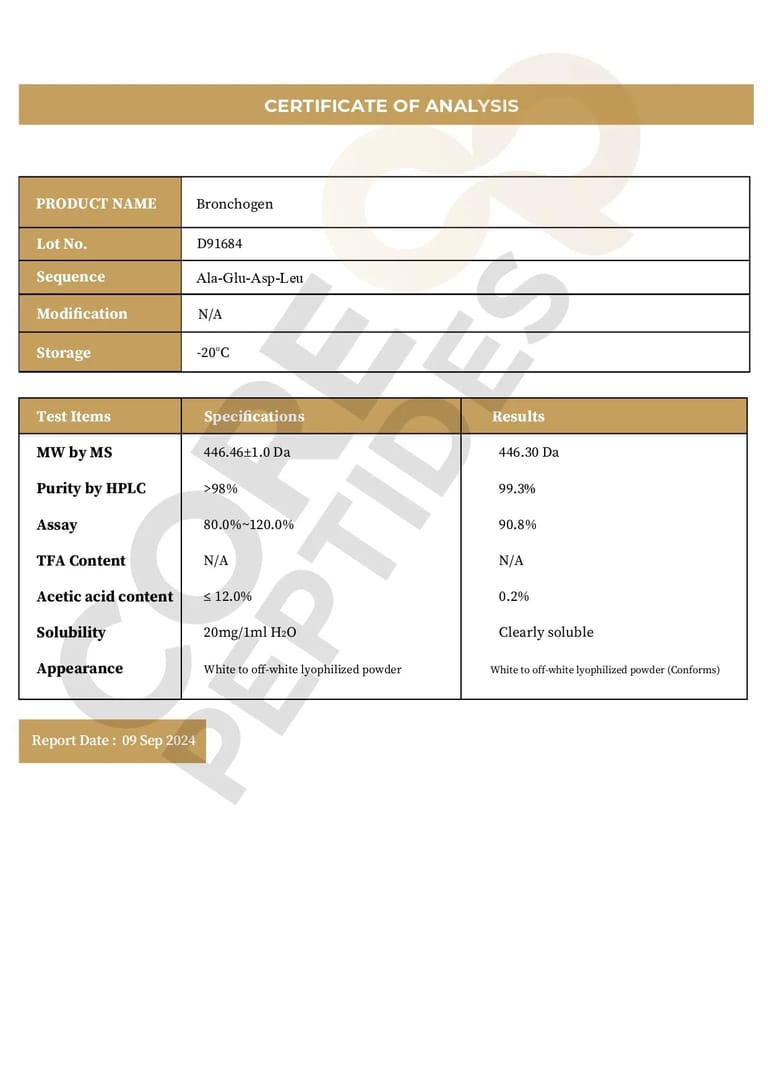
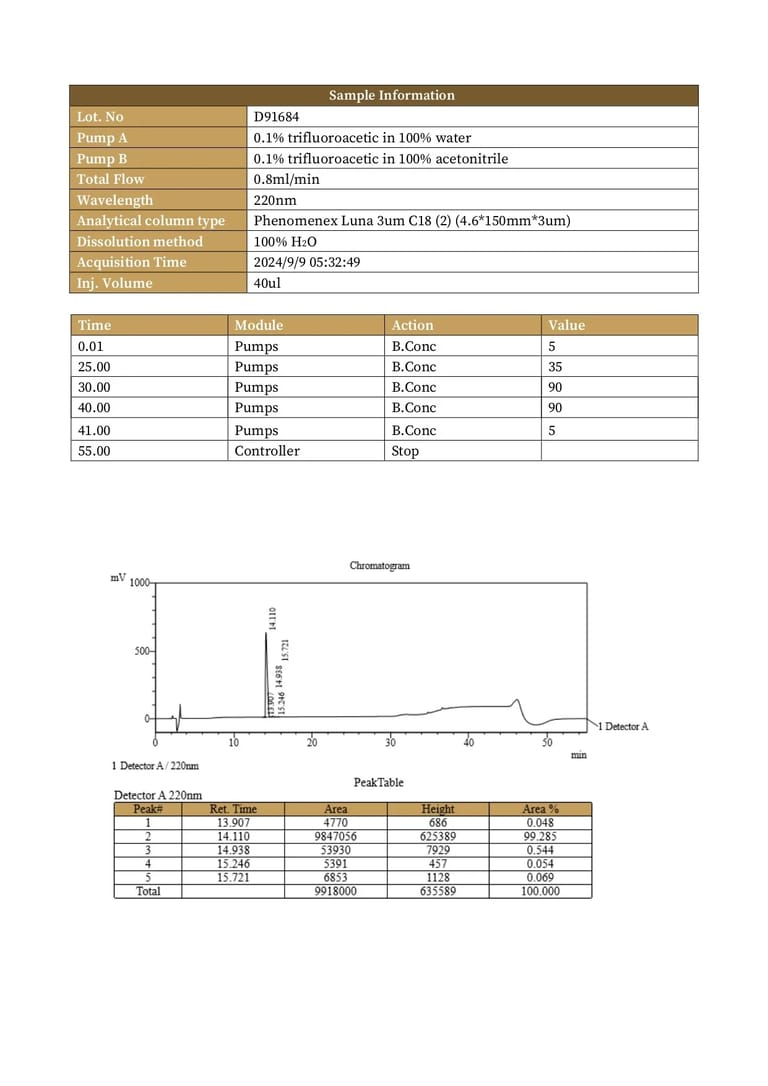
Purity | >99% |
Form | Lyophilized Powder |
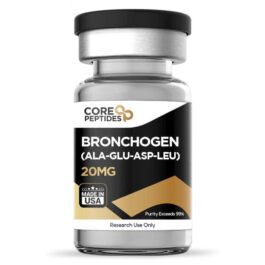
Size | 20 mg |
Contents | Bronchogen |
Pricing
Free shipping on all orders over $200!
Quantity | Discount | Price (USD) |
5 - 8 | 5% | $64.60 |
9+ | 10% | $61.20 |
Chemical Makeup
Specification | Details |
Molecular Formula | C18H30N4O9 |
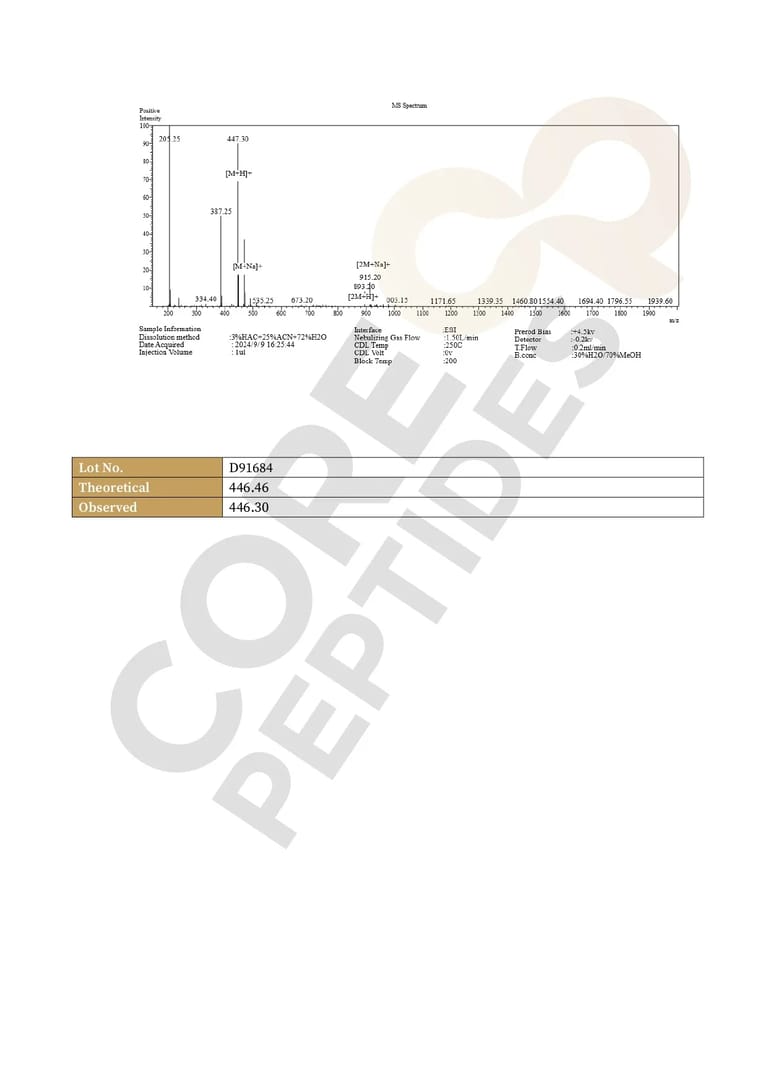
Molecular Weight | 446.45 g/mol |
Sequence | Ala-Glu-Asp-Leu |
Other Known Titles | AEDL |
Research and Clinical Studies
Bronchogen and DNA
Bronchogen is thought to interact with DNA, specifically at CNG sites, which are targets for cytosine DNA methylation. This interaction may influence gene expression and epigenetic modulation. Another study found that Bronchogen appeared to increase the thermal stability of DNA by 3.1 °C, acting as a DNA-stabilizing agent. This suggests the peptide may be useful in research involving DNA structures.
Bronchogen and Cell Renewal
Studies suggest that Bronchogen may impact cell renewal processes and enhance the function of bronchial epithelial cells. Researchers have commented that the peptide "proved to be an efficient agent stimulating the cell renewal processes and the enhancement of the functional activity of bronchial epithelial cells." Its ability to bind to DNA without visibly altering the double-helix structure suggests a targeted interaction that could be further explored for applications like developing targeted delivery systems.
Bronchogen and Inflammation
Research on murine models with damaged bronchial epithelium showed that Bronchogen appeared to alleviate neutrophilic inflammation and normalize the profile of proinflammatory cytokines. The study suggested an apparent structural and functional rejuvenation of the bronchial epithelium, indicated by increased levels of secretory immunoglobulin A (a marker for local immunity) and surfactant protein B. This suggests that Bronchogen may intervene in the inflammatory cascade and promote regenerative processes in the lungs.
Bronchogen and Tissue Remodeling
Bronchogen has been investigated for its potential to prevent and reverse tissue remodeling in the lungs, which can be caused by exposure to harmful substances. In murine models, the peptide appeared to reduce symptoms of bronchial epithelium and lung tissue remodeling, such as goblet cell hyperplasia, and may have helped restore ciliated cells. The apparent increase in secretory IgA production also suggests a mechanism involving immune enhancement and inflammation control.
NOTE: These products are intended for laboratory research use only.