Cardiogen (20mg)
$85.00$75.00
Cardiogen is a research peptide bioregulator being investigated for its potential to regulate fibroblasts and its effects on the cardiovascular system. Researchers also believe it may increase tumor cell apoptosis. It is a tetrapeptide with the sequence H-Ala-Glu-Asp-Arg-OH.
Product Specifications
Specification | Details |
SKU | P-cardiogen |
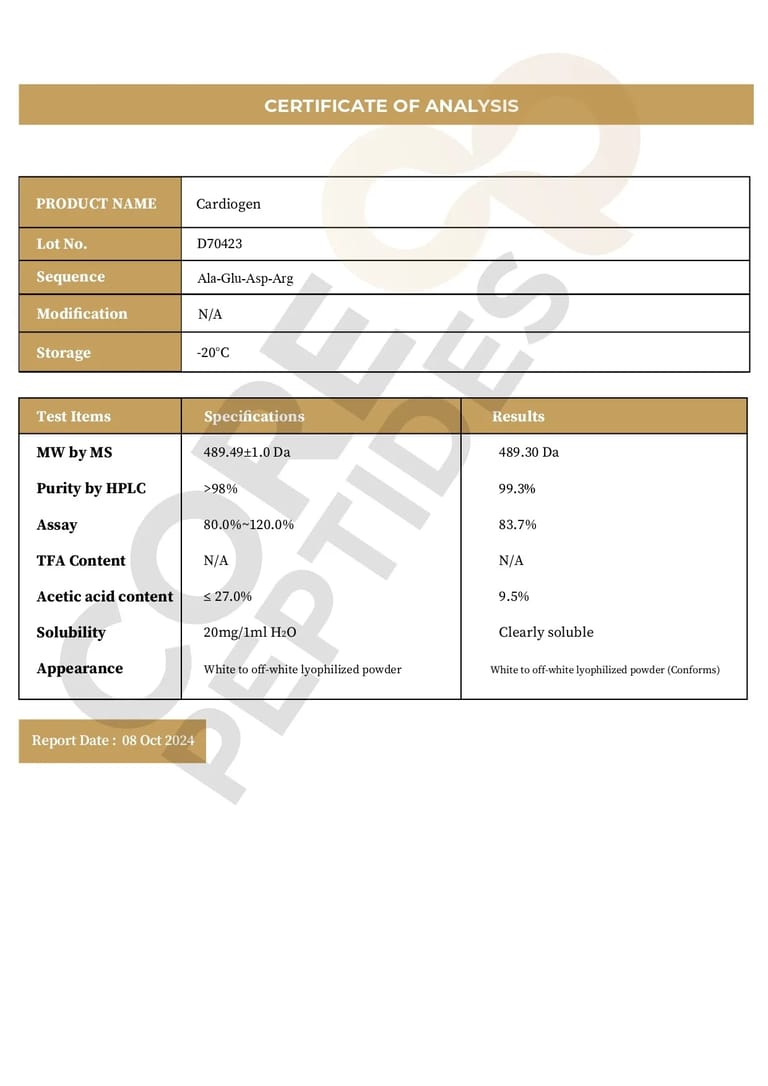
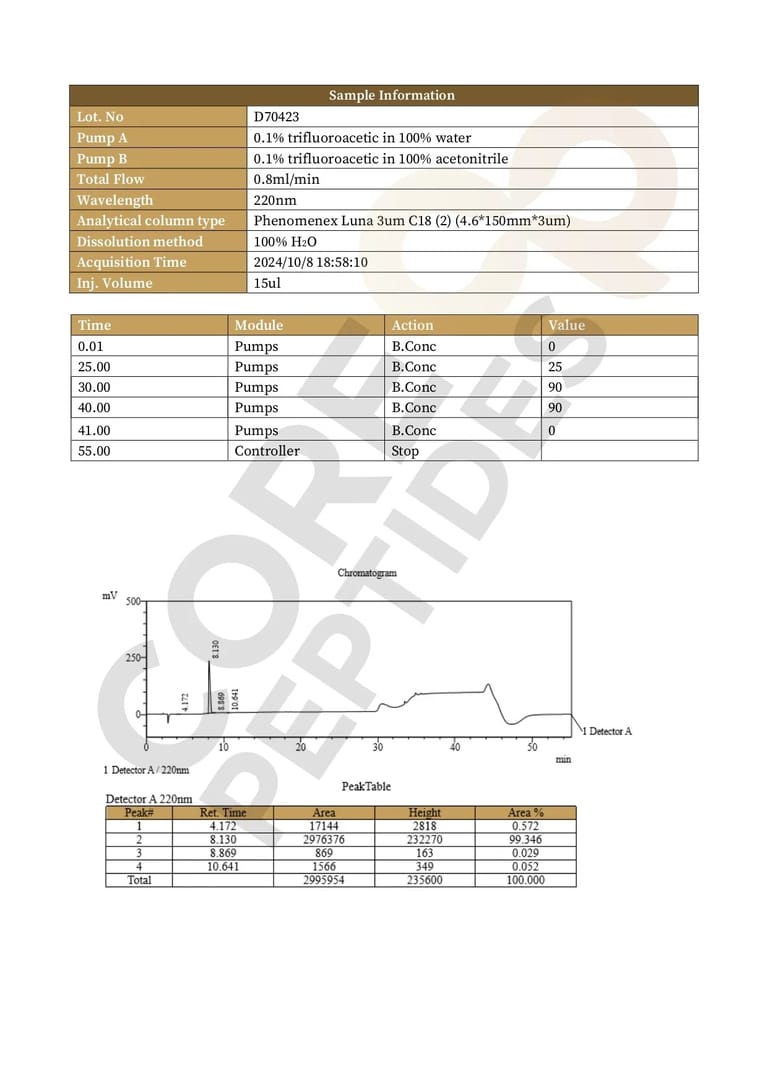
Purity | >99% |
Form | Lyophilized Powder |
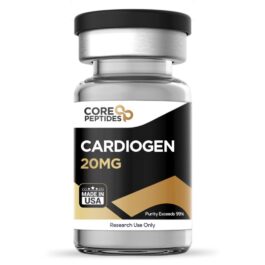
Size | 20 mg |
Contents | Cardiogen (20 mg) |
Pricing
Free shipping on all orders over $200!
Quantity | Discount | Price (USD) |
5 - 8 | 5% | $71.25 |
9+ | 10% | $67.50 |
Chemical Makeup
Specification | Details |
Molecular Formula | C18H31N7O9 |
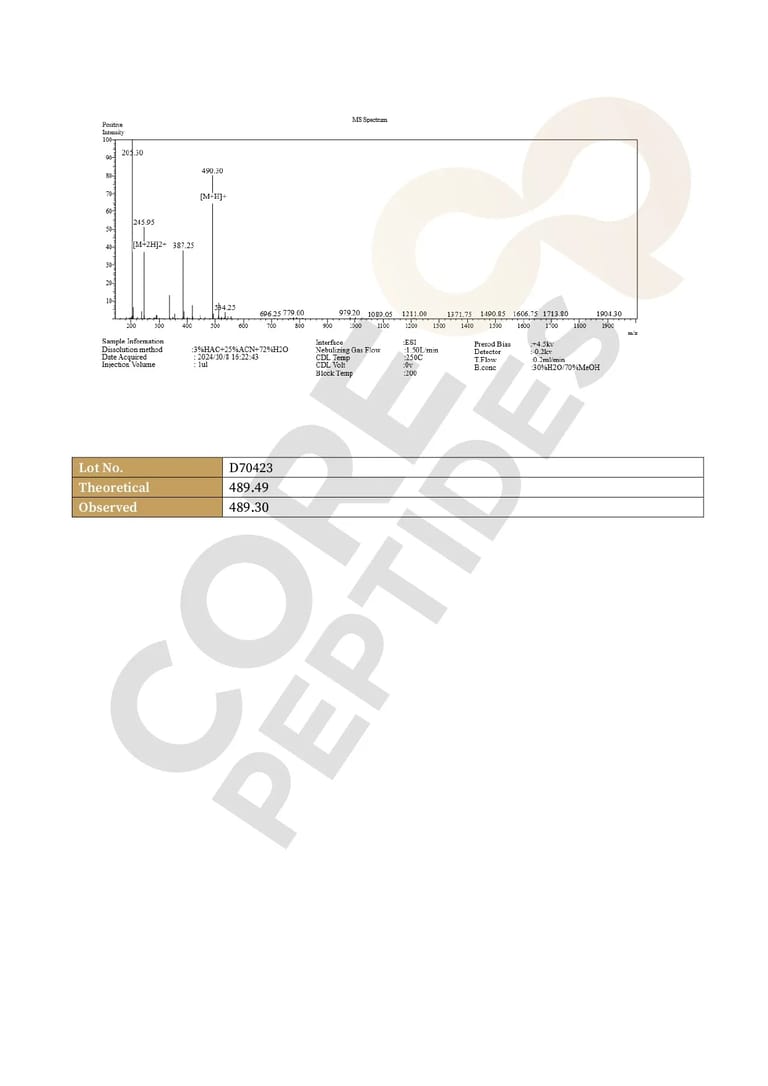
Molecular Weight | 489.5 g/mol |
Structure | H-Ala-Glu-Asp-Arg-OH |
Other Known Titles | SCHEMBL3194515 |
Research and Clinical Studies
Cardiogen and Cancer Research
In a study on murine models with M-1 sarcoma, Cardiogen appeared to inhibit tumor growth by stimulating tumor cell apoptosis and inducing hemorrhagic necrosis. The research suggested that the peptide's action was not a direct cytostatic effect on the tumor cells but was mediated through the tumor's vascular network, potentially disrupting its blood supply.
Cardiogen and Cardiomyocyte Proliferation
Cardiogen is being researched for its potential to stimulate the proliferation of heart muscle cells, known as cardiomyocytes. A study on murine embryonic fibroblast cells suggested that Cardiogen might increase the expression of key proteins in the cytoskeleton (such as actin, vimentin, and tubulin) and nuclear matrix (lamin A and C). This suggests that Cardiogen may influence cellular growth, metabolism, and differentiation.
Cardiogen and Cardiomyocyte Apoptosis
Research suggests that Cardiogen may reduce cardiomyocyte apoptosis (programmed cell death), which can occur after an injury like a heart attack. It is hypothesized to do this by reducing the expression of the p53 gene, which is involved in initiating cell death. In a study on murine models with experimentally induced heart damage, Cardiogen appeared to reduce mortality, diminish the size of necrotic zones, and help preserve the glycogen content and mitochondrial function in the heart tissue.
Cardiogen and Prostate Cell Aging
Cardiogen is being investigated for its potential to address age-related dysfunctions in prostate cells. According to researchers, the peptide may significantly increase the expression of signaling factors that are involved in the differentiation of prostate fibroblasts, which typically decline in aging cells. This suggests that Cardiogen could be a relevant candidate for further research into age-related cellular health.
Disclaimer: Cardiogen peptide is available for research and laboratory purposes only.