
Cartalax (20mg)
$69.00$63.00
Cartalax, also known as AED, is a synthetic peptide bioregulator based on a sequence of amino acids from the alpha-1 chain of type XI collagen. Researchers believe it may modulate biological processes related to cellular aging, inflammation, and cartilage repair. It is being studied for its potential effects on fibroblasts, kidney cells, and bone marrow mesenchymal stem cells.
Product Specifications
Specification | Details |
SKU | P-CARLATAX-20 |
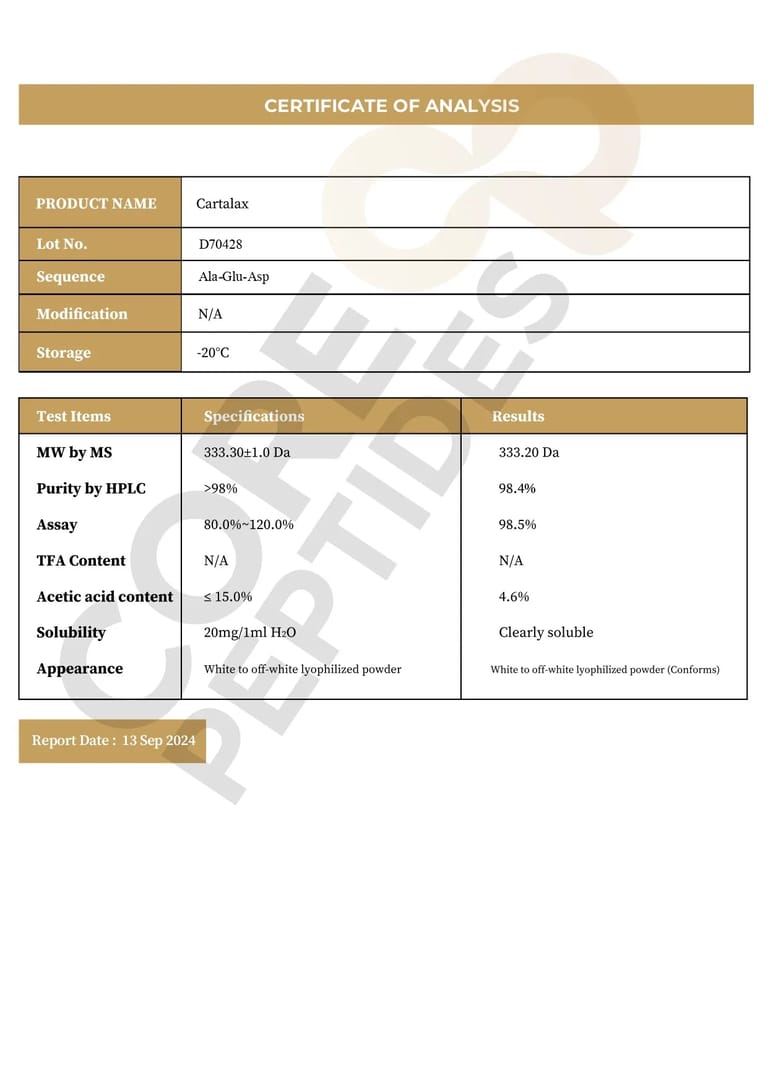
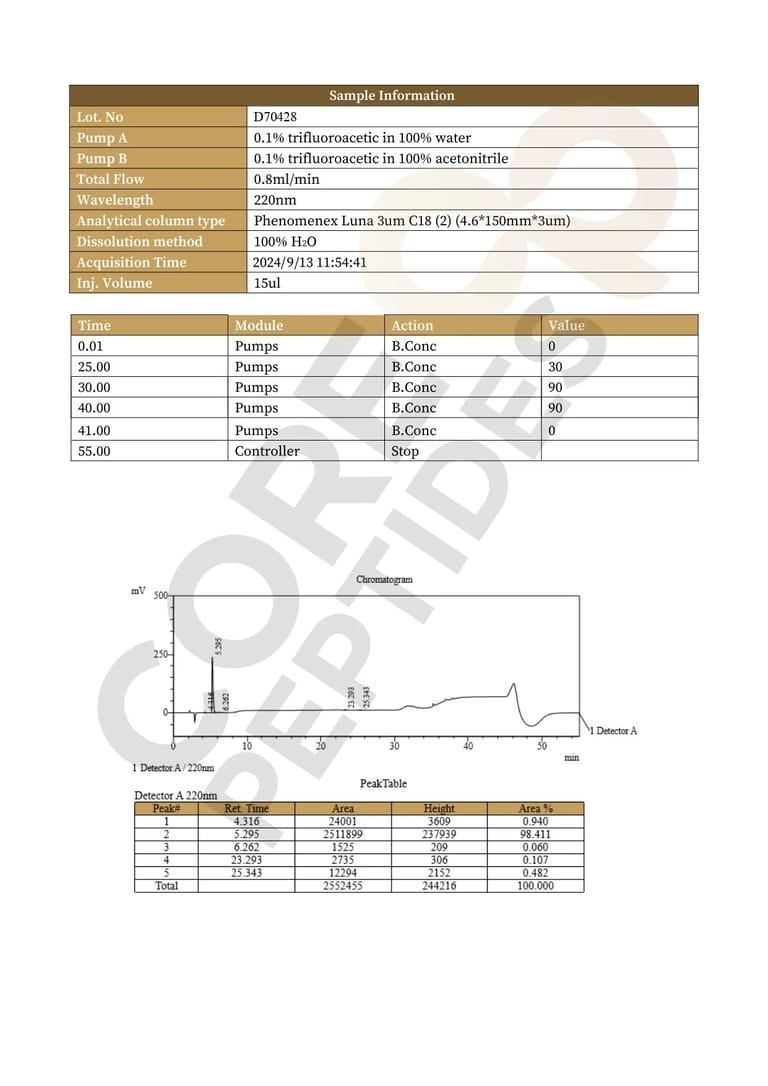
Purity | >99% |
Form | Lyophilized Powder |
Size | 20 mg |
Contents | Cartalax |
Pricing
Free shipping on all orders over $200!
Quantity | Discount | Price (USD) |
5 - 8 | 5% | $59.85 |
9+ | 10% | $56.70 |
Chemical Makeup
Specification | Details |
Molecular Formula | C12H19N3O8 |
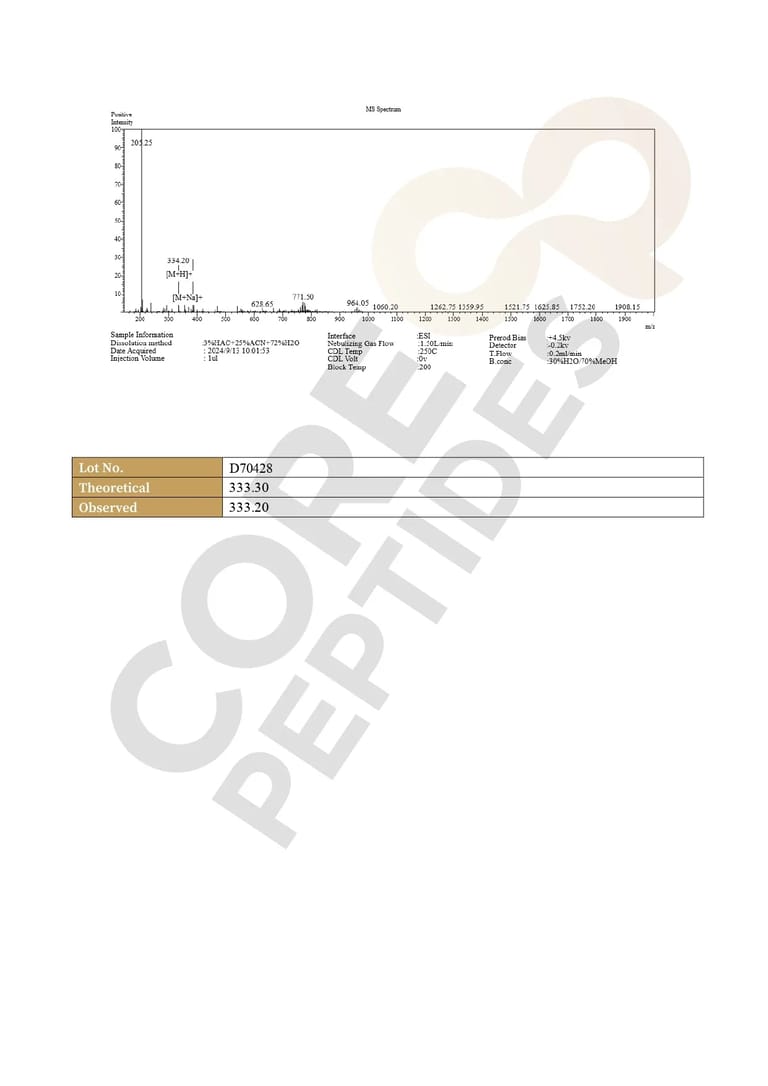
Molecular Weight | 333.29 g/mol |
Sequence | Ala-Glu-Asp |
Other Known Titles | AED, T-31, SCHEMBL5324601 |
Research and Clinical Studies
Cartalax and Fibroblasts
Research on skin fibroblasts suggests that Cartalax may have properties that influence the aging process of these cells. It is thought to:
Promote cell proliferation by increasing the expression of the Ki-67 marker.
Enhance regenerative capacity by affecting the expression of CD98hc.
Inhibit apoptosis (cell death) by suppressing the activity of caspase-3.
Help preserve the integrity of the extracellular matrix by inhibiting the synthesis of MMP-9, an enzyme associated with aging.
Because chondrocytes (cartilage cells) share characteristics with fibroblasts, these findings may suggest that Cartalax could also have reparative properties in cartilage tissues.
Cartalax and Kidney Cells
Studies on kidney cell cultures suggest that Cartalax may promote cell proliferation and contribute to a decrease in apoptosis. It is thought to:
Increase the expression of Ki-67, a marker for cell proliferation.
Reduce the expression of the pro-apoptotic protein p53.
Decrease the expression of aging markers such as p16, p21, and p53.
Increase the expression of SIRT-6, a protein involved in DNA repair and genomic stability.
This research suggests that Cartalax could be a molecule of interest for studying the aging process of kidney cells.
Cartalax and Cellular Aging
Cartalax is also being researched for its potential impact on bone marrow mesenchymal stem cells. Studies have suggested that it may:
Up-regulate the insulin-like growth factor 1 (IGF1) gene, which is involved in cellular growth and development.
Stimulate the expression of the NFκB gene, a protein complex that functions in cellular processes like inflammation and survival.
Inhibit Tankyrase 2 (TNKS2), an enzyme involved in telomere maintenance and cellular longevity.
These findings suggest that Cartalax may play a role in regulating cellular aging at the genetic level.
NOTE: These products are intended for laboratory research use only.