
Chonluten (20mg)
$55.00 $31.00
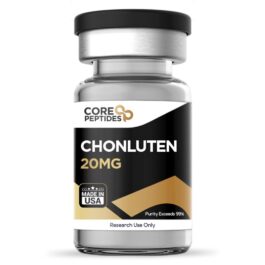
Chonluten Product Information
Our Chonluten is a high-purity, synthetic peptide available in a 20mg size. Provided as a lyophilized powder with a certified purity of >99%, it is intended for research purposes. The current price is $51.00. The SKU is P-Chonluten.
Pricing and Discounts:
5-8 units: A 5% discount is applied, with a price of $48.45 per unit.
9+ units: A 10% discount is applied, with a price of $45.90 per unit.
We also offer FREE shipping on all orders over $200.
Chonluten Peptide: A Focus on Respiratory and Gastrointestinal Health 🔬
What is Chonluten?
Chonluten is a tripeptide (containing glycine, glutamine, and asparagine) that is classified as a bioregulator. It is being researched for its potential to regulate physiological processes in the respiratory system, with a particular focus on influencing inflammation and cell proliferation. As a peptide bioregulator, it may cross cellular membranes to interact with DNA, potentially influencing gene expression related to cellular repair and function. Chonluten appears to be organ-specific, primarily affecting lung and gastrointestinal tissues.
Key Areas of Scientific Research 🧪
1. Chonluten and Inflammation Reduction
Studies suggest that Chonluten may reduce inflammation within the lungs by protecting the bronchial lining. One proposed mechanism is the initiation of phosphorylation in STAT molecules, especially STAT1, within immune cells like macrophages. STAT molecules act as messengers that pass signals to the cell nucleus, and by affecting them, Chonluten might regulate immune cell activity and reduce inflammation. Researchers also theorize that the peptide may decrease the activation of STAT3 and reduce levels of pro-inflammatory cytokines such as IL-6, TNF, and IL-17. This action may help calm inflammation in activated immune cells.
2. Chonluten and Gastrointestinal Tract Tissues
Chonluten's potential impact on the gastrointestinal tract is similar to its suggested effects on the lungs. It may help repair cells in the stomach and intestinal tissues by influencing the activity of genes linked to antioxidant enzymes like superoxide dismutase (SOD). This may help balance antioxidant defenses and reduce oxidative stress. The peptide is also believed to reduce inflammation by affecting genes like TNF-α and Cox-2. Additionally, it may promote new tissue growth by encouraging the proliferation of fibroblasts and the growth of new blood vessels.
3. Chonluten and Gene Expression
Research suggests that short peptides like Chonluten may penetrate cell nuclei and interact with DNA. These DNA-peptide interactions are thought to be important for gene regulation. Studies indicate that peptides can regulate the status of DNA methylation, which is an epigenetic mechanism for gene activation or repression. This suggests that Chonluten may influence gene expression at a fundamental level, which could be a mechanism for its potential effects on cellular processes and aging.
4. Chonluten and Aerobic Activity
Studies have explored the role of Chonluten in aerobic performance, suggesting it may have protective effects against low-oxygen conditions. Researchers hypothesize that the peptide could help lung and muscle tissues function better when oxygen is limited. This may be due to its potential to control the activity of various genes, including c-Fos (involved in cell growth and survival), HSP70 (which protects cells from stress), and genes for antioxidant enzymes like SOD and COX-2.
Product Specifications 📊
Molecular Formula: C11H17N3O8
Molecular Weight: 319.27 g/mol
Structure: (4S)-4-amino-5-[[(2S)-3-carboxy-1-(carboxymethyl amino)-1-oxopropan-2-yl]amino]-5-oxopentanoic acid
Other Known Titles: EDG, Glu-asp-gly, T-34 tripeptide
Important Notice: Chonluten peptide is available for research and laboratory purposes only. It is not intended for human or veterinary use. All information provided is for educational and scientific reference only and has not been evaluated by the FDA or any medical regulatory body.
Support
© 2025. All rights reserved.
WEIGHT LOSS