Chonluten (20mg)
$59.00$51.00
Chonluten, also known as EDG tripeptide or T-34, is a tripeptide bioregulator being researched for its potential to regulate the physiological processes of the respiratory system. It's believed to influence inflammation, proliferation, and restore balance in tissues by interacting with gene expression. It's considered to be organ-specific, with its primary potential in lung tissues, and secondary potential in the gastrointestinal tract.
Product Specifications
Specification | Details |
SKU | P-Chonluten |
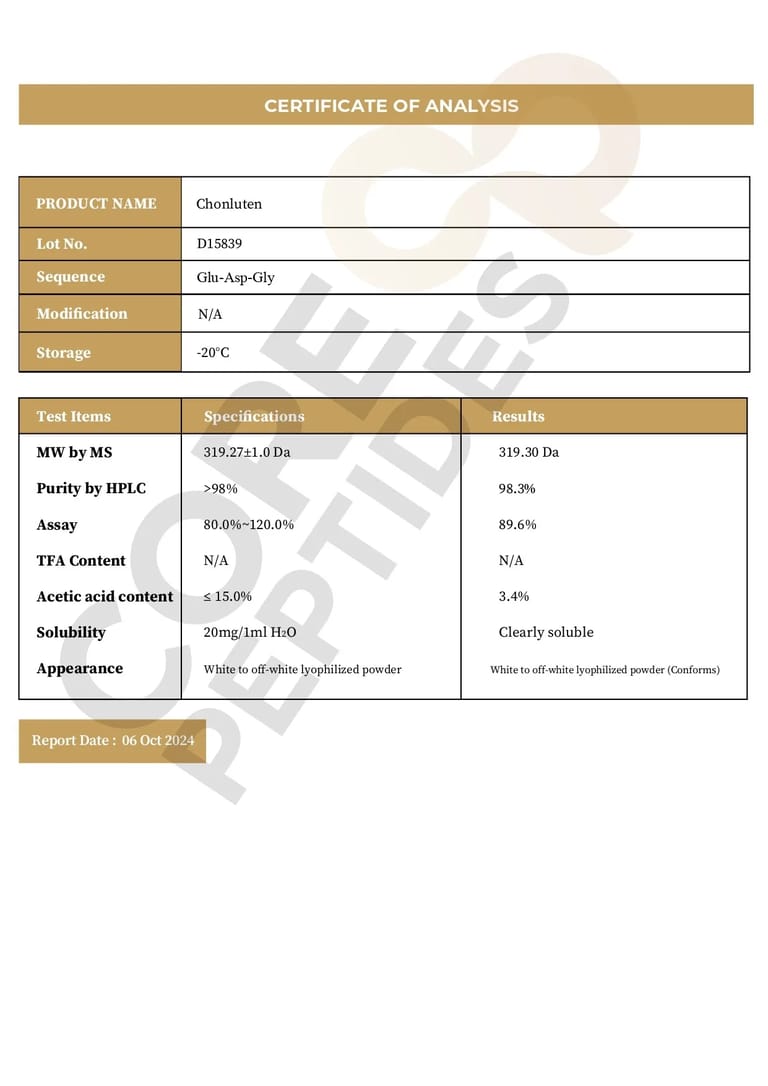
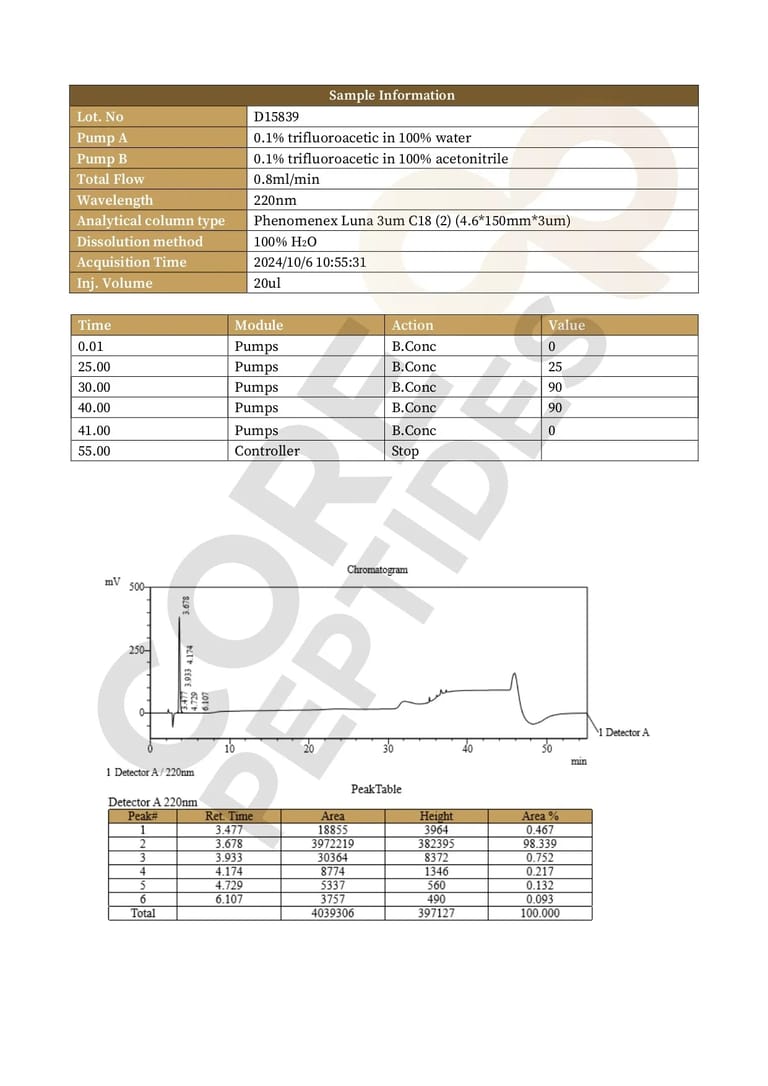
Purity | >99% |
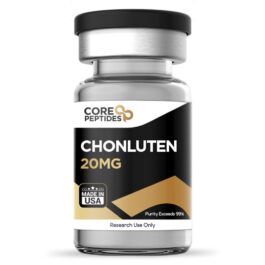
Form | Lyophilized Powder |
Size | 20 mg |
Contents | Chonluten (20 mg) |
Pricing
Free shipping on all orders over $200!
Quantity | Discount | Price (USD) |
5 - 8 | 5% | $48.45 |
9+ | 10% | $45.90 |
Chemical Makeup
Specification | Details |
Molecular Formula | C11H17N3O8 |
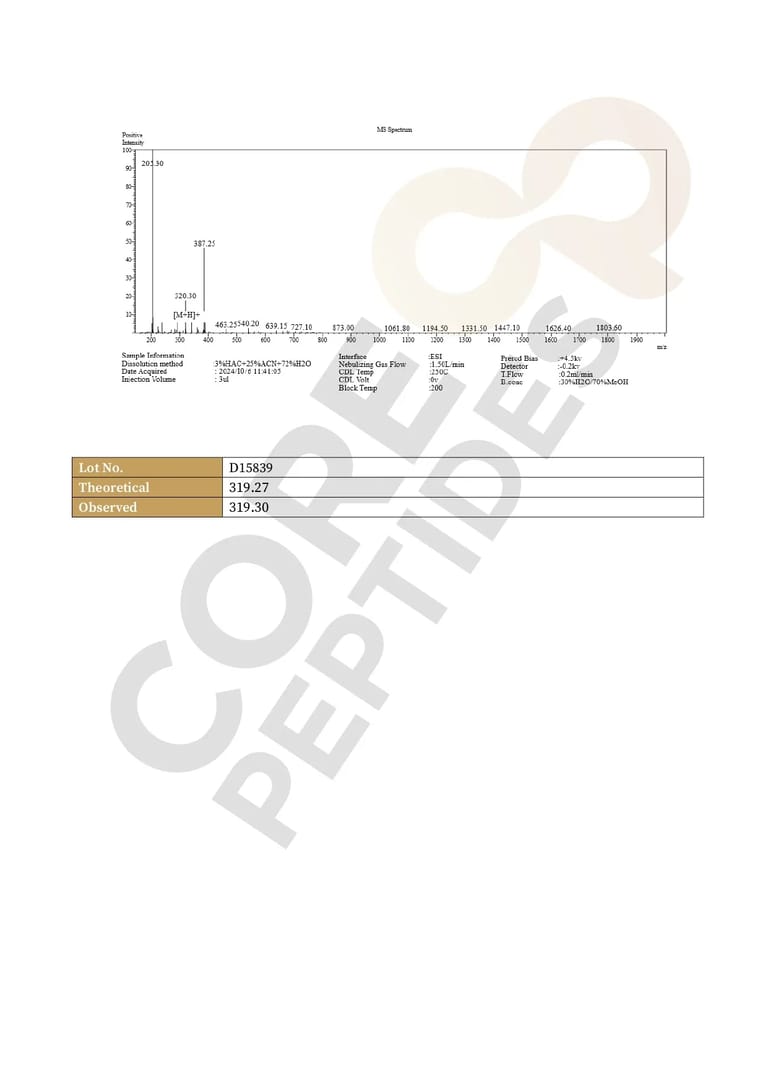
Molecular Weight | 319.27 g/mol |
Structure | 4S)-4-amino-5-[[(2S)-3-carboxy-1-(carboxymethyl amino)-1-oxopropan-2-yl]amino]-5-oxopentanoic acid |
Other Known Titles | Glu-asp-gly, T-34 tripeptide |
Research and Clinical Studies
Chonluten and Inflammation Reduction
Researchers suggest that Chonluten may reduce inflammation in the lungs by protecting the bronchial lining. It is hypothesized to initiate the phosphorylation of STAT1, a molecule that acts as a gene switch to regulate immune cells. It may also decrease the activation of STAT3 and reduce levels of pro-inflammatory proteins like IL-6, TNF, and IL-17. This could help calm inflammation in activated immune cells and modulate immune responses.
Chonluten and Gastrointestinal Tract Tissues
Chonluten's potential impact on the gastrointestinal tract is similar to its suggested effects on the lungs. It is thought to:
Reduce inflammation by affecting genes linked to TNF-α and Cox-2.
Repair cells by normalizing genes that produce antioxidant enzymes like superoxide dismutase (SOD).
Promote new tissue growth by encouraging the multiplication of fibroblasts and the growth of new blood vessels.
Reduce excessive cell death by regulating the expression of heat shock protein 70 (HSP70), which protects cells from apoptosis.
Chonluten and Aerobic Activity
Studies have investigated the potential role of Chonluten in aerobic activity, suggesting it may improve an organism's tolerance to low oxygen conditions (hypoxia). This is believed to be a result of the peptide's potential to control the activity of genes such as c-Fos (involved in cell growth and survival), HSP70 (protects cells from stress), and genes for antioxidant systems.
Disclaimer: Chonluten peptide is available for research and laboratory purposes only.