
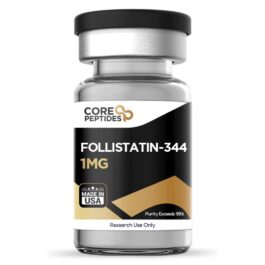
Follistatin-344 (1mg)
$145.00$138.00
Follistatin-344 is a synthetic version of a naturally occurring glycoprotein that's being researched for its potential to regulate muscle growth and other cellular processes. Its primary mechanism of action is its ability to bind to and inhibit proteins in the Transforming Growth Factor-beta (TGFβ) superfamily, most notably myostatin. Myostatin is a natural inhibitor of muscle cell growth, and by antagonizing it, Follistatin-344 may allow for increased muscle development.
Product Specifications
Specification | Details |
SKU | P-FOLLISTN-1 |
Purity | >99% |
Form | Lyophilized Powder |
Size | 1 mg |
Contents | Follistatin-344 (1 mg) |
Pricing
Free shipping on all orders over $200!
Quantity | Discount | Price (USD) |
5 - 8 | 5% | $131.10 |
9+ | 10% | $124.20 |
Chemical Makeup
Specification | Details |
Molecular Weight | 3780 g/mol |
Other Known Titles | Activin-Binding Protein, FSH-Suppressing Protein, FST |
Research and Clinical Studies
Muscle Development
Research suggests that Follistatin-344 may significantly increase muscle mass. In one study, mice given Follistatin-344 exhibited reduced myostatin levels, which may have led to an increase in skeletal muscle mass, with some mice weighing 2 to 3 times more than usual. The increase in mass was reportedly a result of both muscle cell hyperplasia (an increase in the number of cells) and hypertrophy (an increase in cell size).
The research also notes that Follistatin-344 may offer a broader approach to muscle development than other myostatin inhibitors because it also antagonizes activin A, a protein that promotes muscle atrophy. By inhibiting both myostatin and activin A, Follistatin-344 may address both muscle loss and the quality of the remaining muscle tissue.
Carcinogenic Cells
Follistatin-344 is being investigated for its potential role in certain types of cancer.
Breast Cancer: Research suggests that Follistatin is often under-expressed in breast cancer cells, which may allow for the increased spread of cancer cells caused by activin proteins. Restoring Follistatin levels might prevent activin-induced metastasis.
Esophageal Cancer: Follistatin is also being researched for its potential to inhibit Bone Morphogenetic Proteins (BMPs), which are believed to contribute to the transition of normal esophageal tissue to cancerous tissue.
Liver Protection
A study on rats with early liver fibrosis found that Follistatin-344 appeared to lead to a 32% decrease in liver fibrosis and a nearly 90% decrease in hepatocytic apoptosis (liver cell death).
Follicle Growth
Follistatin-344 may exhibit wound healing potential by stimulating interfollicular stem cells. In a clinical study on subjects with hair loss, a peptide formulation containing Follistatin-344 appeared to improve hair growth, thickness, and density by almost 13%.
Diabetes
Research on diabetic murine models suggested that Follistatin-344 may lead to an overexpression of the protein in the pancreatic cells, which resulted in:
Increased pancreatic beta cell mass
Reduced glucose levels
An overall reduction in diabetic symptoms
This is believed to be due to the peptide's inhibition of certain signaling pathways that would otherwise limit cell growth.
Disclaimer: Follistatin-344 peptide is available for research and laboratory purposes only.