
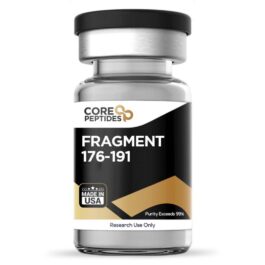
Fragment 176-191 (5mg / 10mg)
$59.00$44.00
Fragment 176-191, also known as hGH Fragment 176-191 or AOD-9604, is a synthetic peptide that's a small fragment of the human growth hormone (hGH) molecule. It is being researched for its potential to stimulate weight loss and fat burning without the effects on growth or insulin sensitivity that are associated with full-length hGH. The peptide consists of 16 amino acids, which are believed to be the "lipolytic fragment" of hGH.
Product Specifications
Specification | Details |
SKU | P-FRAG176-191 |
Purity | >99% |
Form | Lyophilized Powder |
Size | 5 mg / 10 mg |
Contents | Fragment 176-191 |
Pricing
Complimentary shipping on orders over $200.
Quantity | Discount | Price Range (USD) |
Single Unit | N/A | $44.00 - $72.00 |
5 - 8 | 5% | $41.80 - $68.40 |
9+ | 10% | $39.60 - $64.80 |
Chemical Composition
Specification | Details |
Molecular Formula | C78H125N23O23S2 |
Molecular Weight | 1817.12 g/mol |
Other Known Titles | hGH Fragment 176-191, Lipolytic fragment, AOD-9604 |
Research and Clinical Investigations
Fat Cells and Metabolism
Research suggests that Fragment 176-191 may promote fat burning by upregulating beta-3 adrenergic receptors (ß3-AR) on the surface of fat cells (adipocytes). This potential increase in receptors may make the cells more sensitive to lipolytic signals, which could enhance fat oxidation and thermogenesis. A clinical trial involving 300 subjects suggested that a group given the peptide experienced a decrease in body weight, as well as improvements in cholesterol levels and glucose tolerance (6).
The peptide's action is believed to be specific to fat burning, potentially due to the absence of the N-terminus of the GH molecule.
Cartilage Regeneration
A study using a knee osteoarthritis model in experimental models suggested that Fragment 176-191 may have potential regenerative properties for cartilage. The peptide, when used alone or in combination with hyaluronic acid, appeared to improve cartilage regeneration and reduce lameness compared to a saline control group. The best outcomes were reportedly observed when the peptide was combined with hyaluronic acid (7).
Hyperglycemia
In a study on normal-functioning murine models, Fragment 176-191 appeared to induce a slight increase in blood glucose and lactate levels. This was believed to be due to the peptide's potential action of converting the glycogen synthase enzyme from its active state to an inactive state in muscle, adipose tissues, and the liver (8).
Disclaimer: Fragment 176-191 peptide is designated for research and laboratory purposes only.