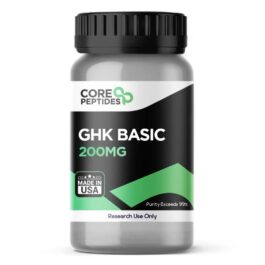
GHK Basic (Tripeptide-1) (200mg)
$184.00$157.00
GHK Basic is a naturally occurring tripeptide with the amino acid sequence glycine-histidine-lysine. Found in plasma, saliva, and other bodily fluids, it's produced by various cell types and has a high affinity for copper. Research suggests that GHK's levels decline with age, potentially contributing to impaired tissue repair and immune function. The peptide is being investigated for its role in regulating numerous biological processes, including wound healing, skin cell function, and its potential antioxidant and anti-inflammatory properties.
Product Information
Specification | Details |
SKU | P-GHK-TP-1 |
Purity | >99% |
Form | Lyophilized powder |
Size | 200 mg |
Contents | GHK Basic (Tripeptide-1) |
Pricing
Quantity | Discount | Price (USD) |
Single Unit | N/A | $157.00 |
5 - 8 | 5% | $149.15 |
9+ | 10% | $141.30 |
Chemical Composition
Specification | Details |
Molecular Formula | C_14H_24N_6O_4 |
Molecular Weight | 340.4 g/mol |
Other Known Titles | Glycyl-L-histidyl-L-lysine, Copper peptide, NSC 379527 |
Research and Clinical Studies
Wound Healing
GHK has been extensively studied for its potential in wound healing. A clinical study on models with diabetic neuropathic ulcers reported that GHK, in its copper-bound form, increased the rate of ulcer closure and reduced the incidence of infections. The researchers noted that the "incidence of ulcer infections was significantly lower (7% incidence compared with 34% for vehicle, p < 0.05) in the plantar ulcers treated immediately after debridement" (1).
Animal studies further support these findings, suggesting that GHK may accelerate wound recovery and the development of granular tissue, which is crucial for repair. This is hypothesized to be linked to increased antioxidant enzyme activity and enhanced vascular development (2). Additional research on ischemic wounds in rats indicated that GHK may lower concentrations of pro-inflammatory markers like TNF-α, MMP-2, and MMP-9, suggesting its potential to mitigate inflammation (3). Dressings enriched with GHK have also been reported to enhance wound recuperation in both typical and diabetic murine models (4).
Skin Cells
GHK is being investigated for its potential to improve the appearance and health of skin. It is hypothesized that the tripeptide sequence of GHK is a natural fragment released during collagen breakdown, which may then signal fibroblasts to synthesize new collagen. This action could play a role in reducing the appearance of skin creasing and wrinkles by stimulating the production of collagen, elastin, and glycosaminoglycans—all vital for skin structure and elasticity (5).
A clinical study reported that GHK appeared to improve collagen production and stimulated dermal keratinocyte proliferation. The study also found an apparent increase in skin thickness and hydration, as well as a smoothing effect on the skin (6). In another study on CO2 laser-resurfaced skin, models receiving GHK regimens reported higher satisfaction with their post-procedure skin quality and experienced improvements in wrinkles (7).
Inflammation and Oxidative Stress
GHK may possess antioxidant and anti-inflammatory characteristics that could protect cells from damage caused by free radicals. The peptide is hypothesized to inactivate free radicals that are by-products of lipid peroxidation and UV-light exposure (8). GHK is also suggested to reduce iron release from ferritin, which acts as a catalyst for lipid peroxidation, thereby potentially reducing inflammation in damaged tissues (9).
In animal models of lung inflammation, GHK appeared to reduce the production of reactive oxygen species and inflammatory cytokines. It is thought to suppress the activation of key signaling pathways, which in turn may reduce the production of inflammatory molecules like TNF-1 and IL-6. This suggests a potential role for GHK in mitigating inflammatory damage in organs like the lungs (10, 11).
Disclaimer: GHK Basic (Tripeptide-1) is available for research and laboratory purposes only.