GHK-Cu (Copper) (50mg)
$49.00 - $28.00
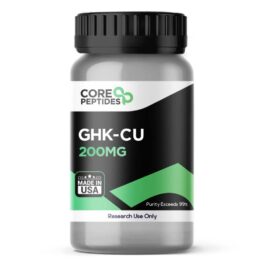
GHK-Cu Product Information
Our GHK-Cu is a high-purity, synthetic peptide available in a 50mg size. Provided as a lyophilized powder with a certified purity of >99%, it is intended for research purposes. The SKU is P-GHKCU-50.
Pricing and Discounts
5-8 units: A 5% discount is applied, with a price of $55.10 per unit.
9+ units: A 10% discount is applied, with a price of $52.20 per unit.
We also offer FREE shipping on all orders over $200.
GHK-Cu is a naturally occurring complex of the tripeptide GHK (glycyl-L-histidyl-L-lysine) and a copper ion. It is found in blood plasma, and its concentration is observed to decline with age. The peptide is being researched for its potential in a wide range of biological processes, including tissue repair, anti-aging, and anti-inflammatory actions.
Key Research Areas 🔬
1. Tissue Repair and Wound Healing
GHK-Cu is a subject of extensive research for its potential role in wound healing and tissue regeneration.
Mechanism: GHK is hypothesized to be released at the site of injury and bind with copper ions. This complex is then posited to stimulate the synthesis of collagen and decorin, proteins crucial for wound healing.
Studies: A study on rabbits with open wounds suggested that GHK-Cu significantly increased healing compared to zinc oxide and placebo. Another study combining GHK-Cu with a helium-neon laser also showed promising results, with the GHK-Cu group exhibiting increased neovascularization (formation of new blood vessels). In a clinical trial on diabetic neuropathic ulcers, a GHK-Cu gel appeared to induce a closure rate of over 98%, far exceeding the placebo group.
2. Anti-aging and Skin Regeneration
The decline of GHK-Cu levels with age has prompted research into its potential anti-aging properties.
Collagen Synthesis: GHK-Cu is posited to stimulate the production of Type I collagen. Studies suggest it may also increase the production of elastin and glycosaminoglycans, which are vital for maintaining skin structure and elasticity.
Skin Appearance: Research on photodamaged skin models has suggested that GHK-Cu may improve skin density, thickness, and elasticity, and reduce the appearance of fine lines and wrinkles. One study suggested that GHK-Cu reduced the depth of wrinkles and improved skin laxity and clarity.
3. Behavioral and Neurological Properties
Some preliminary studies have explored the potential behavioral effects of GHK-Cu in animal models.
Anxiety: In a maze study on rats, the peptide appeared to increase the time the rats spent in "open arms," suggesting a potential reduction in anxiety-like behavior.
Aggression: A study on rats subjected to electric shocks suggested that GHK-Cu reduced the number of aggressive attacks on a second rat by five times compared to a control group.
4. Anti-inflammatory and Antioxidative Potential
GHK-Cu is being researched for its potential to reduce inflammation and oxidative stress.
Oxidative Stress: Studies suggest the peptide may act as an endogenous antioxidant, potentially neutralizing reactive oxygen species like hydroxyl and peroxyl radicals. It is also hypothesized that GHK-Cu may reduce iron release from ferritin, a protein that stores iron, which could help mitigate inflammation and oxidative stress.
Lung Inflammation: A study on mice exposed to cigarette smoke suggested that GHK-Cu may reduce the production of pro-inflammatory cytokines and the activity of myeloperoxidase (MPO), an enzyme that marks inflammation. It is also thought to influence the NF-κB and Nrf2 signaling pathways, which play critical roles in inflammation and cellular defense against oxidative damage.
5. Gene Expression and Metastasis
Some research suggests that GHK-Cu may influence gene expression and potentially suppress the growth of certain cancer cells.
Apoptosis: A study on SH-SY5Y neuroblastoma cells and U937 histiocytic lymphoma cells suggested that GHK-Cu might suppress their growth and reactivate the apoptosis pathway, leading to programmed cell death.
Cell Proliferation: In contrast, a study on non-cancerous cells (NIH-3T3 fibroblasts) suggested that GHK appeared to promote cell growth.
Product Specifications 📊
Molecular Formula: C14H23CuN6O4
Molecular Weight: 340.38 g/mol
Other Known Titles: glycyl-L-histidyl-L-lysine-copper 2+, Cu-GHK, Copper tripeptide-1
Important Notice: GHK-Cu peptide is available for research and laboratory purposes only. It is not intended for human or veterinary use. All information provided is for educational and scientific reference only and has not been evaluated by the FDA or any medical regulatory body.
Support
© 2025. All rights reserved.
WEIGHT LOSS