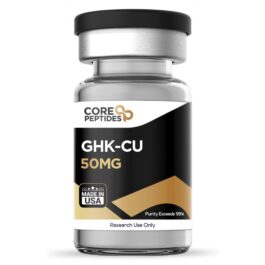
GHK-Cu (Copper) (50mg)
$64.00$58.00
GHK-Cu (Copper) Peptide
GHK-Cu is a naturally occurring complex molecule composed of a tripeptide (glycyl-L-histidyl-L-lysine) bound to a copper ion (Cu2+). This complex is found in plasma, with concentrations declining with age. GHK-Cu is being investigated for its purported ability to restore damaged tissues and support immune response. Research suggests it may play a role in gene expression and exhibit potent antioxidant and anti-inflammatory properties.
Product Specifications
Specification | Details |
SKU | P-GHKCU-50 |
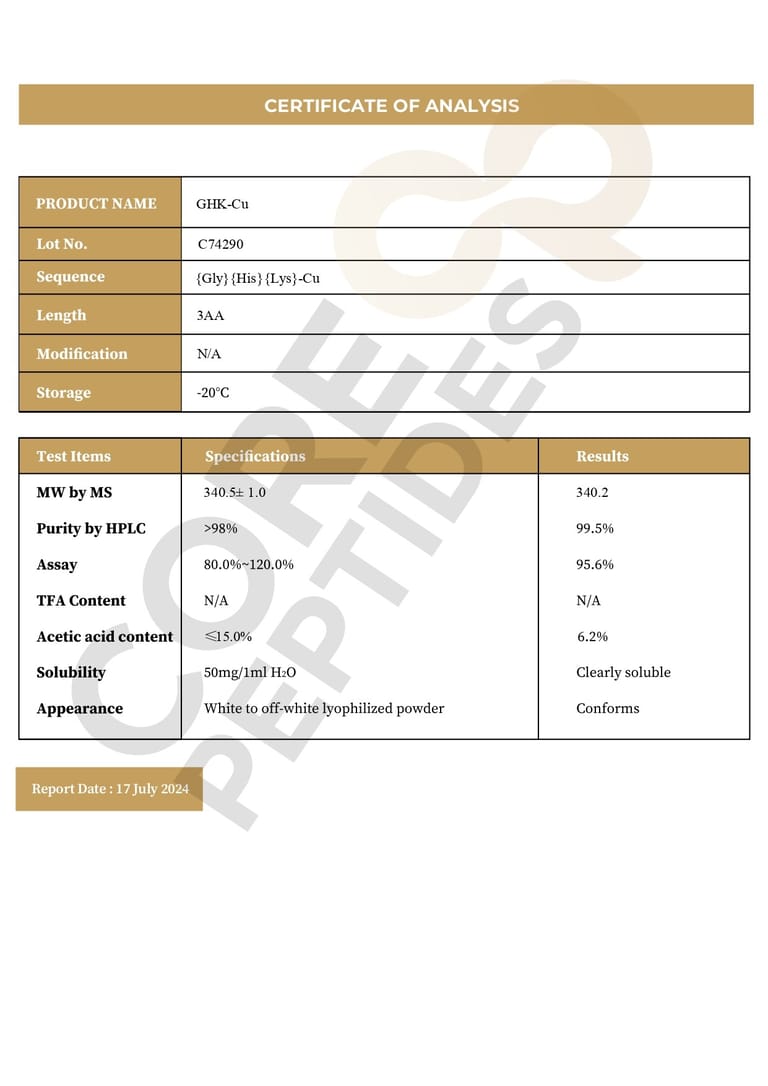
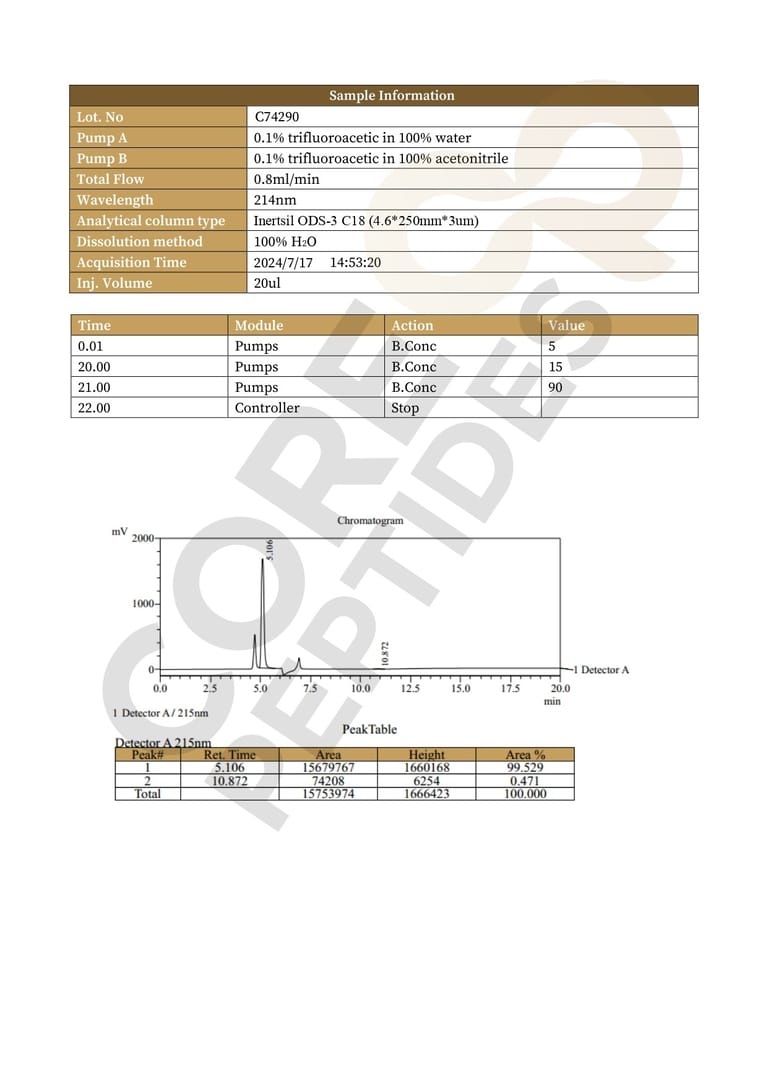
Purity | >99% |
Form | Lyophilized powder |
Size | 50 mg |
Contents | GHK-Cu (50 mg) |
Pricing
Specification | Details |
Original Price | $69.00 |
Current Price | $58.00 |
5 - 8 Units | $55.10 |
9+ Units | $52.20 |
Chemical Makeup
Specification | Details |
Molecular Formula | C_14H_23CuN_6O_4 |
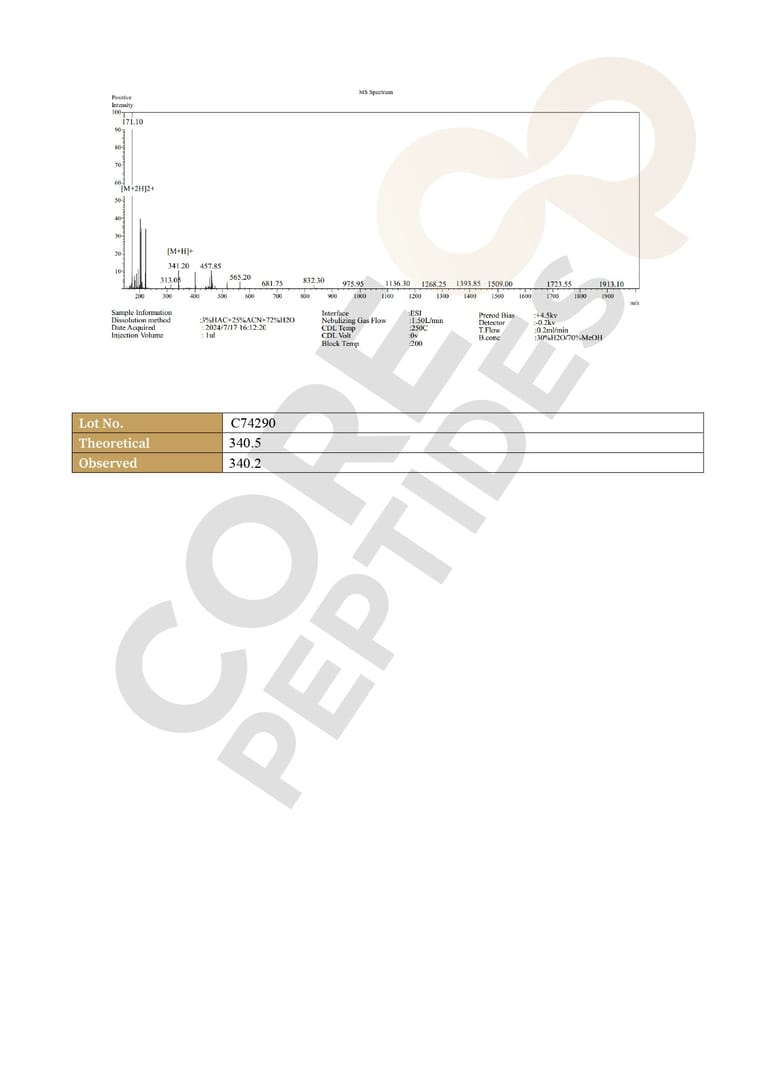
Molecular Weight | 340.38 g/mol |
Other Known Titles | glycyl-L-histidyl-L-lysine-copper 2+, Copper Tripeptide-1 |
Research and Clinical Studies
Tissue Repair & Initial Research
Initial research from the 1980s suggested GHK-Cu's potential in tissue repair. The peptide is believed to host copper ions and stimulate the synthesis of collagen and the accumulation of total proteins and DNA at injury sites. Studies on dermal wounds in rats indicated that GHK-Cu may stimulate the synthesis of decorin, a protein that regulates collagen synthesis and wound healing (6). Further research has suggested that the peptide may also stimulate the production of tissue inhibitors, TIMP-1 and TIMP-2, which help regulate tissue remodeling (7).
In a comparative study, GHK-Cu was applied to open wounds on rabbits and showed increased healing compared to groups treated with zinc oxide or a placebo. The GHK-Cu group also exhibited a reduction in neutrophil counts and an increase in neovascularization (the formation of new blood vessels) (9).
Gene Expression & Metastasis
GHK-Cu is hypothesized to influence gene expression and may have a role in restoring impaired cells. Studies have suggested that the peptide may suppress the growth of certain cancer cell lines in experimental settings. This is believed to be associated with an increase in the expression of caspases and genes related to DNA repair (1). Conversely, in non-cancerous cells, GHK-Cu has appeared to promote the growth of fibroblasts, which are crucial for tissue growth and repair.
Ulcers
A clinical study on diabetic subjects with neuropathic ulcers investigated the efficacy of a GHK-Cu gel. The research reported that the gel appeared to induce closure in over 98% of plantar ulcers, significantly higher than the 60.8% healing rate observed in the control group. The study suggested that GHK-Cu may have potent regenerative potential in the context of chronic wounds (10).
Behavioral Properties
Research suggests GHK-Cu may possess potential behavioral effects. In a study on mice placed on a hot plate, administration of the peptide was reported to reduce the time taken to respond to heat-induced discomfort, potentially suggesting pain mitigation (1). In another study, rats in a maze were reported to spend more time in "open arms" after GHK-Cu administration, a behavior that is often associated with reduced anxiety levels (11).
Antioxidative & Anti-inflammatory Potential
GHK-Cu is being investigated for its ability to mitigate oxidative stress. Research suggests that the peptide may act as an endogenous antioxidant by selectively neutralizing hydroxyl (⋅OH) and peroxyl (ROO$\cdot$) radicals. The peptide is also hypothesized to reduce iron release from ferritin, which can catalyze lipid peroxidation, a process that leads to cell damage (15).
Furthermore, studies on mouse models exposed to cigarette smoke indicated that GHK-Cu may mitigate inflammation by reducing the production of pro-inflammatory cytokines like interleukin-1$\beta$ (IL-1$\beta$) and tumor necrosis factor-α (TNF-α). The peptide is also thought to influence key signaling pathways like NF-κB and Nrf2 to reduce inflammation and enhance cellular antioxidant defenses (14).
Disclaimer: GHK-Cu peptide is designated for research and laboratory purposes only.