GHRP-2 (5mg / 10mg)
$27.00$20.00
GHRP-2, or pralmorelin, is a synthetic pentapeptide. It is being investigated for its potential to stimulate the secretion of growth hormone (GH) by activating ghrelin receptors, also known as growth hormone secretagogue receptors (GHS-Rs). These receptors are found in various parts of the nervous system and other tissues, including the hypothalamus and pituitary gland. Research also suggests GHRP-2 may influence appetite, muscle growth, and have antioxidant and anti-inflammatory properties.
Product Information
Specification | Details |
SKU | P-GHRP2 |
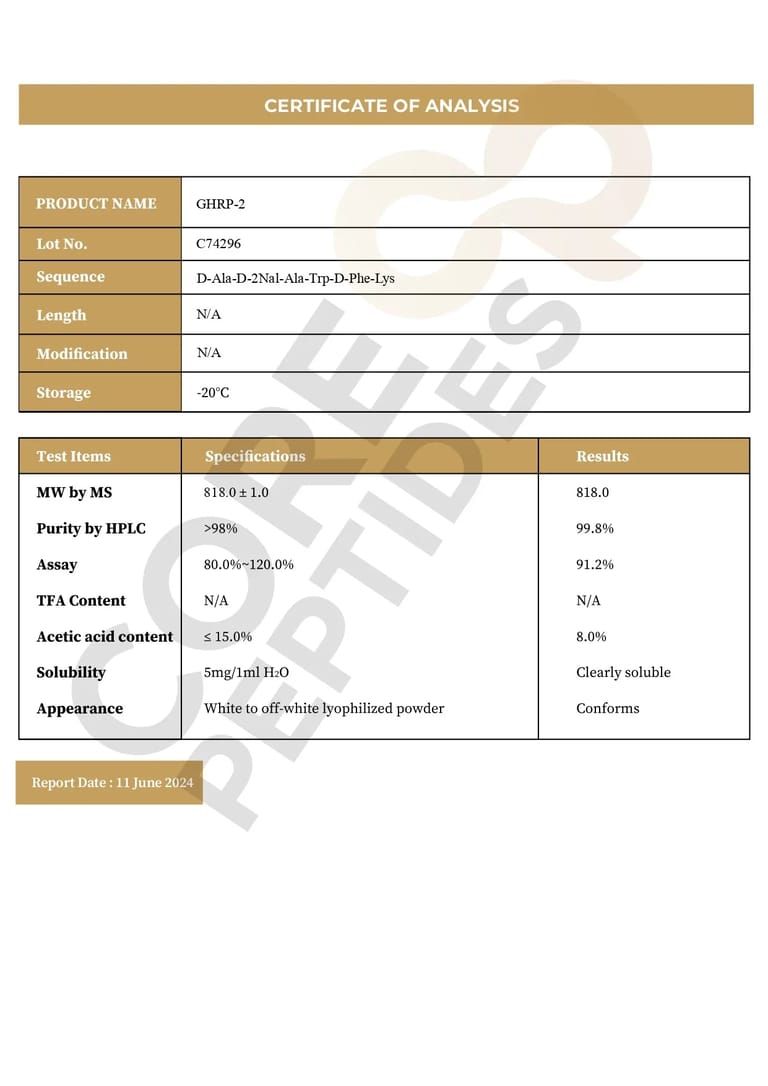
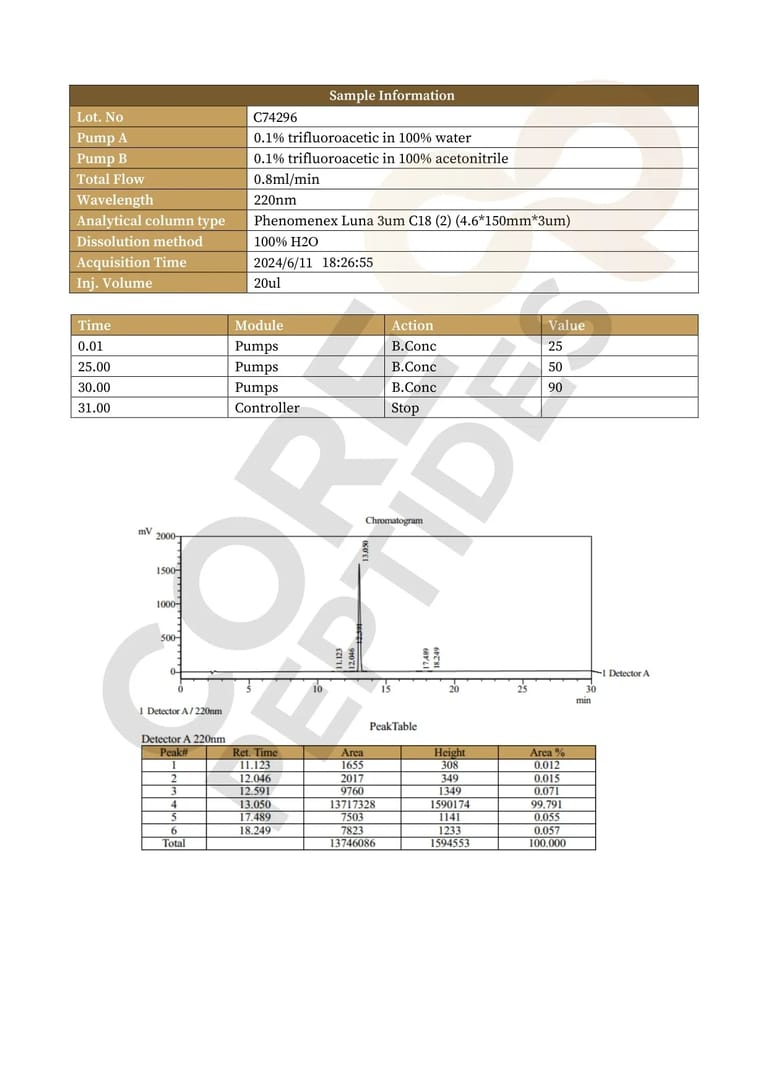
Purity | >99% |
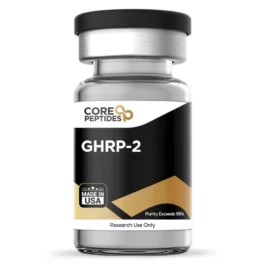
Form | Lyophilized powder |
Size | 5 mg / 10 mg |
Contents | GHRP-2 |
Pricing
Quantity | Discount | Price Range (USD) |
Single Unit | N/A | $20.00 – $29.00 |
5 - 8 | 5% | $19.00 – $27.55 |
9+ | 10% | $18.00 – $26.10 |
Chemical Makeup
Specification | Details |
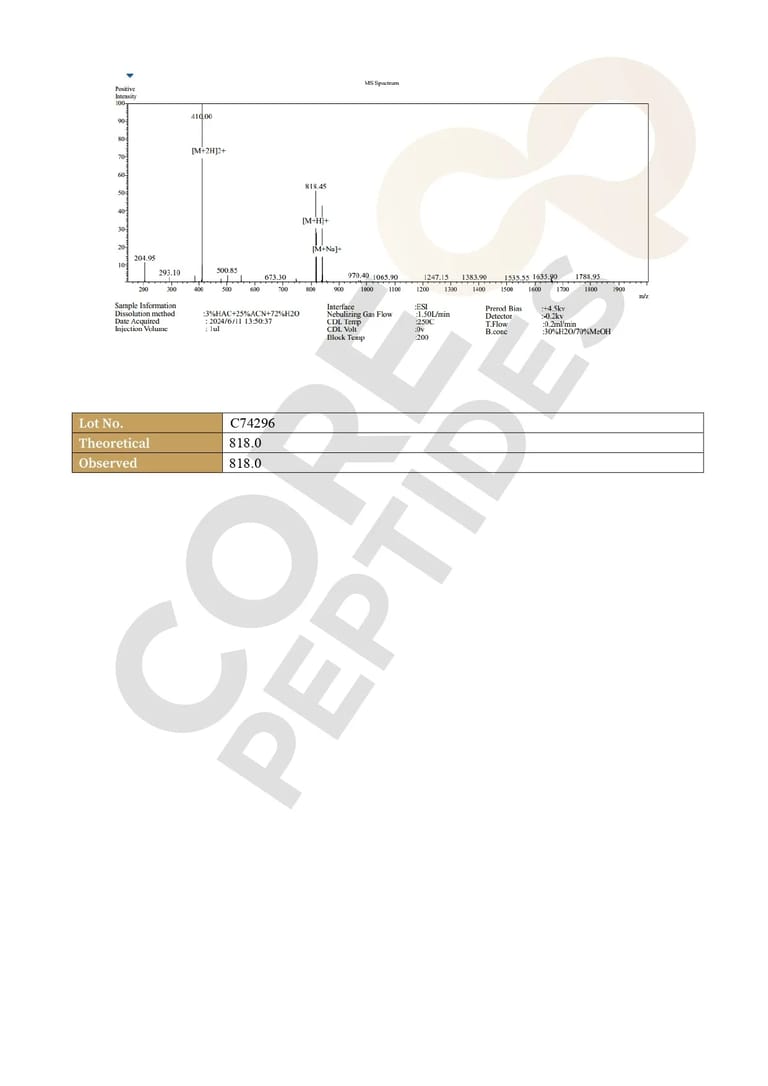
Molecular Formula | C_45H_55N_9O_6 |
Molecular Weight | 817.97 g/mol |
Other Known Titles | pralmorelin |
Research and Clinical Studies
Growth Hormone Synthesis
GHRP-2 is a potent GH secretagogue. Studies have reported that exposure to GHRP-2 in laboratory settings may induce a significant increase in GH levels:
In one trial, GHRP-2 was suggested to induce up to a 181-fold higher spike in GH production by anterior pituitary gland cells (17).
Another experiment posited that the peptide may induce a 47-fold increase in mean pulsatile GH secretion (18).
A trial on prolonged exposure reported that the peptide may increase GH levels by 3-fold to 5-fold, and IGF-1 levels from an average of 100mcg/l to around 180mcg/l (19).
These effects are believed to be mediated by the activation of ghrelin receptors, which triggers an intracellular signaling cascade involving G-proteins, phospholipase C, and calcium ions.
Appetite & Body Composition
Research suggests that GHRP-2 may increase food intake. In one study, models exposed to GHRP-2 reportedly ate an average of 36% more than the saline group, with an increased energy intake per kilogram of body weight (2). This is believed to be a result of the peptide's activation of GHS-Rs on the nervous system, which may enhance the synthesis of hunger-promoting peptides like Neuropeptide Y (NPY).
Furthermore, studies on murine models of thermal injury suggest that GHRP-2 may help reduce muscle wasting by decreasing inflammatory markers and inhibiting muscle protein breakdown (20). Case studies have also suggested the peptide's potential to induce muscle and weight gain (21).
Antioxidative & Anti-inflammatory Actions
GHRP-2 has been investigated for its potential to exert antioxidative and anti-inflammatory effects. Studies indicate the peptide may have an affinity for the CD36 receptor, potentially limiting the cellular absorption of oxidized low-density lipoprotein (OxLDL), which is implicated in atherogenic processes (15). In a study on mice, GHRP-2 exposure appeared to elevate circulating IGF-I levels and reduce levels of interferon-gamma.
In a study on murine models with induced acute lung injury, GHRP-2 was suggested to reduce lung edema, neutrophil infiltration, and levels of pro-inflammatory cytokines. The peptide was also posited to suppress nuclear factor-kappaB (NF-κB) activation, a key mediator of inflammation (16).
Diagnostic Use
Studies have explored the potential of GHRP-2 as a diagnostic tool for GH deficiency. A study found that GHRP-2 administration consistently induced a GH peak in models, suggesting its potential as a diagnostic resource for GH deficiency, possibly as an alternative to the insulin tolerance test (ITT) (8). Another study on still-developing models of GHD reported that GHRP-2 alone and in combination with GHRH showed a positive response in GH levels (9).
Combination Studies
Research has also investigated the effects of GHRP-2 in combination with other hormones. A study on models with prolonged hormonal deficiencies found that a combination of GHRP-2, Thyrotropin-releasing hormone (TRH), and Gonadotropin-releasing hormone (GnRH) appeared to induce the greatest activation of hormones along the growth hormone, thyroid-stimulating hormone, and luteinizing hormone axes compared to GHRP-2 alone or with only TRH (10).
Disclaimer: GHRP-2 peptide is available for research and laboratory purposes only.