GHRP-6 (5mg / 10mg)
$27.00$20.00
GHRP-6, or Growth Hormone Releasing Peptide-6, is a synthetic hexapeptide being investigated for its potential to stimulate the secretion and regulation of growth hormone (GH). It is an analog of met-enkephalin but is thought to lack opioid activity. Instead, it appears to act as a growth hormone secretagogue (GHS) by binding to ghrelin receptors (GHS-Rs), which are believed to influence metabolism, appetite, and GH release. Research suggests that GHRP-6's action may depend on the presence of endogenous GH-releasing hormone (GHRH) and that it may have additional effects on inflammation and tissue repair.
Product Information
Specification | Details |
SKU | P-GHRP6 |
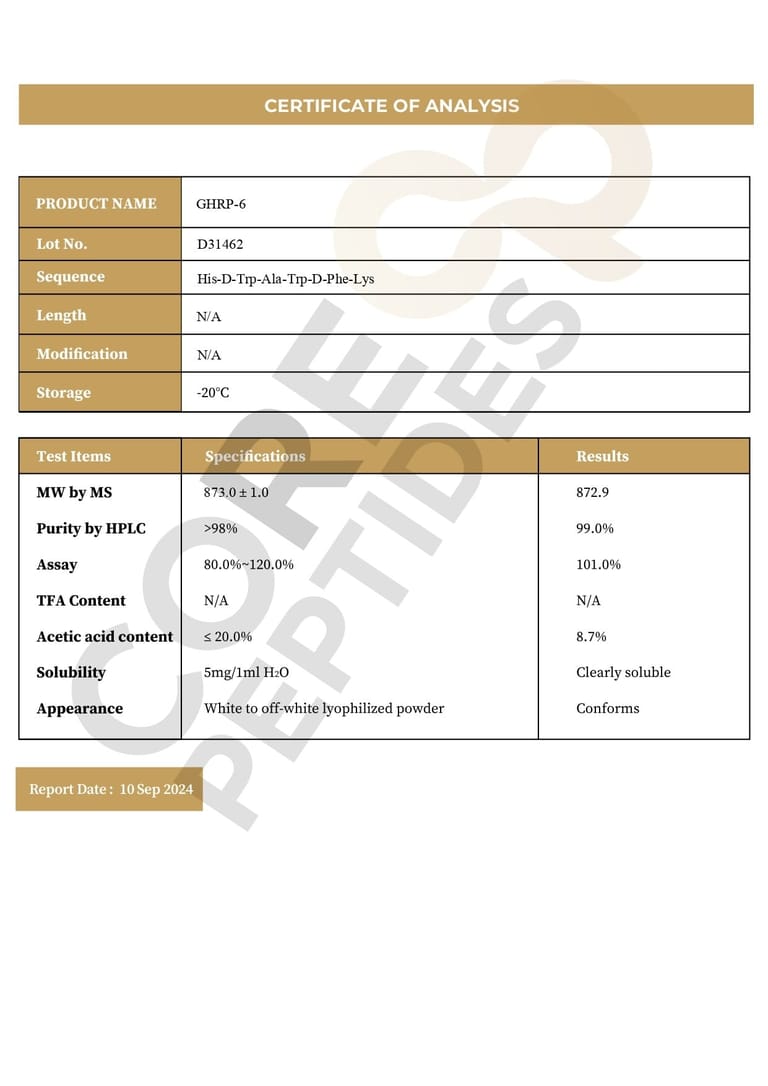
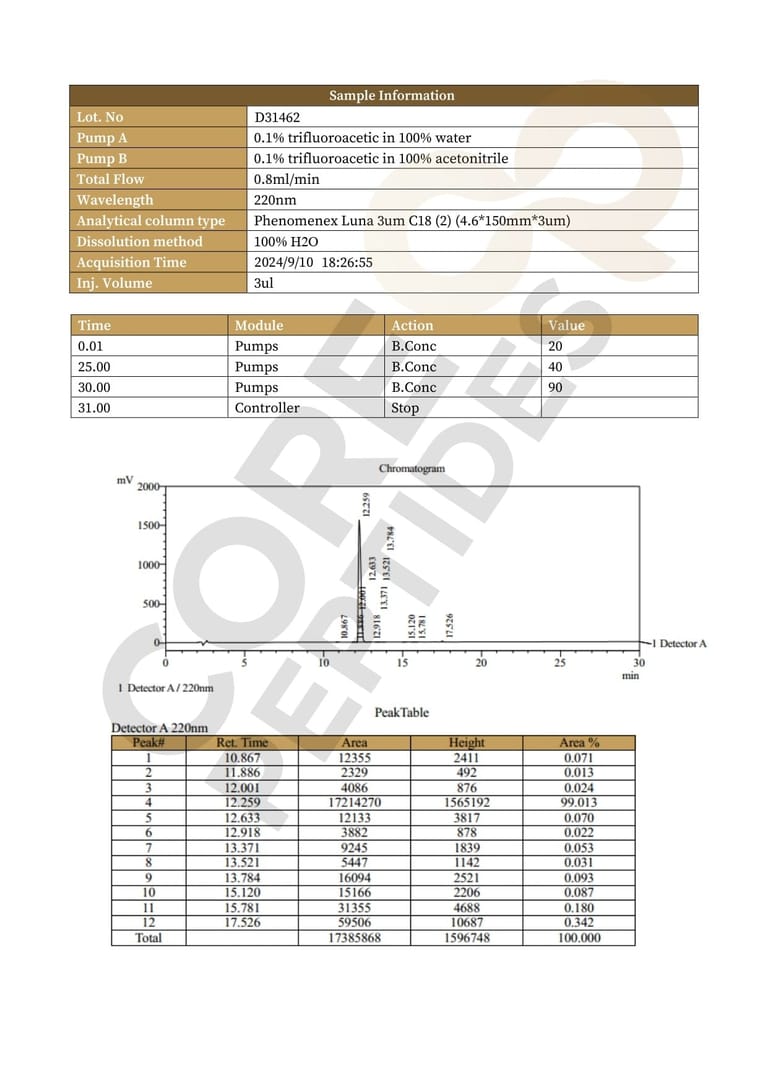
Purity | >99% |
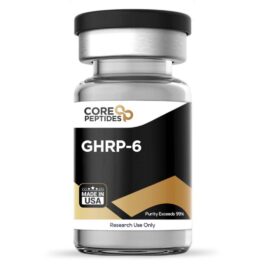
Form | Lyophilized powder |
Size | 5 mg / 10 mg |
Contents | GHRP-6 |
Pricing
Quantity | Discount | Price Range (USD) |
Single Unit | N/A | $20.00 – $29.00 |
5 - 8 | 5% | $19.00 – $27.55 |
9+ | 10% | $18.00 – $26.10 |
Chemical Makeup
Specification | Details |
Molecular Formula | C_46H_56N_12O_6 |
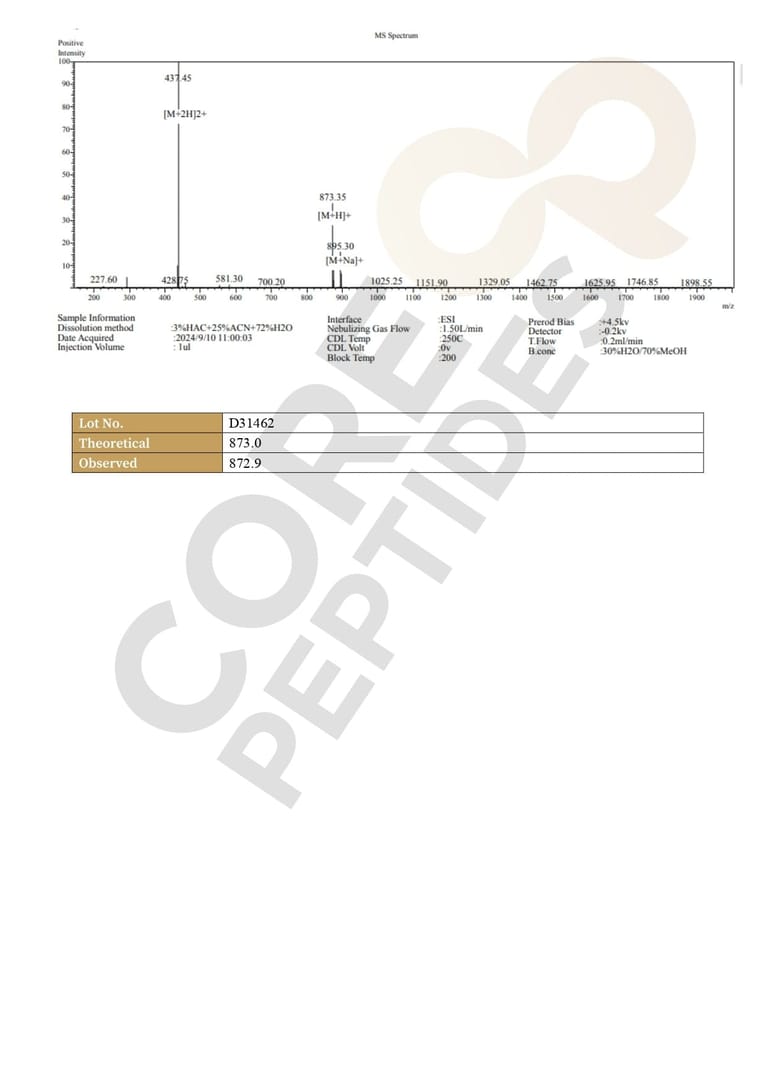
Molecular Weight | 873.03 g/mol |
Other Known Titles | Growth Hormone Releasing Peptide-6 |
Research and Clinical Studies
Growth Hormone Synthesis
Research suggests that GHRP-6 may work in synergy with endogenous GHRH to produce its effects. Studies indicate that GHRP-6 alone can stimulate GH release, but its action is significantly enhanced when GHRH is present. A study on models with hypothalamic-pituitary disconnection found that GHRP-6's effect on GH levels was reduced, suggesting that its primary action may be on the hypothalamic-pituitary axis (5).
In hypothyroidism, which is often characterized by reduced GH secretion, studies on animal models showed that GHRP-6 alone or in combination with GHRH appeared to induce significantly higher GH levels compared to GHRH alone. This is possibly due to GHRP-6's potential to act as a functional antagonist of somatostatin, a hormone that inhibits GH release (7).
Organ Function & Tissue Recovery
GHRP-6 is being investigated for its potential role in organ protection and tissue repair. A study on models of injury and multiple organ failure suggested that GHRP-6 may protect against severe hepatic and intestinal damage and lipid peroxidation, potentially reducing this damage by 50-85% (9).
Preclinical studies have also suggested that GHRP-6 may promote faster wound healing and reduce hypertrophic scar formation by lessening inflammation and the expression of fibrotic cytokines (16, 17). Additionally, in a study on liver fibrosis, GHRP-6 was associated with a potential decrease in fibrosis and a reduction in fibrogenic factors (18).
GI Transit & Appetite
Research on diabetic mouse models suggests that GHRP-6 may have a potential role in regulating gastrointestinal (GI) transit. In models with delayed GI transit induced by diabetes, GHRP-6 administration was reported to improve gastric emptying and intestinal transit (10). GHRP-6's interaction with ghrelin receptors may also influence appetite, as ghrelin is often referred to as the "hunger hormone."
Neuroprotection & Muscle Tissue
GHRP-6 has been associated with the potential for neuroprotection and muscle tissue support. Research suggests the peptide may elevate IGF-1 mRNA levels in specific brain regions, potentially initiating cellular survival pathways and protecting against apoptosis (12). This effect may be linked to its potential to enhance IGF-1 production, which is a key mediator of GH's growth-promoting actions.
Some studies indicate that GHRP-6 may have anabolic capabilities. An experiment with cultured myoblast cells suggested that the peptide may enhance the production of myogenic marker proteins and IGF-1, which are critical for muscle tissue development (13). Another study reported that GHRP-6 stimulation elicited a GH secretion peak significantly higher than a physiological GHRH stimulation (14, 15).
Disclaimer: GHRP-6 peptide is available for research and laboratory purposes only.