Gonadorelin (GnRH) (10mg)
$97.00$90.00
Gonadorelin is a synthetic peptide that mimics the natural hormone gonadotropin-releasing hormone (GnRH). It is primarily being investigated for its potential role in regulating the hypothalamic-pituitary-gonadal (HPG) axis by stimulating the release of luteinizing hormone (LH) and follicle-stimulating hormone (FSH) from the pituitary gland. Research suggests that while acute exposure may stimulate gonadotropin release, prolonged or excessive exposure can lead to downregulation of GnRH receptors, which may reversibly inhibit hormone production.
Product Information
Specification | Details |
SKU | P-GONADRLN-10 |
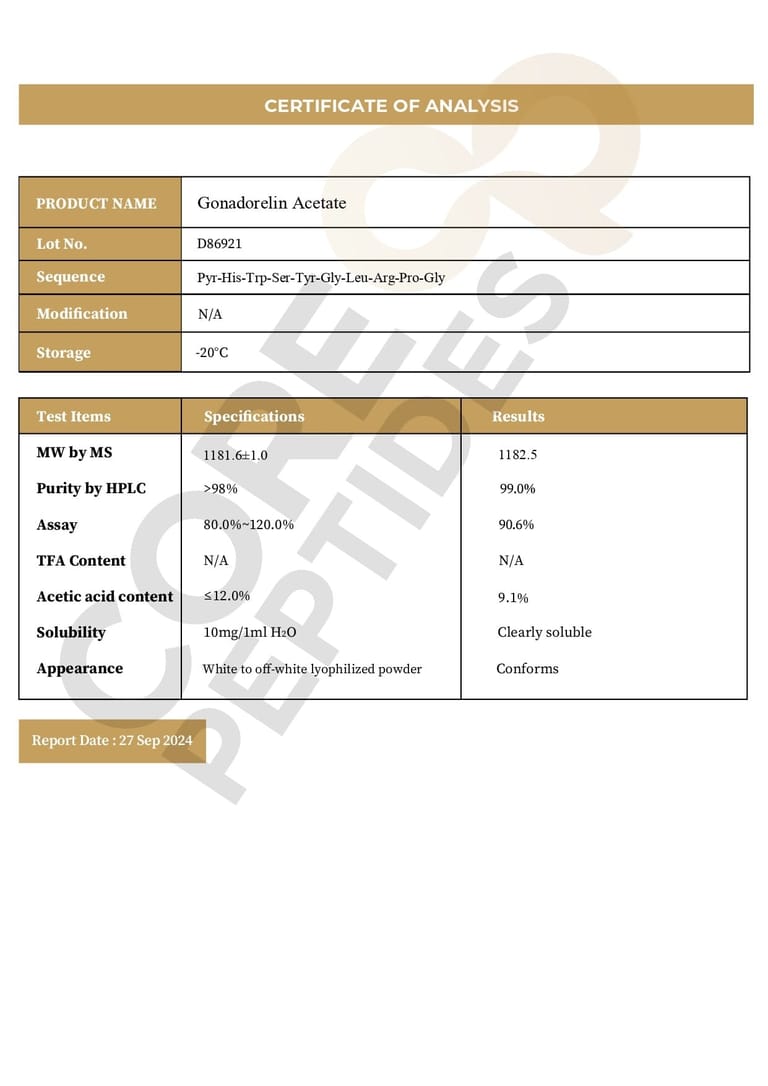
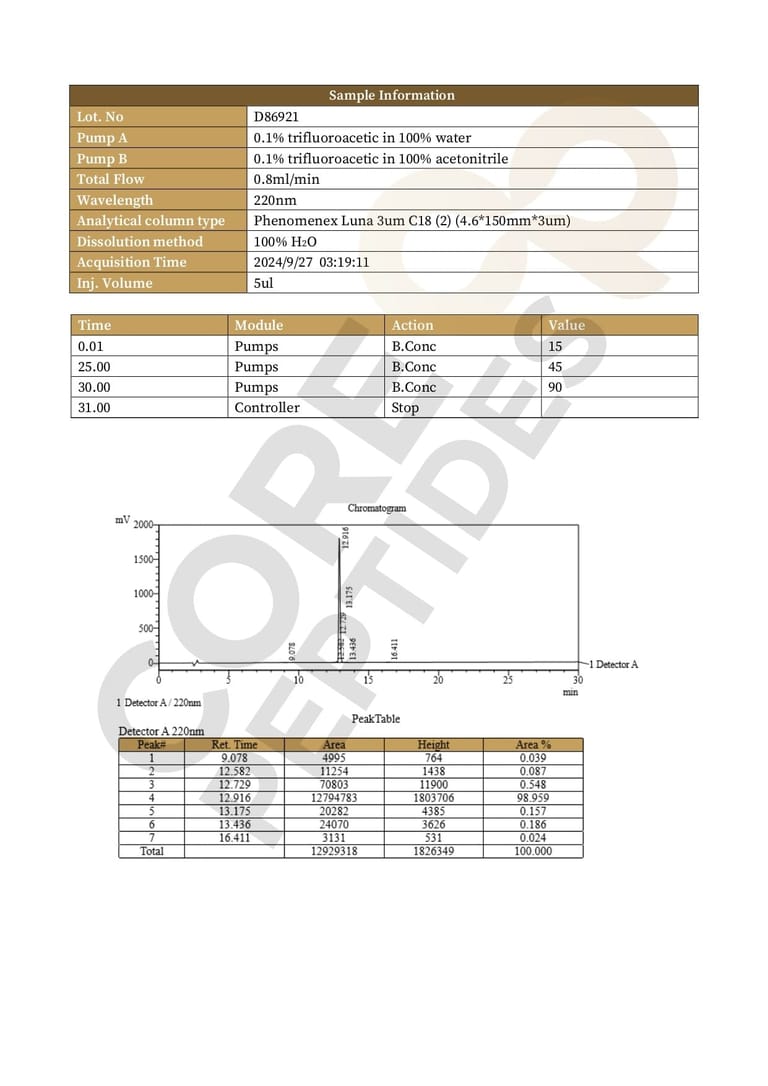
Purity | >99% |
Form | Lyophilized powder |
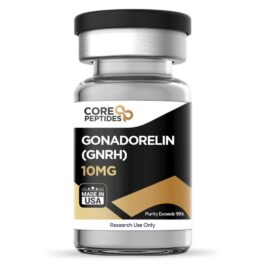
Size | 10 mg |
Contents | Gonadorelin (10 mg) |
Pricing
Quantity | Discount | Price (USD) |
Single Unit | N/A | $90.00 |
5 - 8 | 5% | $85.50 |
9+ | 10% | $81.00 |
Chemical Makeup
Specification | Details |
Molecular Formula | C_55H_75N_17O_13 |
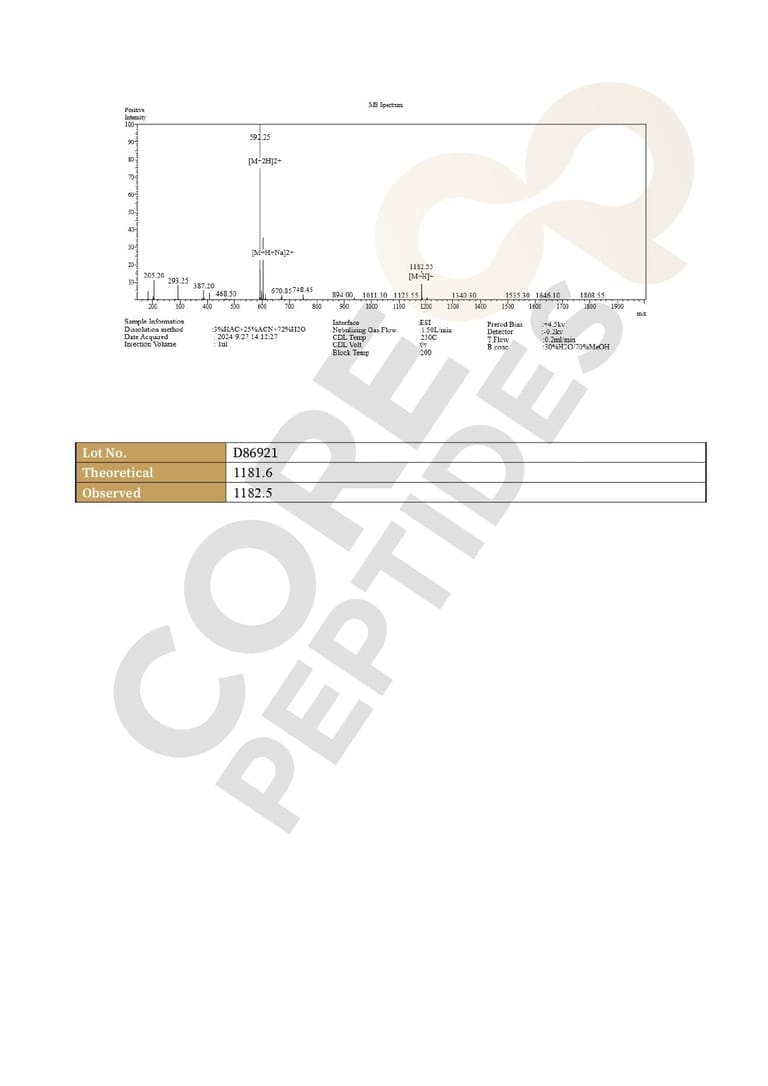
Molecular Weight | 1182.31 g/mol |
Other Known Titles | Growth Hormone Releasing Factor, Somatocrinin, Somatoliberin |
Research and Clinical Studies
Endocrine Function & Post-Cycle Recovery
Gonadorelin is being investigated for its potential to restore the function of the HPG axis, which can be suppressed by exposure to exogenous androgens. A study reported that short-term Gonadorelin exposure in models with suppressed hormone levels appeared to increase LH, FSH, and endogenous testosterone, with these improvements reportedly sustained for over 12 months (5). Research on models with hypothalamic dysfunction also suggests that intermittent exposure to Gonadorelin may "kick-start" the HPG axis, ultimately leading to successful spermatogenesis (6, 7).
Cancer & Cell Proliferation
Research suggests that GnRH agonists like Gonadorelin may have potential as an anti-carcinogenic agent. By downregulating GnRH receptors after prolonged exposure, the peptide may lead to a decline in the production of testosterone and dihydrotestosterone. This is being explored as a potential mechanism to inhibit the proliferation of cancer cells that are dependent on these hormone levels, such as those found in the prostate and breast (10, 11).
Reproductive Function & Diagnostics
Gonadorelin is also being explored for its potential in diagnostics and managing reproductive health. A clinical study on female subjects with amenorrhea and those in the follicular phase of their menstrual cycle suggested that Gonadorelin may induce the secretion of gonadotropins, and this action appears to be dependent on the functioning of the hypothalamic and pituitary axis (14).
Furthermore, a clinical trial suggested that daily administration of a GnRH analog, when combined with testosterone, may lead to a significant, but reversible, reduction in sperm count, even causing azoospermia in some models. This indicates a potential as a temporary contraceptive (12). Gonadorelin is also being investigated for its potential to facilitate the descent of testes, with one study reporting a success rate of approximately 40% (8).
Neuroprotection
Research has suggested that high levels of luteinizing hormone may be linked to neurological dysfunction in certain brain areas, particularly the hippocampus. Scientists hypothesize that mitigating the production of LH through GnRH analogs like Gonadorelin could have a neuroprotective effect. However, as testosterone also plays a role in brain function, a selective inhibitory action on LH, rather than the entire gonadal axis, may be more beneficial (13).
Disclaimer: Gonadorelin peptide is available for research and laboratory purposes only.