Humanin (10mg) $147.00
$162.00$147.00
Humanin is a short, natural peptide primarily synthesized in the mitochondria. It is being investigated for its potential role in regulating cell metabolism and inflammation. Research suggests that the peptide may exhibit cytoprotective and neuroprotective functions by binding to specific intracellular molecules and receptors, such as the Bcl-2-associated X protein (Bax), which is involved in apoptosis. Humanin's length can vary depending on its synthesis location, with a 21-amino acid form derived from within the mitochondria and a 24-amino acid form from the cytosol.
Product Information
Specification | Details |
SKU | P-HUMANIN-10 |
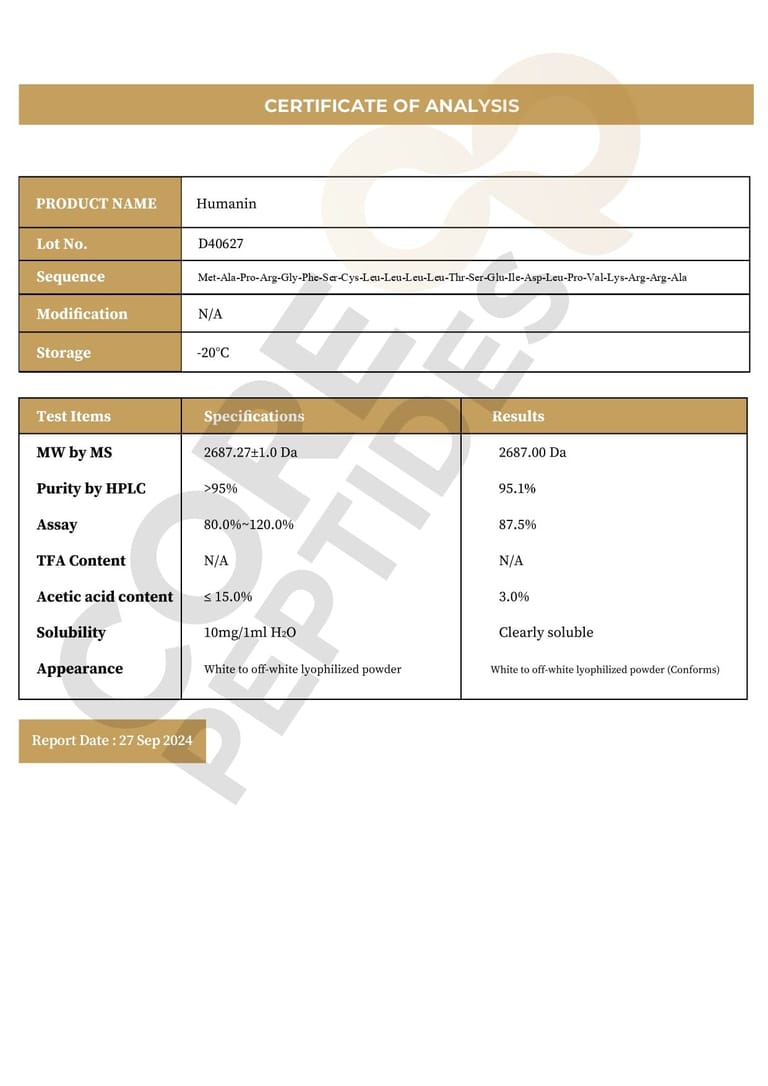
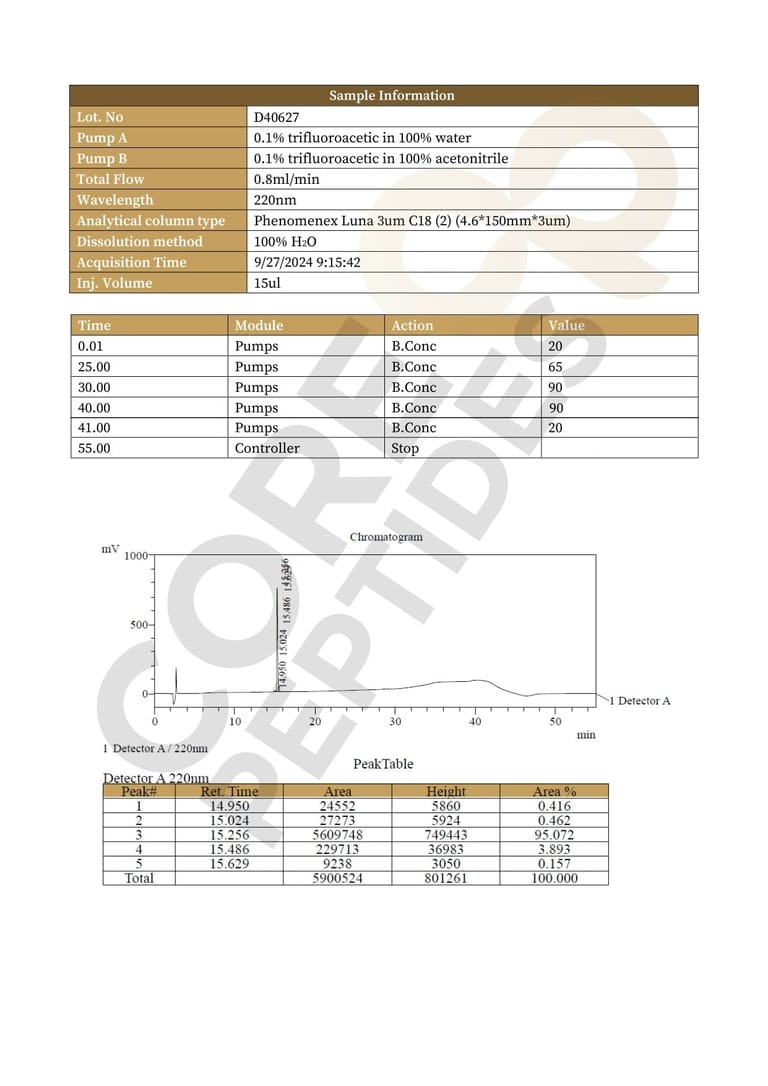
Purity | >99% |
Form | Lyophilized powder |
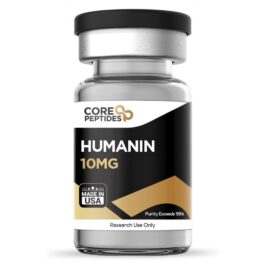
Size | 10 mg |
Contents | Humanin (10 mg) |
Pricing
Quantity | Discount | Price (USD) |
Single Unit | N/A | $147.00 |
5 - 8 | 5% | $139.65 |
9+ | 10% | $132.30 |
Chemical Makeup
Specification | Details |
Molecular Formula | C_119H_204N_34O_32S_2 |
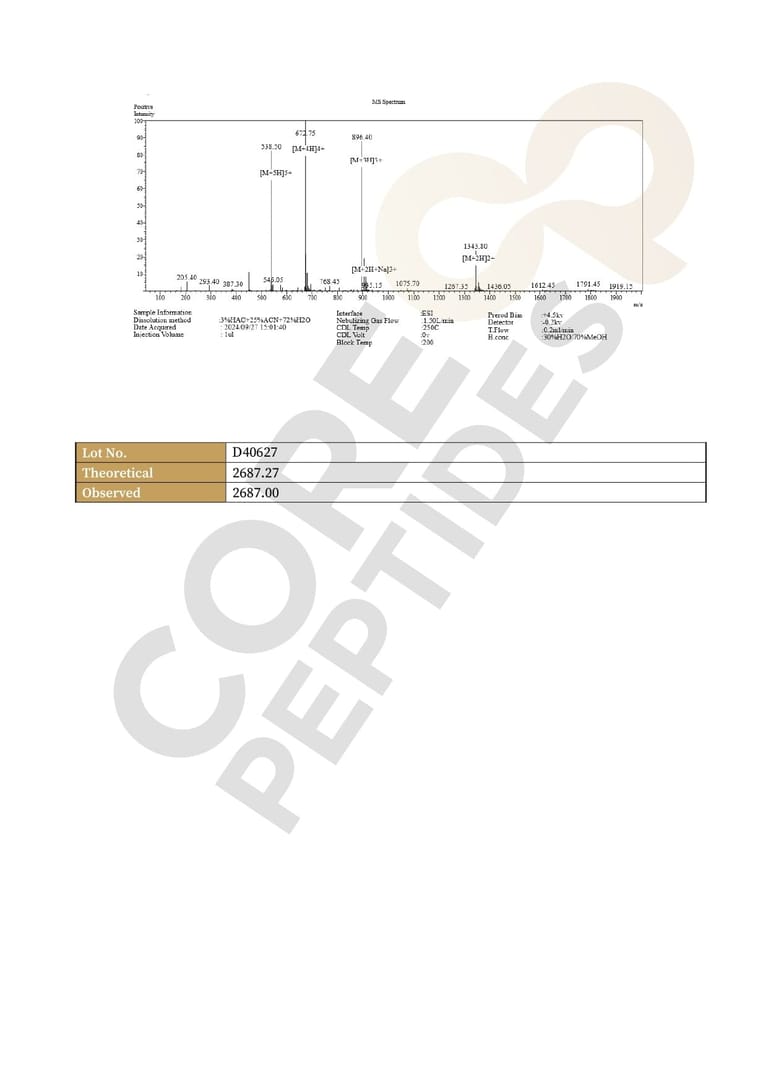
Molecular Weight | 2687.3 g/mol |
Other Known Titles | HNGF6A protein |
Research and Clinical Studies
Mitochondrial Function & Cellular Longevity
Humanin is being investigated for its potential to protect mitochondria from reactive oxygen species (ROS) and mitigate their degeneration (10). Studies on murine models have suggested a potential correlation between Humanin levels and cellular longevity. Models with very low levels of growth hormone (GH) and insulin-like growth factor-1 (IGF-1) reportedly had a 40% increase in Humanin and an increased lifespan, while those with high GH/IGF-1 had low Humanin levels and reduced lifespan. This suggests that Humanin may be inversely correlated with GH and IGF-1 levels (11).
Neurological Deterioration
Humanin is being researched for its potential neuroprotective properties. A study on murine models with high levels of amyloid proteins showed that those presented with Humanin for three months exhibited improved learning and enhanced memory compared to placebo models (12). In another study, the peptide appeared to protect cortical neurons from neurotoxic damage by preserving cell viability and inhibiting the over-phosphorylation of tau proteins at specific sites (14).
Insulin Resistance
Studies have explored Humanin's potential to influence insulin resistance. In non-obese diabetic murine models, the peptide appeared to restore glucose tolerance within six weeks and delayed the onset of diabetes (15). A study on models fed a high-fat diet reported that Humanin exposure appeared to reduce weight gain by about 20% despite no change in food intake. This was associated with an apparent increase in energy expenditure and improved glucose and insulin levels (16).
Hypoxia & Ischemia
Humanin is being investigated for its potential to protect against damage from hypoxia and ischemia. In a study on isolated retinal cells, Humanin exposure appeared to reverse the impact of chemically induced hypoxia and protect the cells from low oxygen levels (18).
Additional studies on cerebral ischemia in murine models suggested that continual administration of Humanin may reduce the size of the ischemic volume by almost 30% (20). Another study reported that Humanin significantly reduced infarct size in a large animal model by 41% when administered shortly after an ischemic period (21).
Additional Studies
Humanin is also being explored for its potential to exhibit an anxiolytic effect by binding with the FPR2 receptor in the brain (22). Furthermore, in a study on murine carcinogenesis models, Humanin appeared to reverse the apoptosis of healthy cells induced by an antineoplastic agent, suggesting a potential cytoprotective role (23).
Disclaimer: Humanin peptide is available for research and laboratory purposes only.