
Kisspeptin-10 (10mg)
$49.00 $33.00
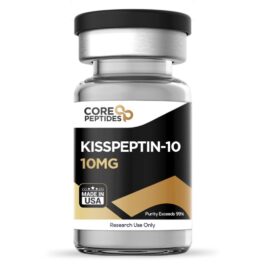
Kisspeptin-10 Product Information
Our Kisspeptin-10 is a high-purity, synthetic peptide available in a 10mg size. Provided as a lyophilized powder with a certified purity of >99%, it is intended for research purposes. The SKU is P-KISSPEPT-10.
Pricing and Discounts
5-8 units: Get a 5% discount at $59.85 per unit.
9+ units: Enjoy a 10% discount at $56.70 per unit.
We also offer FREE shipping on all orders over $200.
Sources
Kisspeptin-10 is a naturally occurring peptide encoded by the KISS1 gene. It is a fragment of a larger protein and is the subject of research for its potential role in regulating the reproductive system and other bodily functions. It's considered a ligand for the G-protein coupled receptor 54 (GPR54), also known as the KISS1 receptor, and may activate the reproductive axis.
Key Research Areas 🔬
1. Reproductive System
Kisspeptin-10 is primarily studied for its potential to stimulate the release of hormones that regulate reproduction.
Mechanism: The peptide is hypothesized to work by binding to GPR54 receptors on the hypothalamus and pituitary gland. This action may lead to the stimulation of GnRH (Gonadotropin-Releasing Hormone) and gonadotropin neurons, potentially resulting in the release of FSH (Follicle-Stimulating Hormone) and LH (Luteinizing Hormone).
Licensed by Google
Studies: A literature review suggested that the Kisspeptin-10 system may regulate gonadotropin hormone release, and that abnormalities in this system may be linked to reproductive disorders like hypogonadotropic hypogonadism (HH) and polycystic ovarian syndrome (PCOS). One study on models with delayed hormonal development showed that Kisspeptin-10 exposure led to increased levels of LH in almost half of the group.
2. Emotional and Behavioral Modulation
Limbic Brain Activity: A study using neuroimaging suggested that Kisspeptin-10 may lead to enhanced activity in the limbic brain, a region involved in emotions and motivation. This was observed through an increased response to sexual and bonding stimuli.
3. Food Intake and Metabolism
Appetite Regulation: Due to its presence in brain regions that regulate food intake, Kisspeptin-10 has been studied for its potential effects on appetite. An experiment on male mice suggested that the peptide may decrease meal frequency and total meal time, but not meal size.
Metabolic Impact: A study comparing control mice with those having impaired Kisspeptin systems found that the impaired female mice had significant increases in body weight and impaired glucose tolerance, suggesting a potential role for the peptide in metabolism and energy balance.
4. Neuroprotection
Mechanism: Kisspeptin-10 is being researched for its potential to protect against neurological damage. It is hypothesized to bind to and counteract the damaging actions of proteins like amyloid-beta (Aβ) and alpha-synuclein (α-syn), which are associated with neurodegenerative diseases.
Studies: Research on cholinergic cells suggested that lower concentrations of Kisspeptin-10 may decrease the toxicity induced by both wild-type and mutant forms of α-syn, and that this protective action may not require the activation of the GPR54 receptor.
Product Specifications 📊
Molecular Formula: C63H83N17O14
Molecular Weight: 1302.4 g/mol
Other Known Titles: Kisspeptin 45-54
Important Notice: Kisspeptin-10 peptide is available for research and laboratory purposes only. It is not intended for human or veterinary use. All information provided is for educational and scientific reference only and has not been evaluated by the FDA or any medical regulatory body.
Support
© 2025. All rights reserved.
WEIGHT LOSS