Kisspeptin-10 (10mg)
$69.00$63.00
Kisspeptin-10 is a naturally occurring peptide encoded by the KISS1 gene. It is a cleaved fragment of a larger polypeptide, and its primary function is being investigated as a key regulator of the reproductive system. Kisspeptin-10 is a ligand for the GPR54 receptor (KISS1R), and its action is being explored for its potential to modulate the hypothalamic-pituitary-gonadal (HPG) axis by stimulating the release of GnRH and gonadotropins like FSH and LH.
Product Information
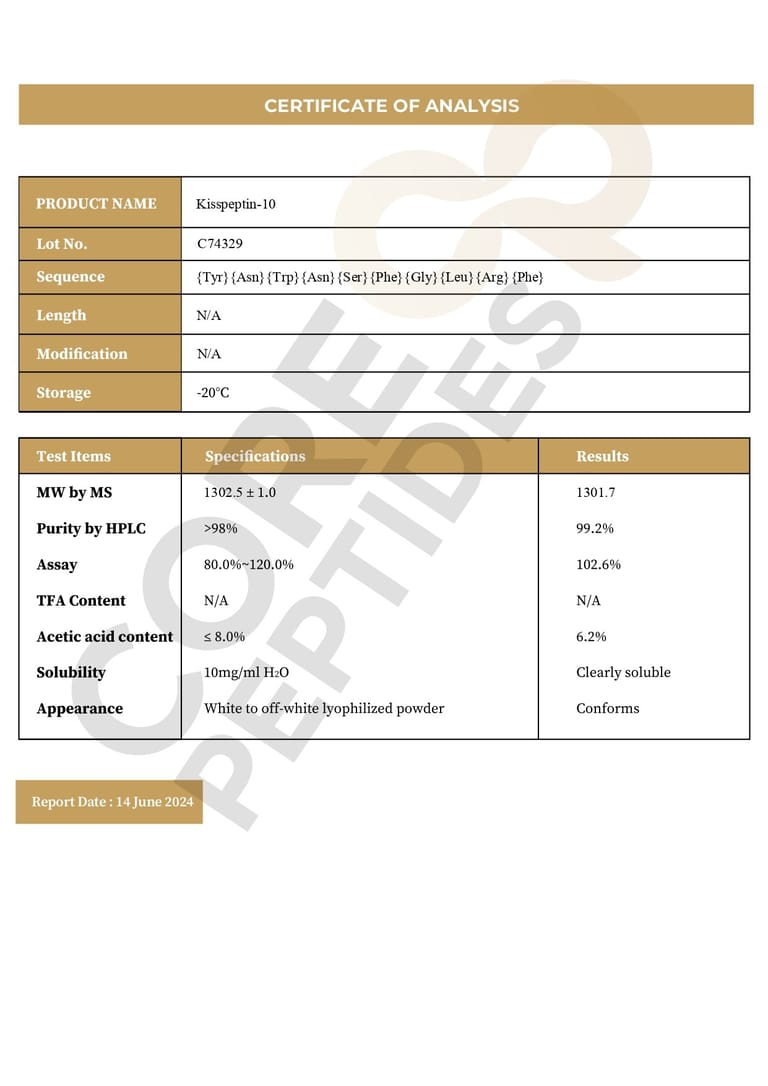
Specification | Details |
SKU | P-KISSPEPT-10 |
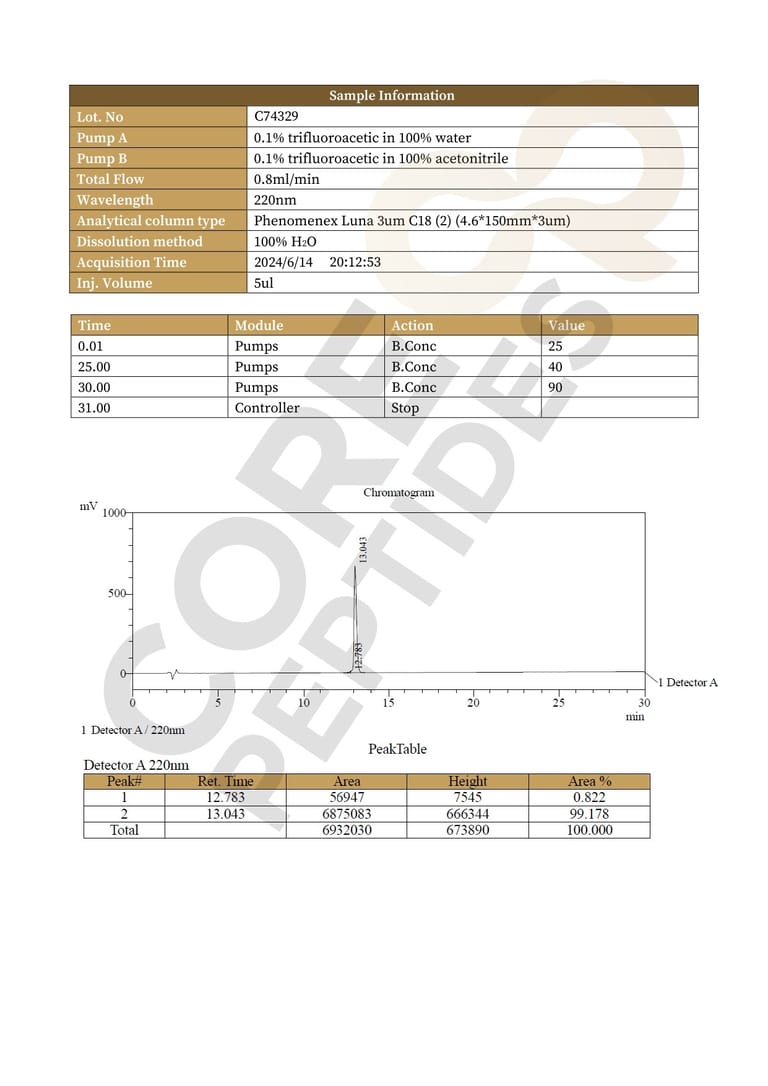
Purity | >99% |
Form | Lyophilized powder |
Size | 10 mg |
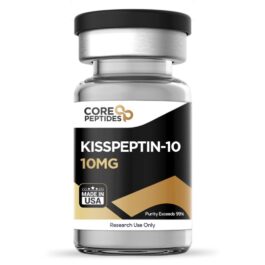
Contents | Kisspeptin-10 (10 mg) |
Pricing
Quantity | Discount | Price (USD) |
Single Unit | N/A | $63.00 |
5 - 8 | 5% | $59.85 |
9+ | 10% | $56.70 |
Chemical Makeup
Specification | Details |
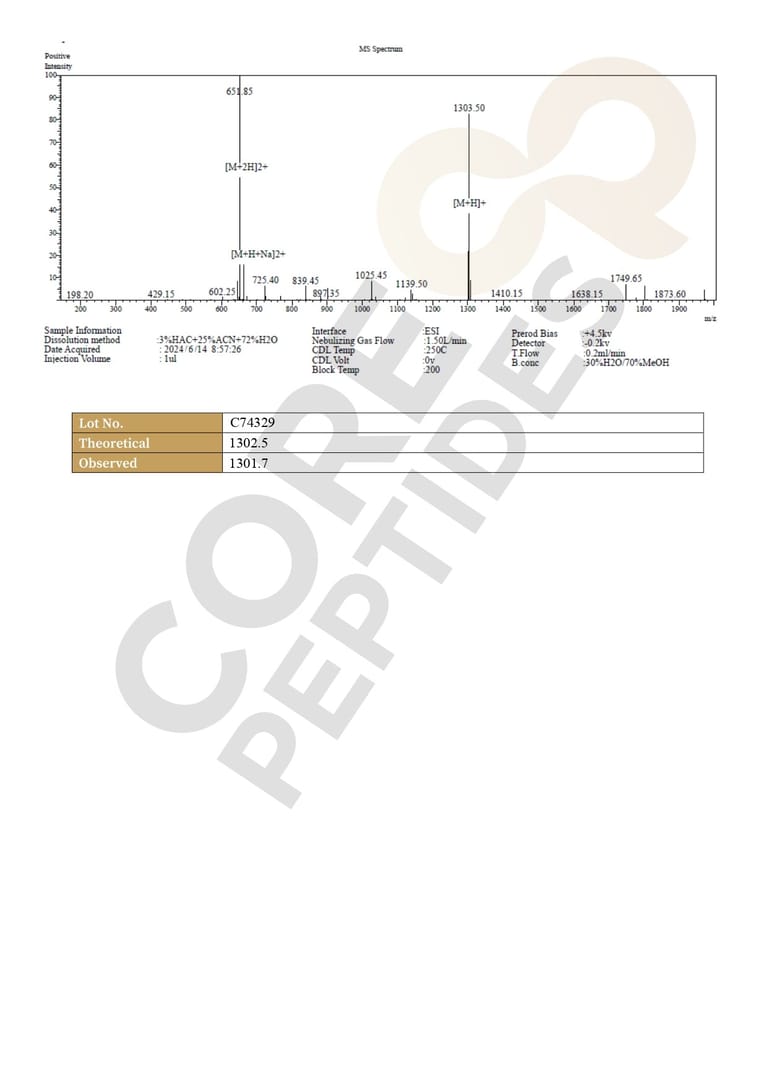
Molecular Formula | C_63H_83N_17O_14 |
Molecular Weight | 1302.4 g/mol |
Other Known Titles | Kisspeptin 45-54 |
Research and Clinical Studies
Reproduction & Hormonal Development
Kisspeptin-10 is being researched for its potential to stimulate reproductive hormone release. Studies on animal models with characteristics of hypogonadotropic hypogonadism (HH) and polycystic ovarian syndrome (PCOS) suggest that these conditions may be linked to abnormalities in the Kisspeptin-10 system (10). A study on models with stunted development reported that exposure to Kisspeptin-10 resulted in increased levels of LH hormone in 47% of the subjects, suggesting its potential to regulate the reproductive system (13). Research on male models showed increased FSH and LH levels, while in females, these hormones were elevated specifically during the preovulatory phase of the menstrual cycle (15).
Food Intake & Metabolism
Kisspeptin-10 is widely distributed in brain regions involved in appetite regulation. A study on mice suggested that the peptide may decrease food intake in the short term by reducing meal frequency and total meal time, while keeping meal size and eating rate similar to controls (11). Further research indicates that Kisspeptin-10 may influence genes related to appetite, such as increasing the expression of neuropeptide Y (NPY) and suppressing BDNF (12).
Studies on mice with impaired Kisspeptin systems have also highlighted its potential role in metabolism. Female mice with an impaired system showed significant increases in body weight, impaired glucose tolerance, and reduced locomotor activity, suggesting a link between the Kisspeptin system and metabolic regulation (13).
Neuroprotection
Kisspeptin-10 is being investigated for its potential neuroprotective properties against neurodegenerative conditions associated with the accumulation of amyloid-beta (Aβ) and alpha-synuclein (α-syn). Computational studies suggest a potential interaction between Kisspeptin-10 and the C-terminal residues of α-syn. In a study on cholinergic neurons, Kisspeptin-10 appeared to lessen apoptosis and mitochondrial damage caused by both wild-type and mutant forms of α-syn (17, 18). These protective actions did not appear to be dependent on the activation of the GPR54 receptor.
Emotional Modulation
Research suggests that Kisspeptin-10 may play a role in emotional modulation. A study using neuroimaging and psychometric analysis reported that Kisspeptin-10 appeared to enhance limbic brain activity, with models exhibiting an increased response to sexual and bonding stimuli (14).
Disclaimer: Kisspeptin-10 peptide is available for research and laboratory purposes only.