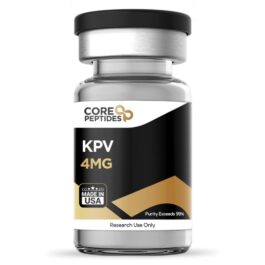
KPV (4mg)
$44.00$38.00
KPV is a synthetic tripeptide (Lysine-Proline-Valine) and a C-terminal fragment of the naturally occurring hormone alpha-melanocyte-stimulating hormone (α-MSH). It is being investigated for its purported anti-inflammatory properties. Research suggests that KPV may inactivate inflammatory pathways and inhibit the synthesis of pro-inflammatory cytokines in various tissues, including the intestines.
Product Information
Specification | Details |
SKU | P-KPV-4 |
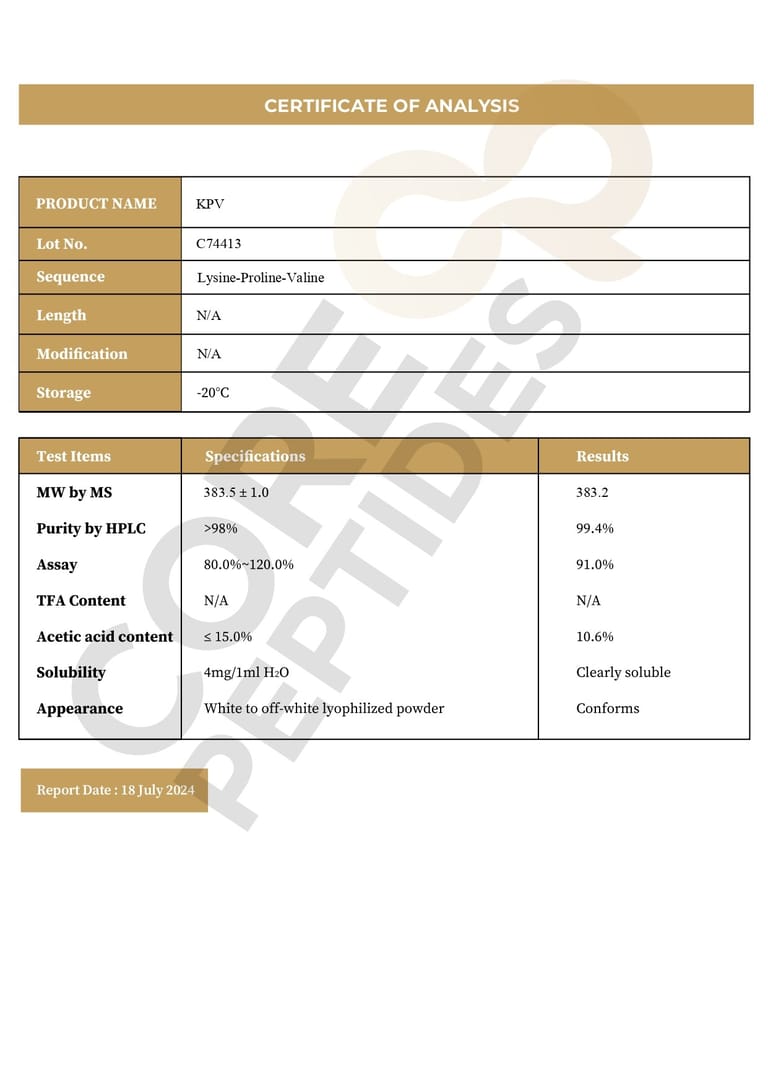
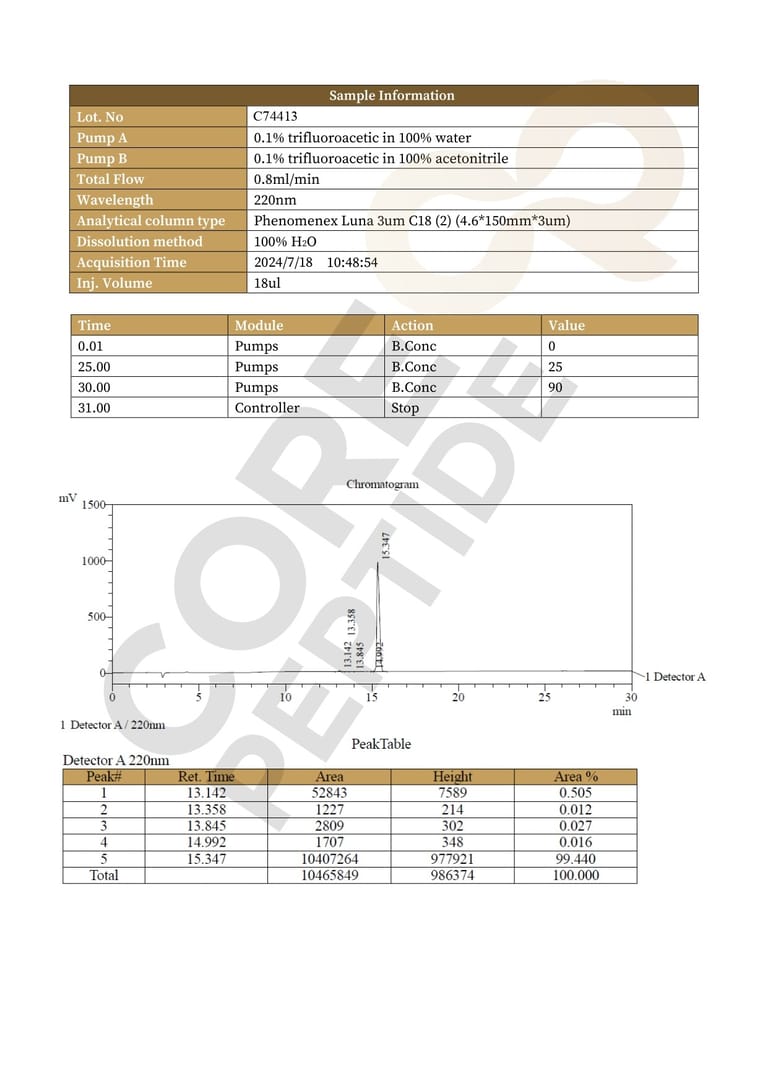
Purity | >99% |
Form | Lyophilized powder |
Size | 4 mg |
Contents | KPV (4 mg) |
Pricing
Specification | Details |
Original Price | $45.00 |
Current Price | $38.00 |
5 - 8 Units | $36.10 |
9+ Units | $34.20 |
Chemical Makeup
Specification | Details |
Molecular Formula | C_16H_30N_4O_4 |
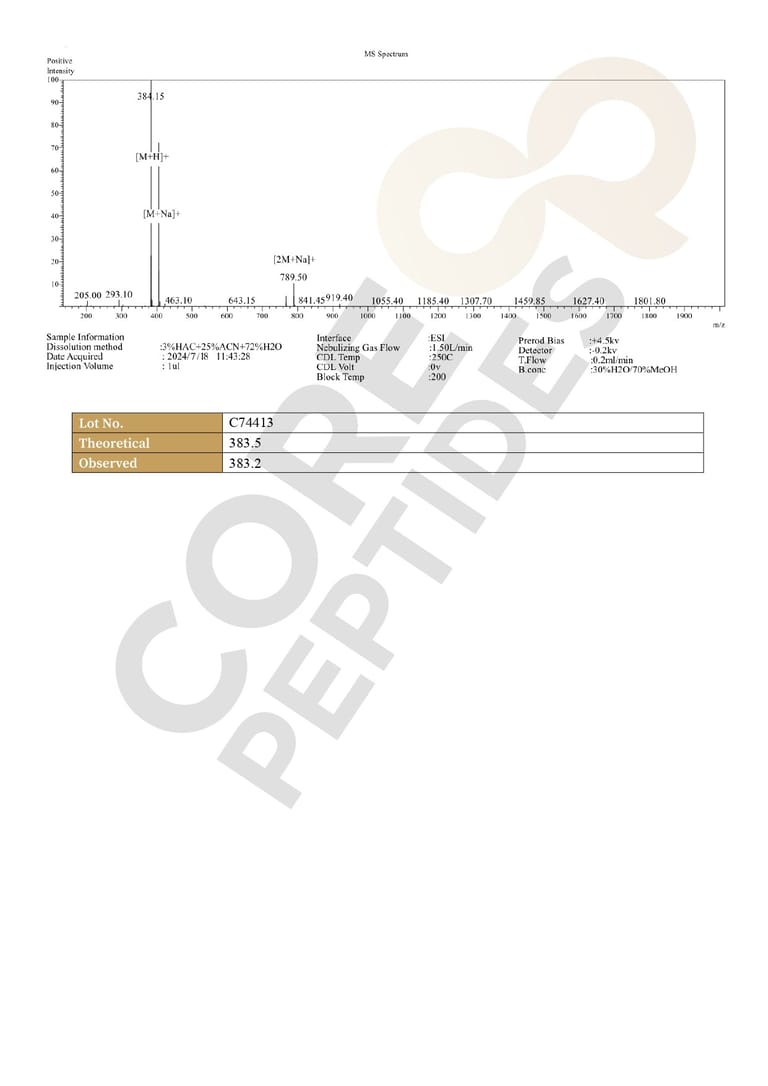
Molecular Weight | 342.43 g/mol |
Other Known Titles | MSH (11-13), ACTH(11-13), alpha-MSH(11-13) |
Research and Clinical Studies
Intestinal Protection & Inflammation
KPV is being investigated for its potential to mitigate intestinal inflammation. A study on murine models with bowel dysfunction reported that the peptide appeared to reduce inflammatory cells and anti-enzymatic symptoms. In another study, a chemically-induced compound of KPV with hyaluronic acid appeared to mitigate swelling in the intestines, which suggests a potential for targeted delivery (4).
Additional research on inflamed intestinal cell cultures suggested that even nanomolar concentrations of KPV may have anti-inflammatory effects. The peptide's action in these cells appeared to be mediated via PepT1 expression, a transporter that may play a role in delivering the peptide to the inflammation site (5). Furthermore, in models with ulcerative inflammation, KPV was reported to protect mucosal surfaces and downregulate TNF-α, a key inflammatory marker (6).
Wound Healing & Scar Formation
Studies have explored KPV's potential to accelerate wound healing and reduce scar formation. In a study on corneal epithelial tissue, KPV appeared to accelerate the healing process, with all corneas in the study achieving complete re-epithelialization within 60 hours, compared to none in the placebo group. This effect appeared to be linked to nitric oxide (NO) activity (11).
In a study on murine models with surgical incisions, KPV exposure appeared to lead to improved wound healing and a smaller scar area, which was associated with reduced levels of inflammatory cells like leukocytes and mast cells (12). These findings suggest that KPV may have potential applications in tissue repair and scar mitigation.
Additional Anti-inflammatory Studies
A comparative study suggested that KPV and its parent molecule, α-MSH, both appeared to be equally effective in reducing swelling in murine ears induced by dermatitis. Furthermore, an older study on rabbits suggested that KPV may also have antipyretic potential, reducing body temperature to optimal levels (8, 9).
Disclaimer: KPV peptide is available for research and laboratory purposes only.