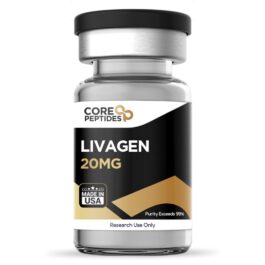
Livagen (20mg)
$85.00$73.00
Livagen is a short, four-amino acid peptide that acts as a bioregulator. It is being investigated for its potential to impact gene regulation by influencing the structure of chromatin, the material that makes up chromosomes. By hypothetically "de-condensing" chromatin, Livagen may reactivate certain genes that have become dormant, possibly leading to improved cellular activity and production.
Product Information
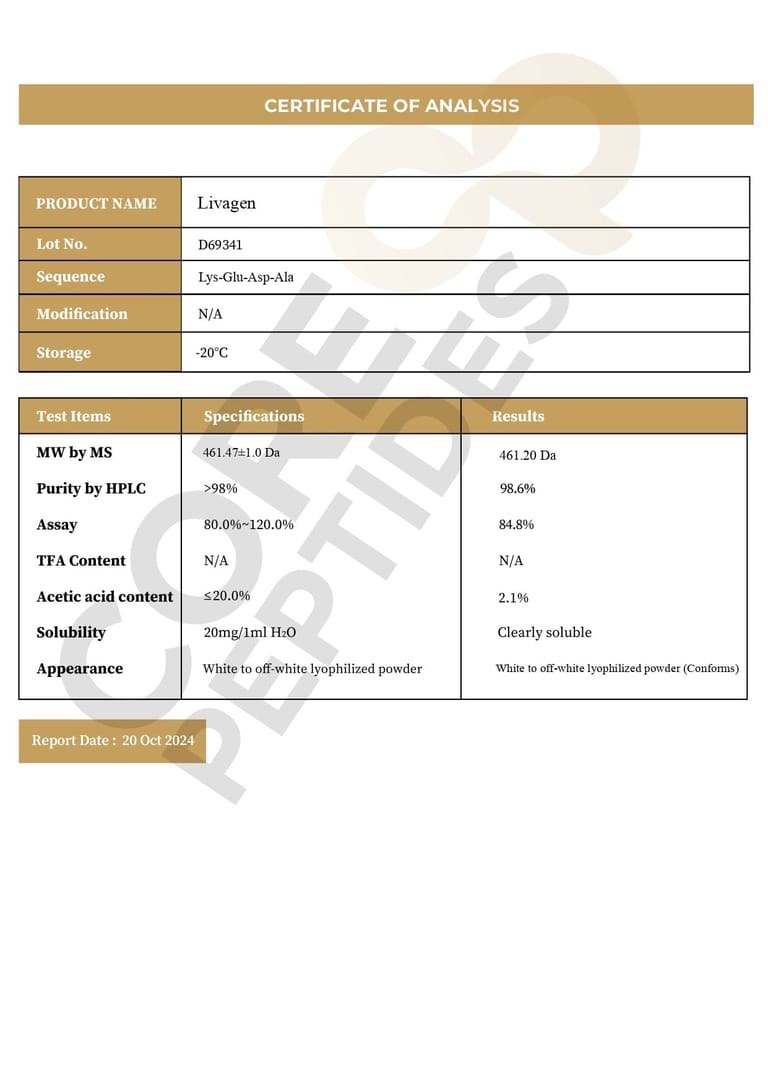
Specification | Details |
SKU | P-Livagen |
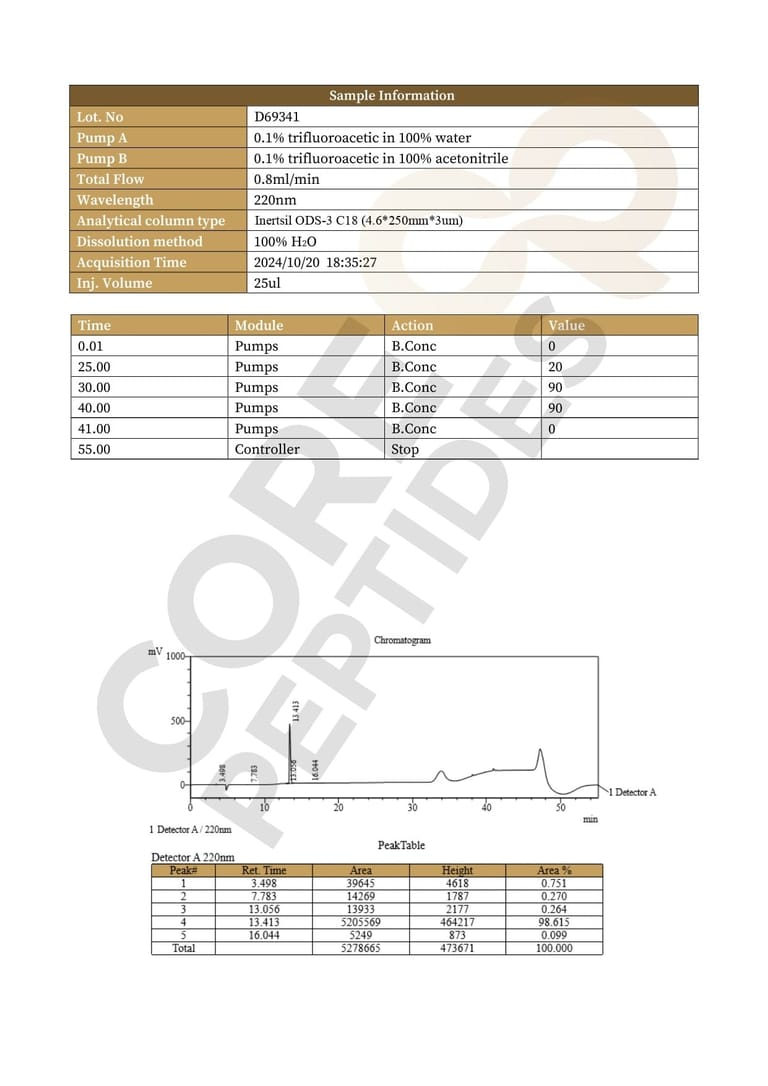
Purity | >99% |
Form | Lyophilized powder |
Size | 20 mg |
Contents | Livagen (20 mg) |
Pricing
Quantity | Discount | Price (USD) |
Single Unit | N/A | $73.00 |
5 - 8 | 5% | $69.35 |
9+ | 10% | $65.70 |
Chemical Makeup
Specification | Details |
Molecular Formula | C_18H_31N_5O_9 |
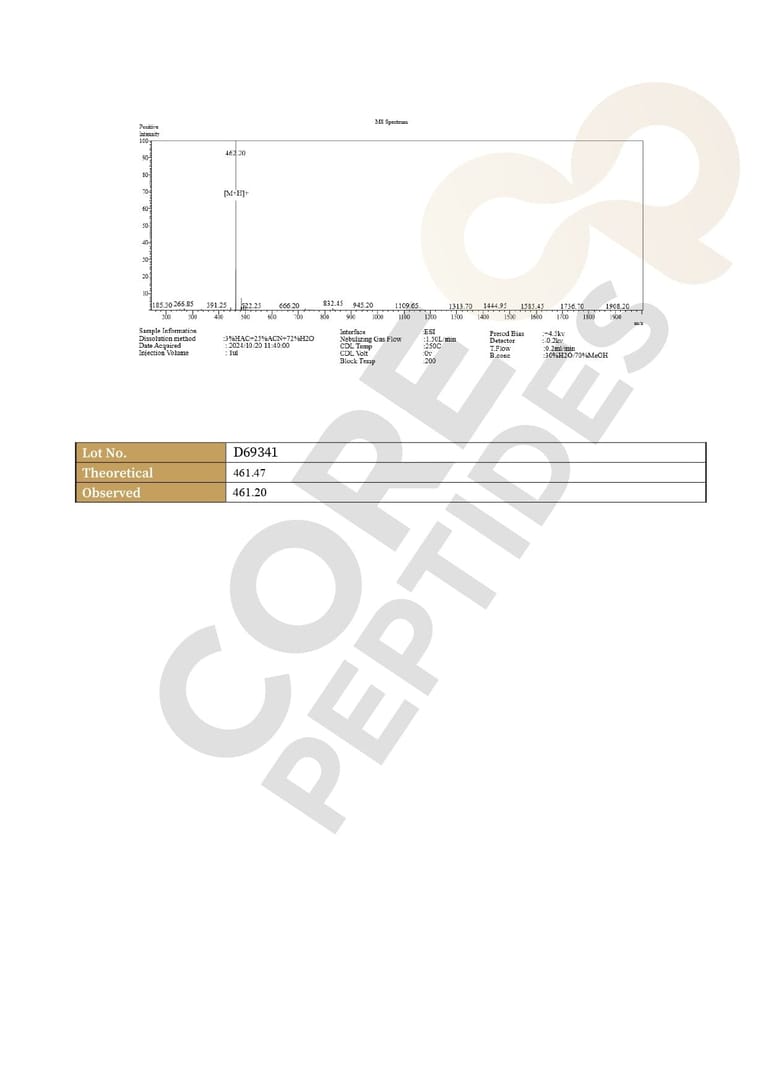
Molecular Weight | 461.5 g/mol |
Other Known Titles | KEDA |
Research and Clinical Studies
Gene Regulation
Research suggests that Livagen may have a role in regulating gene expression by acting on chromatin structure. Studies on cell culture models of hypertrophic cardiomyopathy (HCM) suggest that Livagen may induce the de-condensation of chromatin, potentially leading to the transcriptional activation of previously inactivated genes (4, 5, 6). The peptide, either alone or in combination with cobalt ions, appeared to modify the activity of nucleolar organizer regions (NORs), which are integral to ribosomal RNA synthesis, hinting at altered protein synthesis capabilities within the cells.
Nociception & Antioxidant Systems
Livagen is also being explored for its potential to influence pain pathways. In vitro studies suggest that Livagen may prevent the degradation of naturally occurring neurotransmitters called enkephalins, which are involved in pain signal transmission. However, research indicates that Livagen does not appear to directly bind to mu- or delta-opioid receptors, suggesting its action may be an indirect effect (7).
Furthermore, a study on liver models suggested that Livagen may help normalize immune responses and antioxidant status, potentially restoring liver function during episodes of hepatitis. This suggests the peptide may offer positive actions in mitigating liver fibroid induration and combating various forms of hepatitis (8).
DNA Repair
Livagen is being investigated for its potential to reverse cellular alterations that lead to increased chromatin condensation and decreased cellular repair over time. By inhibiting and potentially reversing these changes, the peptide is hypothesized to improve cellular functions and "reverse" cell aging (3, 9).
Disclaimer: Livagen peptide is available for research and laboratory purposes only.