LL-37 (5mg)
$85.00 $59.00
LL-37 Product Information
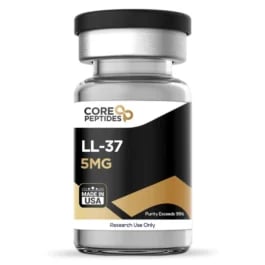
Our LL-37 is a high-purity, synthetic peptide available in a 5mg size. Provided as a lyophilized powder with a certified purity of >99%, it is intended for research purposes. The SKU is P-LL37-5.
Pricing and Discounts
5-8 units: A 5% discount is applied, with a price of $84.55 per unit.
9+ units: A 10% discount is applied, with a price of $80.10 per unit.
We also offer FREE shipping on all orders over $200.
LL-37, also known as Cathelicidin, is a 37-amino acid cationic peptide that is the subject of research for its potential antimicrobial and immunomodulatory properties. It is naturally found in neutrophils and is believed to play a role in the immune system.
Mechanisms of Action and Research 🔬
1. Antimicrobial Properties
Mechanism: LL-37 is posited to interact with the membranes of bacteria, fungi, and viruses. Researchers hypothesize that it may form agglomerates and lipid bilayers on the microbial membrane, leading to its disruption and degradation. This non-specific interaction may prevent pathogens from developing resistance.
GI Tract: LL-37's antimicrobial potential is being explored for its role in protecting the gastrointestinal (GI) mucosa from microbial damage. Studies have shown an increased expression of the peptide in models with gastrointestinal ulcers.
2. Inflammatory and Immune Response
LL-37's role in inflammation is complex, as it is being researched for both pro-inflammatory and anti-inflammatory effects.
Pro-inflammatory: The peptide may enhance the immune system's response to damaged cells. Studies suggest it can form complexes with self-nucleic acids (DNA and RNA), leading to the activation of inflammatory pathways and cytokine expression, possibly mediated by scavenger receptors.
Anti-inflammatory: Research also suggests that LL-37 may offer a protective action against certain inflammatory responses. In models of autoimmunity like psoriasis, it may protect keratinocytes from inflammation triggered by the AIM2 inflammasome. It may also suppress the secretion of pro-inflammatory cytokines like IL-6 and IL-8 in the GI tract.
Autoimmunity: LL-37 is being investigated for its involvement in autoimmune diseases. Elevated levels of the peptide have been reported in conditions like psoriasis and arthritis, suggesting a potential role in their pathogenesis.
3. Tissue Repair and Angiogenesis
Mechanism: LL-37 has been suggested to promote wound healing. Studies suggest that it may induce endothelial skin cell proliferation and the formation of tubule-like structures, which are essential for angiogenesis (the formation of new blood vessels).
Studies: In murine models, exposure to the peptide appeared to enhance vascularization and re-epithelialization in wounds. This indicates a potential role in promoting tissue regeneration.
4. Cancer Research
Immunotherapy: Studies are ongoing to explore LL-37's potential as an immunotherapeutic agent. It has been shown to increase the sensitivity of lymphocytes to CpG oligodeoxynucleotides, which are compounds known to promote tumor-suppressing activity.
Anticancer Potential: Research suggests that LL-37 may inhibit the proliferation of gastric cancer cells by activating the bone morphogenetic protein signaling system.
Product Specifications 📊
Molecular Formula: C205H340N50O53
Molecular Weight: 4493.34 g/mol
Other Known Titles: CAP-18
Important Notice: LL-37 peptide is available for research and laboratory purposes only. It is not intended for human or veterinary use. All information provided is for educational and scientific reference only and has not been evaluated by the FDA or any medical regulatory body.
Support
© 2025. All rights reserved.
WEIGHT LOSS