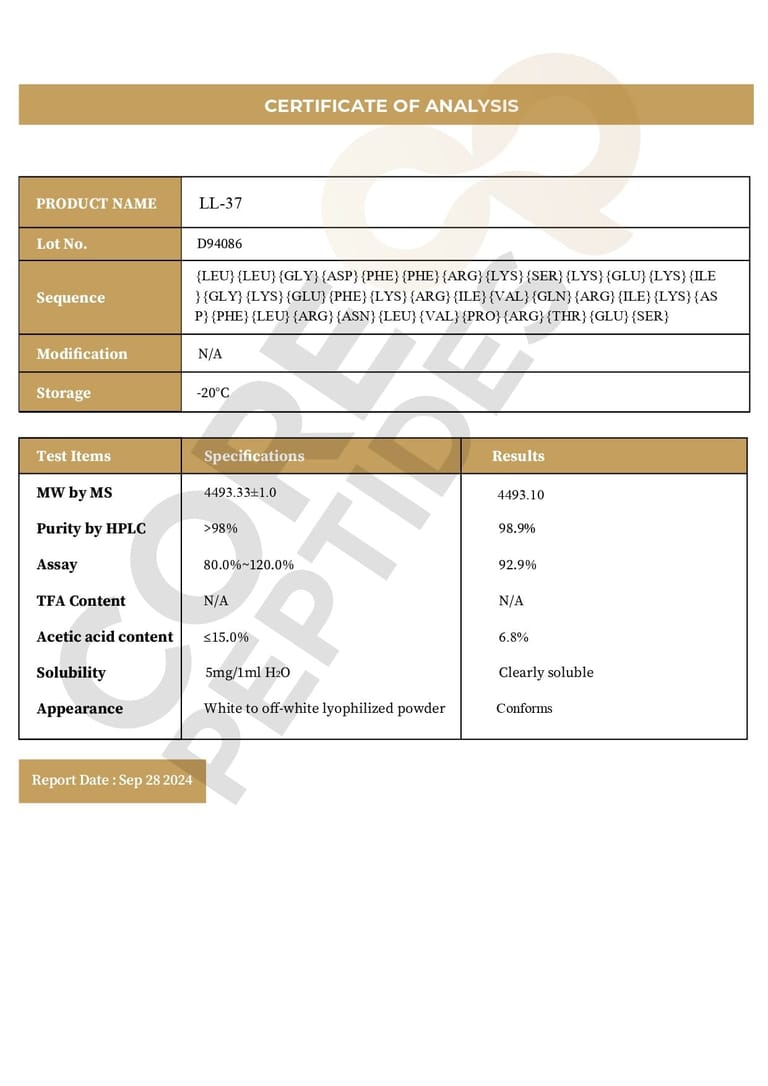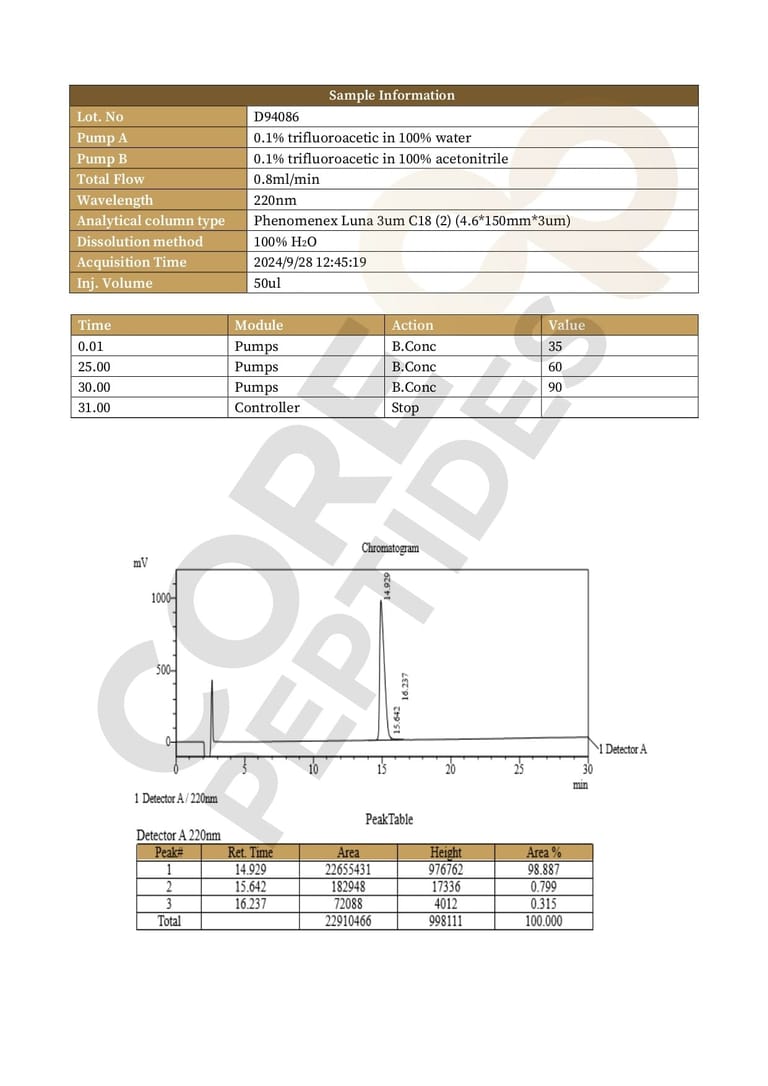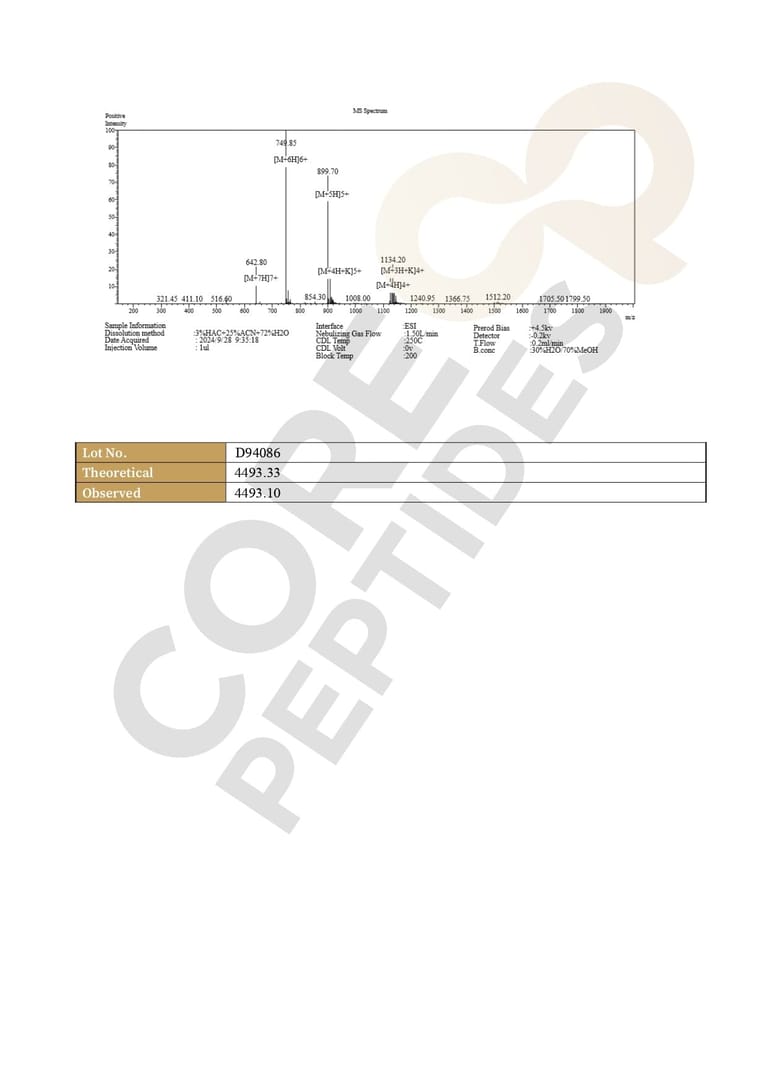
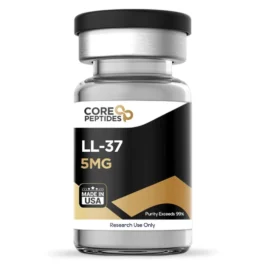
LL-37 (5mg)
$97.00$89.00
LL-37, also known as Cathelicidin, is a naturally occurring, 37-amino acid peptide primarily found in neutrophils. It is being investigated for its potential antimicrobial properties against bacteria, fungi, and viruses, which it is believed to achieve by forming agglomerates and lipid bilayers that can degrade microbial membranes. Research also suggests a dual role for LL-37 in immune responses, potentially acting as both a pro-inflammatory agent in certain conditions and a protective, immunomodulatory agent in others.
Product Information
Specification | Details |
SKU | P-LL37-5 |
Purity | >99% |
Form | Lyophilized powder |
Size | 5mg |
Contents | LL-37 (5mg) |
Pricing
Quantity | Discount | Price (USD) |
Single Unit | N/A | $89.00 |
5 - 8 | 5% | $84.55 |
9+ | 10% | $80.10 |
Chemical Makeup
Specification | Details |
Molecular Formula | C_205H_340N_50O_53 |
Molecular Weight | 4493.34 g/mol |
Other Known Titles | CAP-18 |
Research and Clinical Studies
Inflammatory & Autoimmune Responses
LL-37 is being studied for its complex role in inflammation. Research suggests it may enhance the immune system's response to damaged cells by influencing how self-nucleic acids are recognized, potentially activating inflammatory pathways (7). However, studies on psoriasis, an autoimmune condition, suggest that elevated endogenous LL-37 levels may be characteristic of the disease. In this context, the peptide may exert anti-apoptotic actions on keratinocytes and promote inflammation via type I interferon (IFN) pathways (1). Additionally, increased levels of LL-37 have been reported in models of arthritis, where it may induce apoptosis of osteoblasts, potentially leading to decreased bone formation in joints (1, 8).
Tissue Repair
Despite its potential role in certain inflammatory conditions, LL-37 is also being researched for its positive impact on tissue repair and angiogenesis (the formation of new blood vessels). In a study on mice, LL-37 appeared to enhance vascularization and skin cell formation. The peptide is also thought to promote endothelial cell proliferation, migration, and the formation of tubule-like structures, which are all essential for wound healing (9).
Cancer & GI Tract
Research is ongoing to explore LL-37's potential in cancer cell development. Studies suggest that the peptide may inhibit the proliferation of gastric cancer cells by activating the bone morphogenetic protein signaling system. It may also increase the sensitivity of lymphocytes to immunotherapeutic compounds like CpG oligodeoxynucleotides (10).
Furthermore, LL-37 is being investigated for its potential to impact the gastrointestinal (GI) tract. Increased expression of the peptide has been observed in models with GI ulcers. Due to its antimicrobial properties, LL-37 may be capable of protecting the GI mucosa from microbial damage and suppressing the secretion of pro-inflammatory cytokines like interleukin-6 (IL-6) and IL-8 (11, 12).
Disclaimer: LL-37 peptide is available for research and laboratory purposes only.