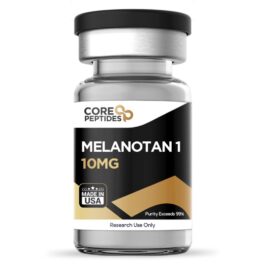
Melanotan 1 (10mg)
$49.00$43.00
Melanotan 1, also known as afamelanotide, is a synthetic peptide that mimics the natural hormone alpha-melanocyte stimulating hormone (α-MSH). It is being investigated for its potential to stimulate eumelanin production, a photoprotective compound that may protect tissues from UV-induced damage. Melanotan 1 is believed to work by binding with high affinity to melanocortin receptors (MCRs), particularly the MC1R found on melanocytes, which are responsible for skin and hair pigmentation.
Product Information
Specification | Details |
SKU | P-MELANTN1-10 |
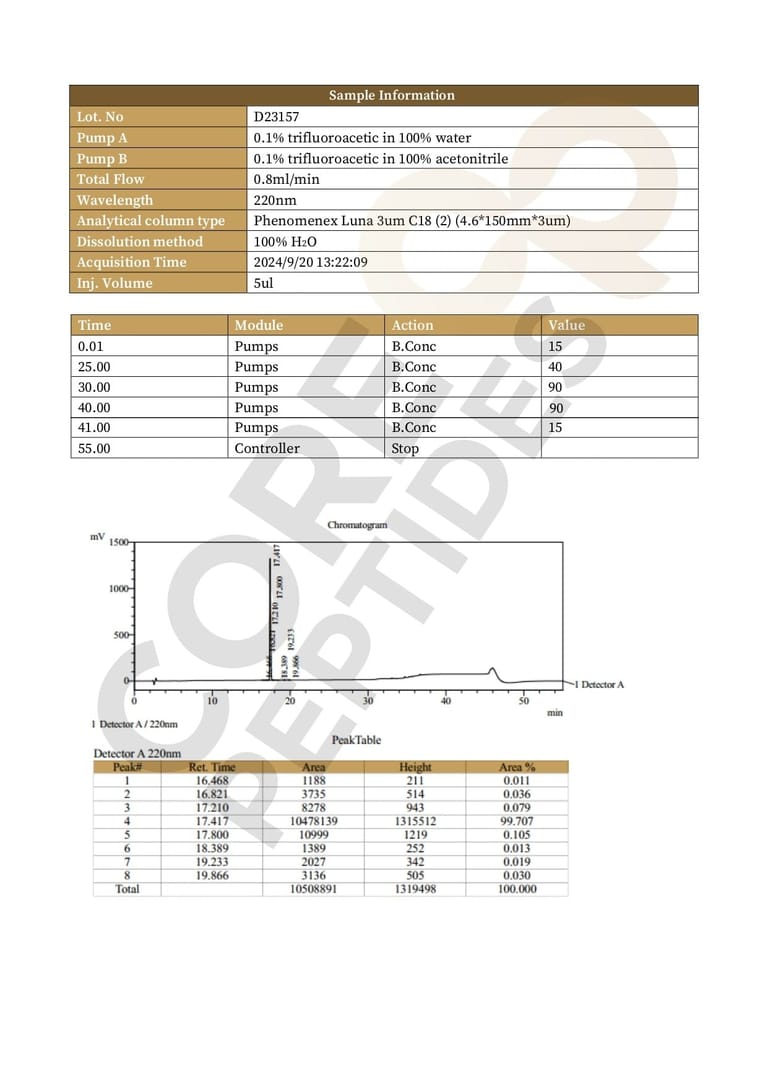
Purity | >99% |
Form | Lyophilized powder |
Size | 10mg |
Contents | Melanotan 1 (10mg) |
Pricing
Quantity | Discount | Price (USD) |
Single Unit | N/A | $43.00 |
5 - 8 | 5% | $40.85 |
9+ | 10% | $38.70 |
Chemical Makeup
Specification | Details |
Molecular Formula | C_78H_111N_21O_19 |
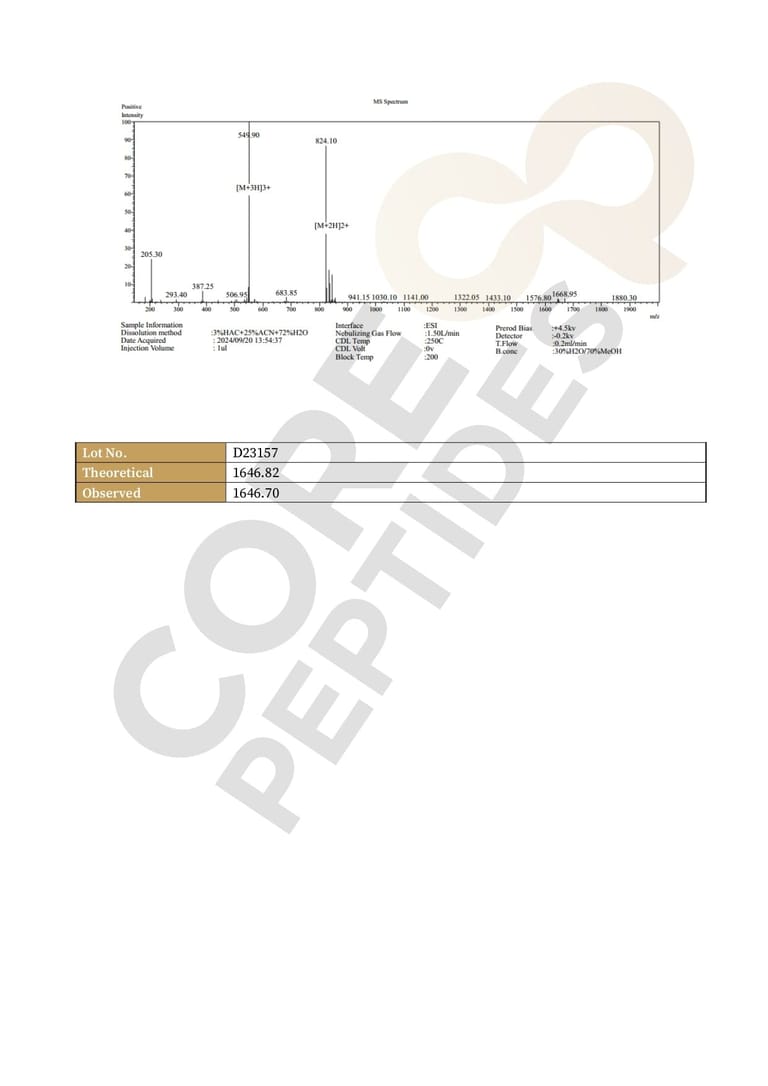
Molecular Weight | 1646.87 g/mol |
Other Known Titles | MT1; afamelanotide |
Research and Clinical Studies
Melanocortin System & UV Protection
Melanotan 1 is hypothesized to act as a potent agonist of melanocortin 1 receptors (MC1R), which are primarily responsible for skin pigmentation. By activating MC1R, the peptide may increase the production of cyclic adenosine monophosphate (cAMP), which then activates the enzymes for eumelanin production. This process is believed to result in a tanned appearance and may enhance the skin's natural defense against UV radiation, as eumelanin provides photoprotective properties and may facilitate DNA repair mechanisms (1, 4, 5).
Clinical trials have also investigated the peptide's potential in erythropoietic porphyria, a condition characterized by painful UV sensitivity. In these studies, models exposed to Melanotan 1 appeared to be able to spend more time in sunlight with little to no pain compared to a placebo group (6). This suggests that the peptide may help mitigate photosensitivity.
Inflammation & Other Conditions
Studies suggest that Melanotan 1 and its parent hormone, α-MSH, may have anti-inflammatory properties. Research on models of liver fibrosis reported that the peptide appeared to reverse established fibrosis and mitigate the upregulation of pro-inflammatory genes. It is thought to achieve this by influencing the activity of matrix metalloproteinases (MMPs) and suppressing the expression of key inflammatory markers like COX-2 (6).
The peptide's potential to influence the melanocortin system has led to broader research into conditions involving these receptors. For instance, the MC4R has been implicated in regulating appetite, energy balance, and sexual function (3).
Disclaimer: Melanotan 1 peptide is available for research and laboratory purposes only.