
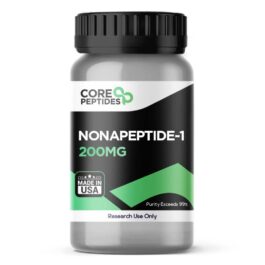
Nonapeptide-1 (200mg)
$227.00$214.00
Nonapeptide-1 is a nine-amino-acid peptide that's being investigated for its potential to inhibit melanogenesis, the process of melanin production. It's thought to act as an antagonist to the melanocortin-1 receptor (MC1R), which is crucial for stimulating pigmentation. By inhibiting this receptor, the peptide may prevent the activation of the tyrosinase enzyme, which is necessary for melanin synthesis. This mechanism is being researched for its potential to reduce hyperpigmentation and even out skin tone.
Product Information
Specification | Details |
SKU | P-NONAPEPTIDE-1 |
Purity | >99% |
Form | Lyophilized powder |
Size | 200mg |
Contents | Nonapeptide-1 |
Pricing
Quantity | Discount | Price (USD) |
Single Unit | N/A | $214.00 |
5 - 8 | 5% | $203.30 |
9+ | 10% | $192.60 |
Chemical Makeup
Specification | Details |
Molecular Formula | C_61H_87N_15O_9S |
Molecular Weight | 1206.5 g/mol |
Research and Clinical Studies
Mechanism of Action & Skin Pigmentation
Nonapeptide-1 was discovered in a search for potent MC1R antagonists. It's believed to be one of the most potent inhibitors of these receptors, which are found on melanocytes (pigment-producing cells). The natural agonist for MC1R is α-melanocyte-stimulating hormone (α-MSH). By blocking the receptor, Nonapeptide-1 may prevent the signaling cascade that leads to the activation of the tyrosinase enzyme and the subsequent production of melanin.
In an in vitro study, Nonapeptide-1 appeared to significantly decrease the expression of tyrosinase and other related proteins, even with UV radiation. A clinical trial on subjects with melasma (a form of hyperpigmentation) also reported a consistent reduction in the melasma severity score and mean melanin index in the group receiving the peptide, suggesting it may have a potential role in improving skin tone (4, 6).
Future Research Potential
The melanocortin-1 receptors are also found in other cells, like nerve and immune cells. This has led to research on the potential of MC1R inhibition in areas beyond pigmentation.
Nociception: Studies on mice with an overexpressed MC1R antagonist reported a reduced response to inflammatory pain and a decreased aversion to capsaicin in female mice (8). This suggests that inhibiting these receptors may have a role in pain modulation.
Melanoma: Research has also explored the role of MC1R in melanoma tumor cells. Studies found that inhibiting these receptors with natural inhibitors appeared to slow the growth rate of melanoma tumor cells and make their size and morphology more homogeneous (9). While Nonapeptide-1 has not been directly researched in this context, the findings highlight a potential area for future investigation.
Disclaimer: Nonapeptide-1 is available for research and laboratory purposes only.