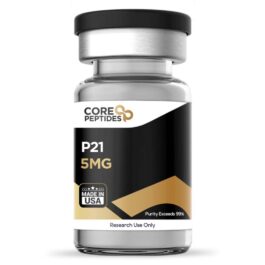
P21 (5mg)
$128.00$116.00
P21 (P021) is a synthetic peptide that mimics the activity of ciliary neurotrophic factor (CNTF), a protein that supports the survival and differentiation of neural cells. It's designed to overcome the limitations of CNTF, such as an immune response, while still providing potential neuroprotective benefits. P21 is being investigated for its potential to improve cognitive function, increase neurogenesis, and support neuronal plasticity, particularly in models of neurodegenerative diseases.
Product Information
Specification | Details |
SKU | P-P21 |
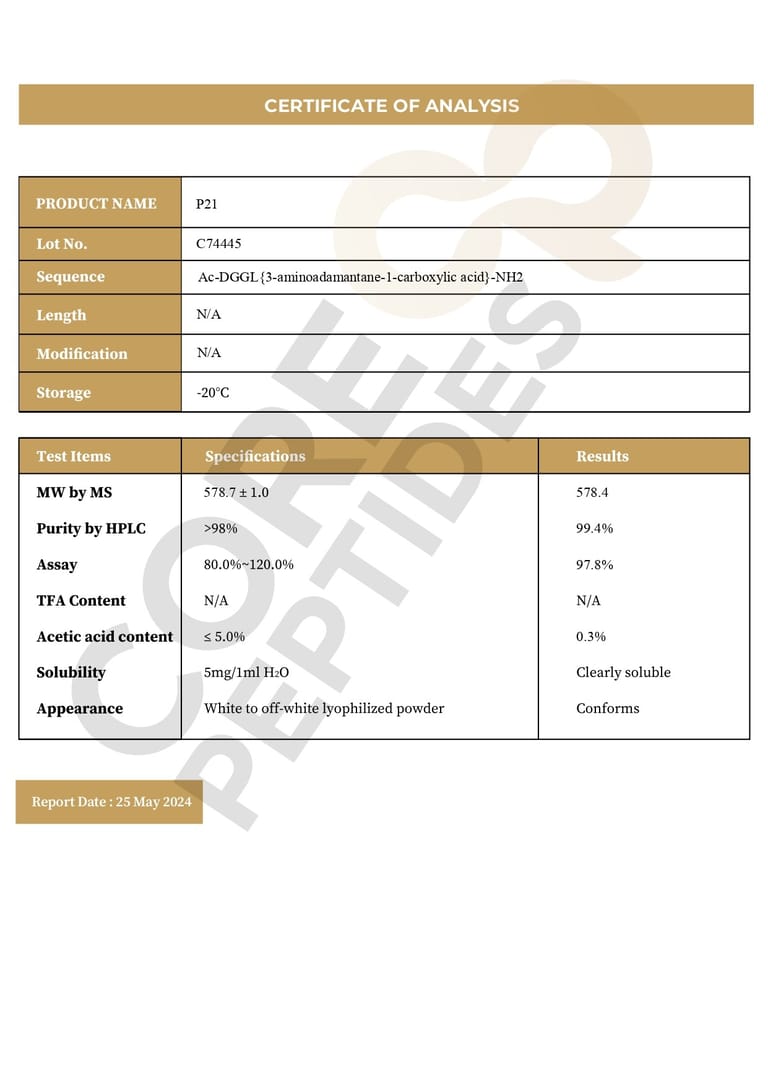
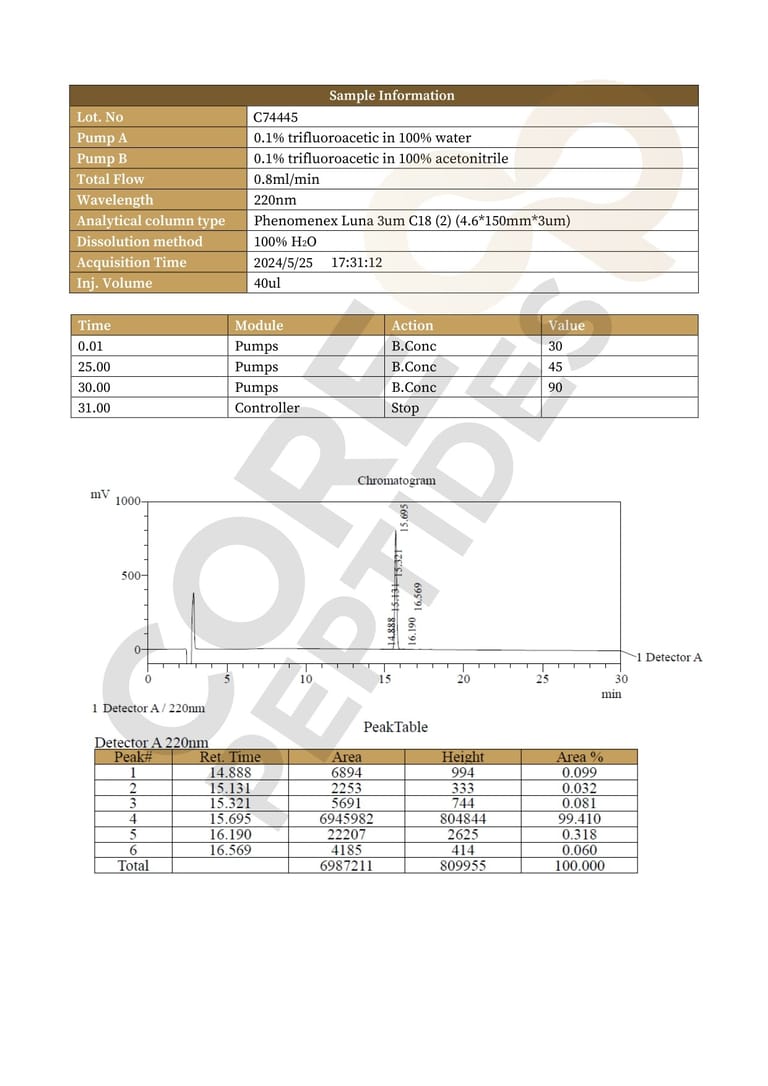
Purity | >99% |
Form | Lyophilized powder |
Size | 5mg |
Contents | P21 |
Pricing
Quantity | Discount | Price (USD) |
Single Unit | N/A | $116.00 |
5 - 8 | 5% | $110.20 |
9+ | 10% | $104.40 |
Export to Sheets
Chemical Makeup
Specification | Details |
Molecular Formula | C_30H_54N_6O_5 |
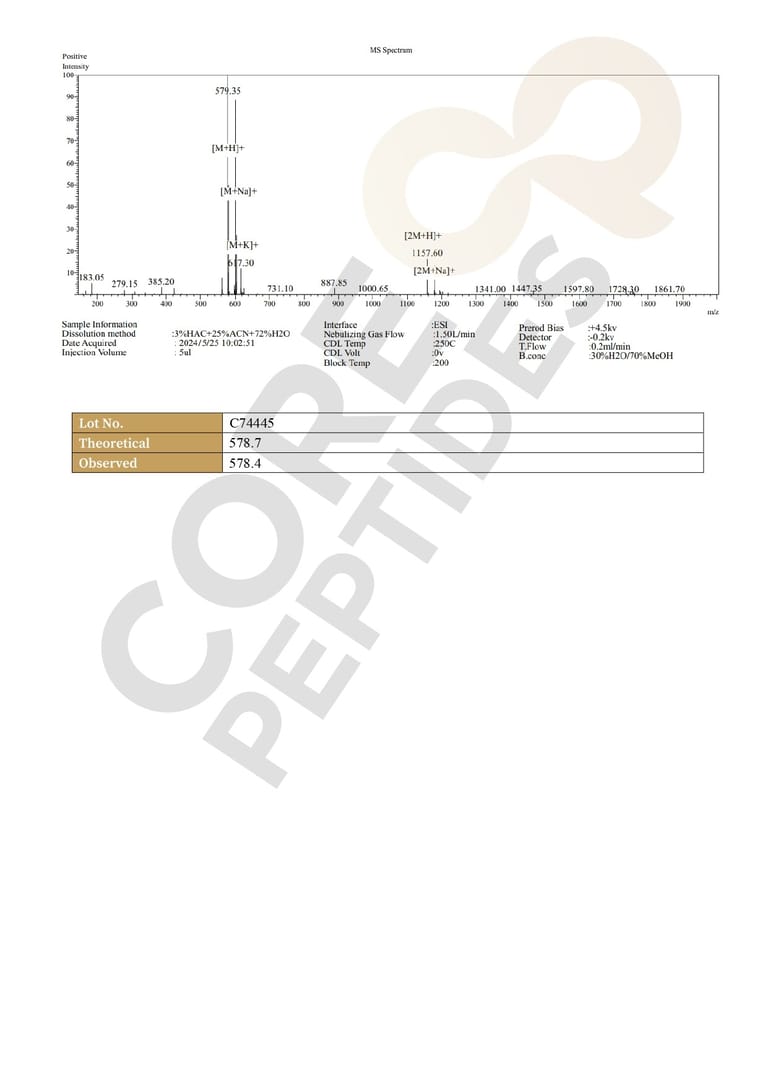
Molecular Weight | 578.3 g/mol |
Sequence | Ac-DGGL-adamatanylglycine-NH_2 |
Other Known Titles | P021 |
Research and Clinical Studies
Cognitive Impairment
P21 is being extensively researched for its potential to address cognitive impairment. Studies suggest it may rescue dendritic and synaptic deficits, boost neurogenesis, and reverse cognitive impairment by influencing key markers for synaptic function, such as synapsin, PSD-95, and MAP2 (2).
In aged murine models, P21 appeared to reduce the natural decline in learning and memory by potentially increasing the expression of brain-derived neurotrophic factor (BDNF) (3). BDNF is a protein that is vital for neuronal survival, differentiation, and the growth of dendrites, all of which contribute to enhanced cognitive function.
Alzheimer's Disease (AD) Models
Research on P21 in AD models has shown promising potential.
Tau & A$\beta$ Reduction: Chronic exposure to P21 in aged rats reportedly reduced the concentration of total tau in the brain and cerebrospinal fluid (CSF). It is believed that P21's influence on BDNF may indirectly inhibit glycogen synthase kinase-3 (GSK-3), an enzyme involved in tau phosphorylation, which leads to the formation of neurofibrillary tangles (4). Additionally, a study on a transgenic AD model found that P21 appeared to reduce the abnormal accumulation of amyloid-beta (A$\beta$) plaque load (5).
Neuroprotection: The peptide is also being investigated for its neuroprotective potential. In a study where P21 was administered to AD models during the period of synaptic compensation, it appeared to prevent neurodegeneration, rescue episodic memory impairment, and potentially reduce the mortality rate (6).
Macular Degeneration
P21's neuroprotective potential is also being researched in the context of age-related macular degeneration (AMD). A study on aged and transgenic murine models reported that chronic exposure to P21 appeared to prevent several pathological changes associated with AMD, including photoreceptor degeneration and atrophy in the retinal pigment epithelium (8).
Disclaimer: P21 peptide is available for research and laboratory purposes only.