
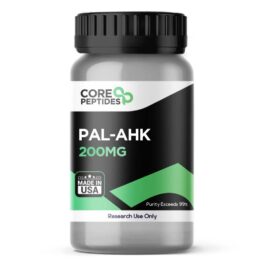
Pal-AHK (200mg)
$184.00$176.00
Pal-AHK is a synthetic peptide composed of the amino acids alanine, histidine, and lysine, with a palmitoyl group attached. The palmitoyl group is thought to enhance the peptide's ability to penetrate cells. Pal-AHK is being investigated for its potential to stimulate the production of collagen and elastin, exhibit antioxidative action, and promote hair follicle growth.
Product Information
Specification | Details |
SKU | P-Pal-AHK |
Purity | >99% |
Form | Lyophilized powder |
Size | 200mg |
Contents | Pal-AHK |
Pricing
Quantity | Discount | Price (USD) |
Single Unit | N/A | $176.00 |
5 - 8 | 5% | $167.20 |
9+ | 10% | $158.40 |
Chemical Makeup
Specification | Details |
Molecular Formula | C_31H_56N_6O_5 |
Molecular Weight | 592.8 g/mol |
Other Known Titles | Palmitoyl AHK |
Research and Clinical Studies
Hair Growth
While there's no direct research on Pal-AHK's effects on hair growth, studies on similar compounds suggest it may promote hair follicle growth by preventing the programmed cell death, or apoptosis, of dermal papilla cells (DPCs). This is hypothesized to be achieved by elevating the Bcl-2/Bax ratio (a key regulator of apoptosis) and reducing the levels of cleaved caspase-3 and PARP, which are involved in promoting cell death (5, 6).
Additionally, Pal-AHK may increase the expression of vascular endothelial growth factor (VEGF), a protein that supports angiogenesis (the formation of new blood vessels). By increasing blood vessel growth around hair follicles, VEGF may help supply nutrients and oxygen, which could support hair growth and reduce shedding (7).
Skin Cells & Antioxidant Potential
Research on the main molecule, AHK, suggests that it may stimulate the proliferation of skin cells and collagen synthesis. In cell culture studies, AHK appeared to increase the viability of dermal fibroblasts and boost the production of collagen type I, a key protein for skin strength and durability (8).
The peptide's potential antioxidant action is thought to be due to its unique amino acid composition. It may also reduce the expression of TGF-β1, a molecule that can contribute to chronic inflammation and tissue damage when overactive (3). By reducing oxidative stress and promoting collagen production, Pal-AHK is being investigated for its potential to improve the skin's extracellular matrix.
Disclaimer: Pal-AHK peptide is available for research and laboratory purposes only.