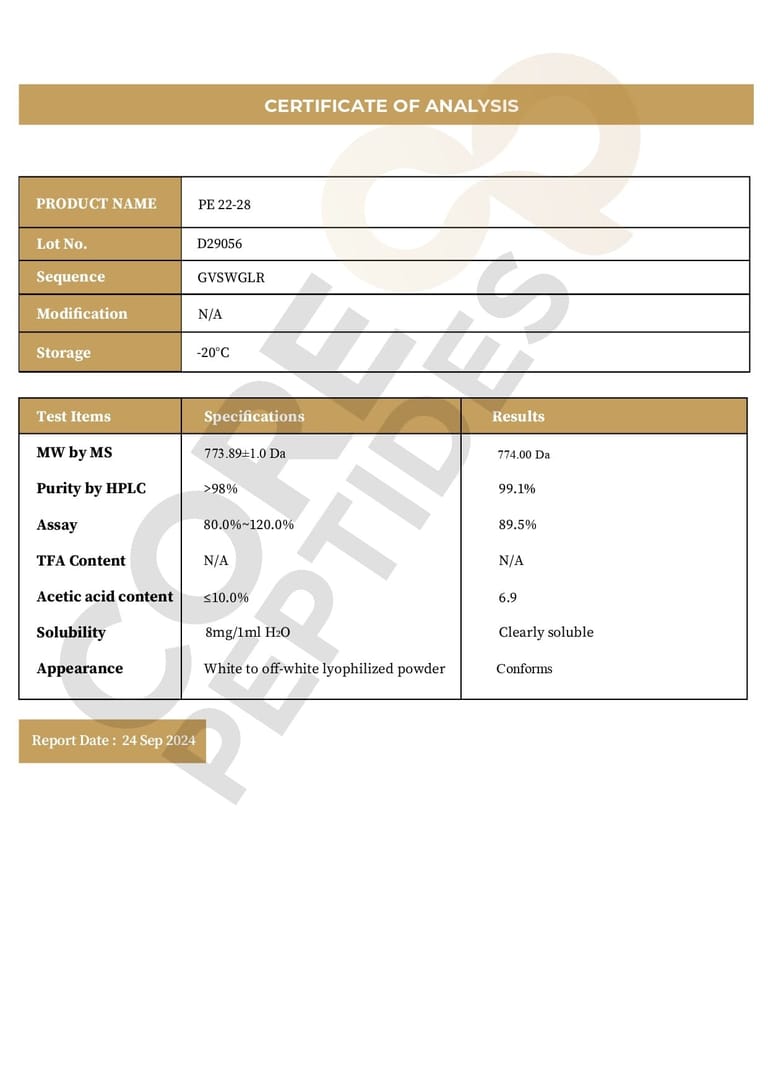

PE-22-28 (8mg)
$61.00$54.00
PE-22-28 is a synthetic peptide that is a shortened derivative of the naturally occurring protein spadin. It is being researched for its potential as a fast-acting compound that may exhibit antidepressant and nootropic properties by blocking the TREK-1 (TWIK-related potassium channel) receptor. This receptor is primarily found in brain regions like the hippocampus and prefrontal cortex, which are involved in mood, memory, and learning.
Product Information
Specification | Details |
SKU | P-PE2228-8 |
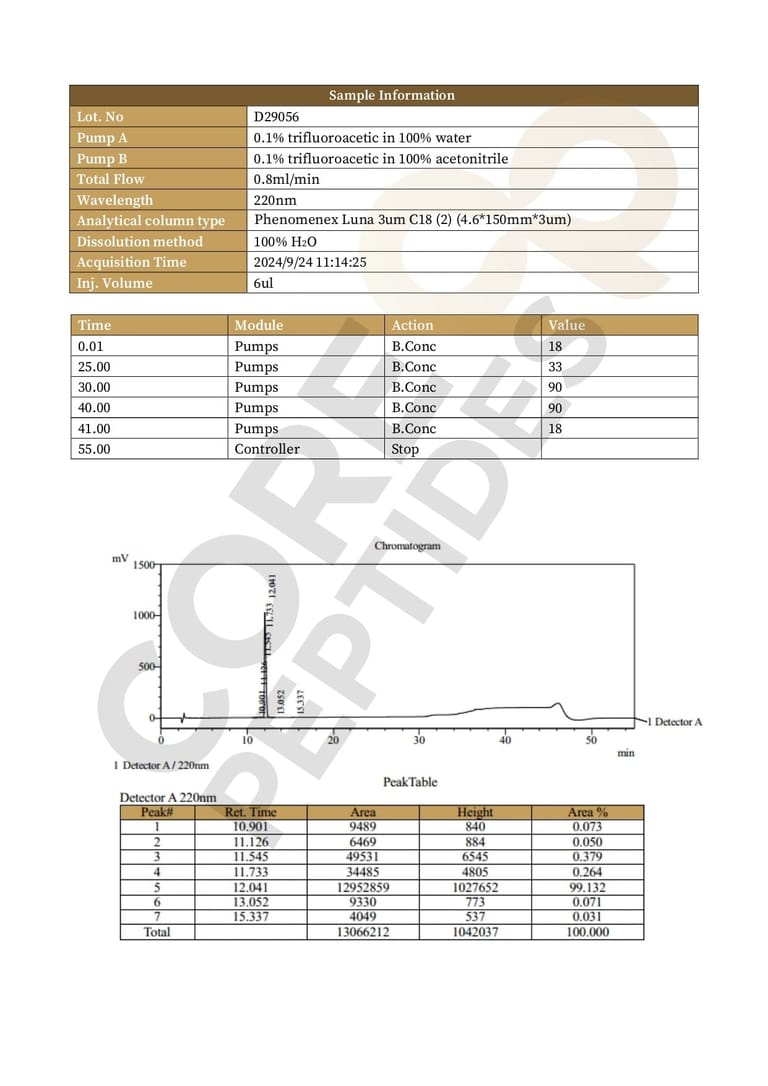
Purity | >99% |
Form | Lyophilized powder |
Size | 8mg |
Contents | PE-22-28 (8mg) |
Pricing
Quantity | Discount | Price (USD) |
Single Unit | N/A | $54.00 |
5 - 8 | 5% | $51.30 |
9+ | 10% | $48.60 |
Chemical Makeup
Specification | Details |
Molecular Formula | C_35H_55N_11O_9 |
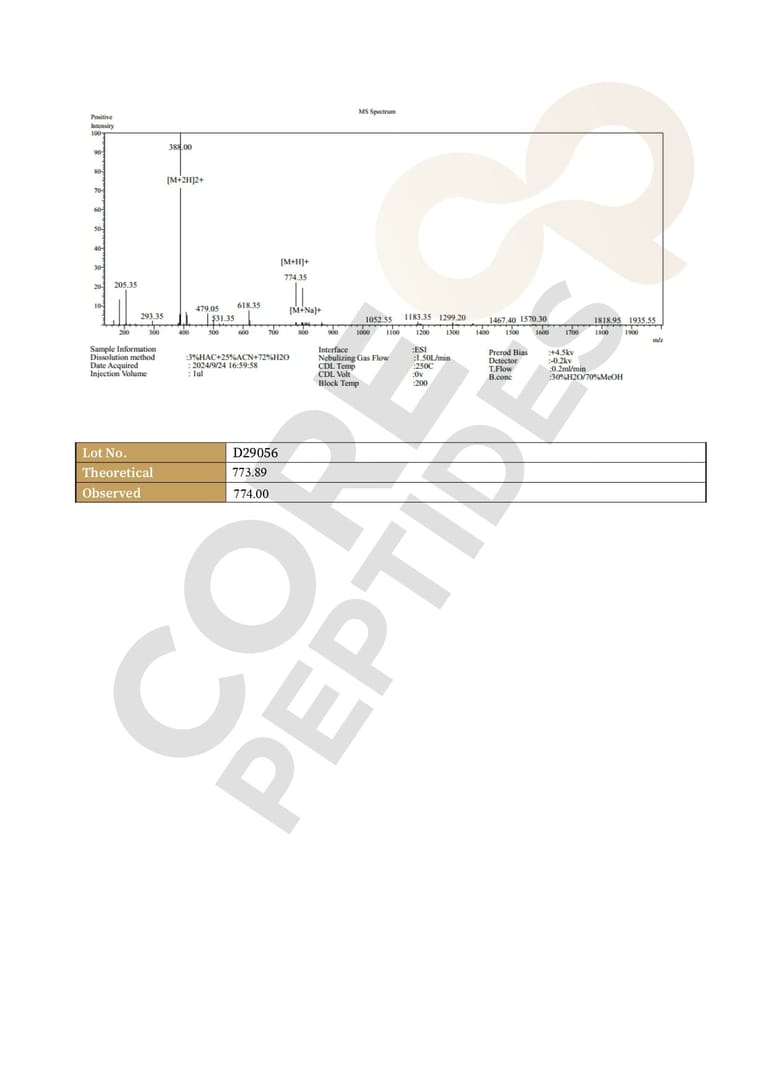
Molecular Weight | 773.89 g/mol |
Sequence | GVSWGLR |
Research and Clinical Studies
Depression & Neurogenesis
Studies suggest that PE-22-28 may have an antidepressant effect by blocking the TREK-1 channel. This action is thought to increase neuronal excitability and may contribute to neurogenesis (the formation of new neurons), particularly in the hippocampus, a brain region that is often smaller in models of depression (5).
The peptide may also enhance synaptogenesis (the formation of synapses) and activate key signaling pathways like MAPK and PI3K, which are involved in neuron protection and formation (6). Research on its natural analog, spadin, suggests that it may rapidly increase the concentration of brain-derived neurotrophic factor (BDNF) and the activity of CREB, a transcription factor crucial for neurogenesis and memory (3).
A study on mice with Post-Stroke Depression (PSD) compared PE-22-28 to an SSRI (selective serotonin reuptake inhibitor). The peptide appeared to be fast-acting and did not induce the wide range of unintended impacts that the SSRI did (4).
Serotonin Signaling
PE-22-28 is hypothesized to influence serotonin signaling. By blocking the TREK-1 channel, the peptide is believed to stimulate serotonergic neurons in the dorsal raphé nucleus, which may facilitate serotonin transmission. This action, combined with the peptide's potential to influence mGluR2/3 receptors, suggests a complex interplay that could lead to enhanced mood and brain stability (9, 10).
Muscle Function
The TREK-1 receptor also impacts muscle function. Activating this receptor can induce muscle relaxation, while blocking it may lead to muscle contraction. Based on this understanding, the PE-22-28 peptide is involved in ongoing research to determine its correlation with muscle relaxation and contraction (8).
Disclaimer: PE-22-28 peptide is available for research and laboratory purposes only.