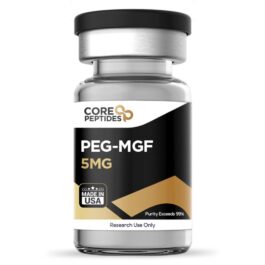
PEG-MGF (5mg)
$69.00$63.00
PEG-MGF, or polyethylene glycol (PEG)-ylated Mechano Growth Factor, is a synthetic form of MGF (Mechano Growth Factor). MGF is an isoform of IGF-1 (insulin-like growth factor) that is believed to be produced in muscle tissues in response to mechanical stress. Pegylation, the attachment of a PEG molecule, is thought to extend the peptide's half-life and potentially enhance its impact. PEG-MGF is being investigated for its potential to stimulate muscle cell regeneration, protect cardiac tissue, aid in bone repair, and support neurogenesis.
Product Information
Specification | Details |
SKU | P-PEGMGF-5 |
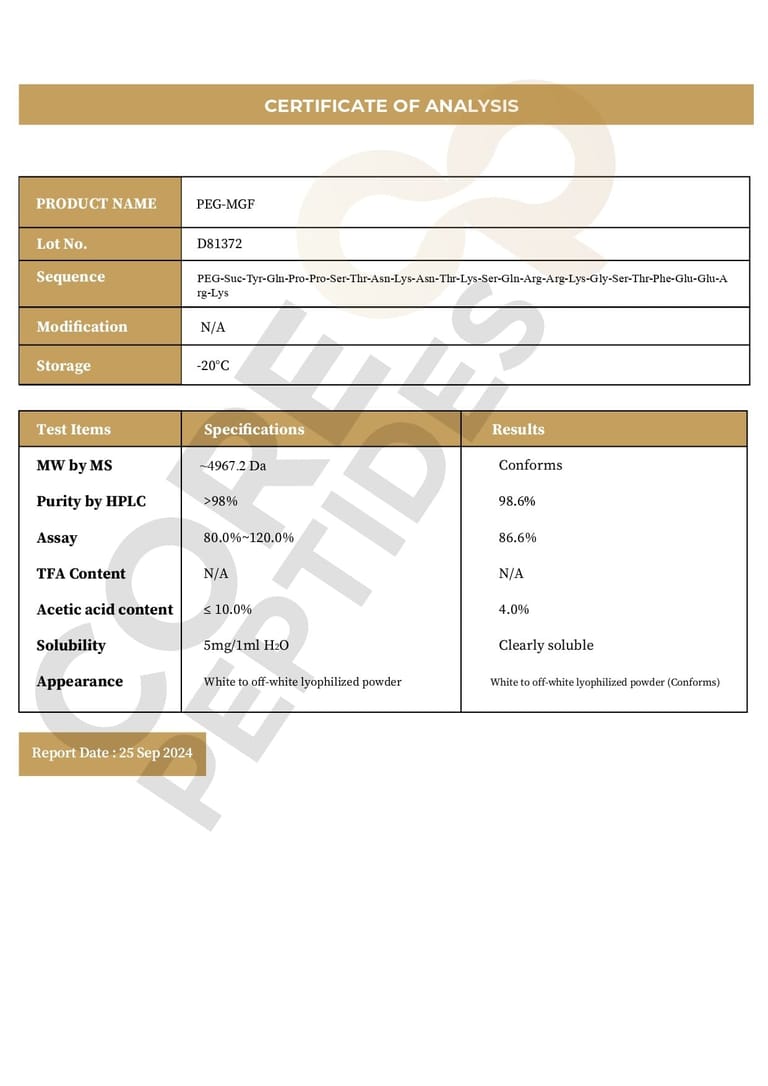
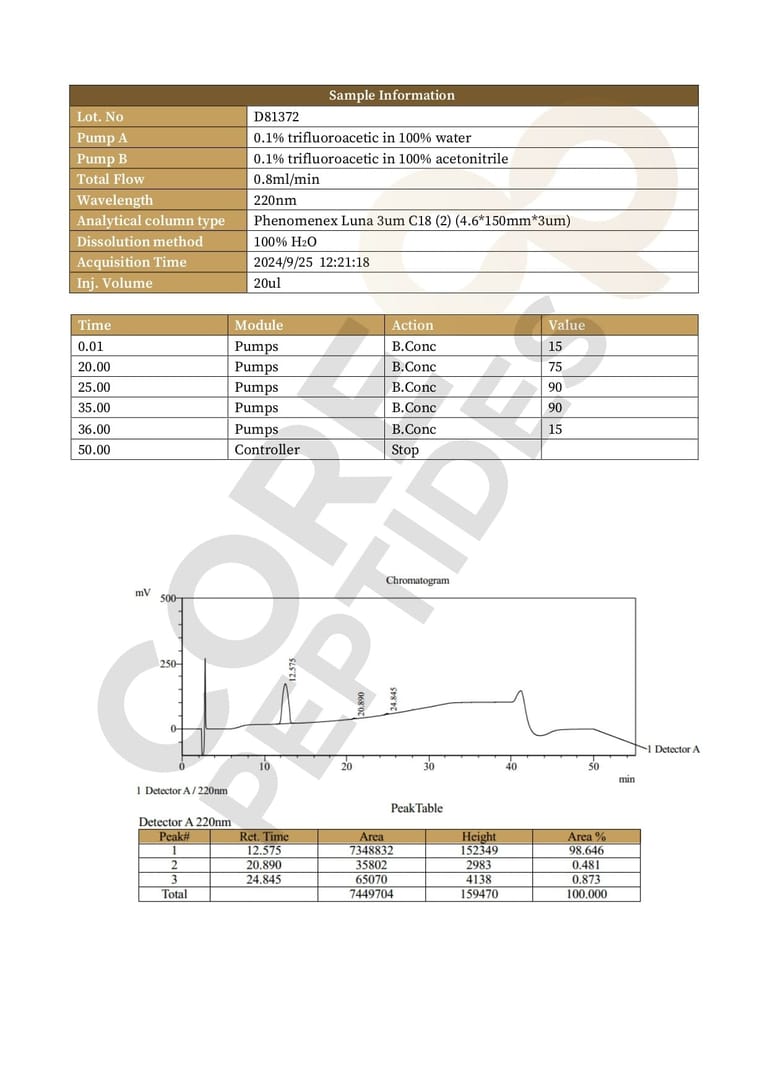
Purity | >99% |
Form | Lyophilized powder |
Size | 5mg |
Contents | PEG-MGF (5mg) |
Pricing
Quantity | Discount | Price (USD) |
Single Unit | N/A | $63.00 |
5 - 8 | 5% | $59.85 |
9+ | 10% | $56.70 |
Chemical Makeup
Specification | Details |
Molecular Formula | C_121H_200N_42O_39 |
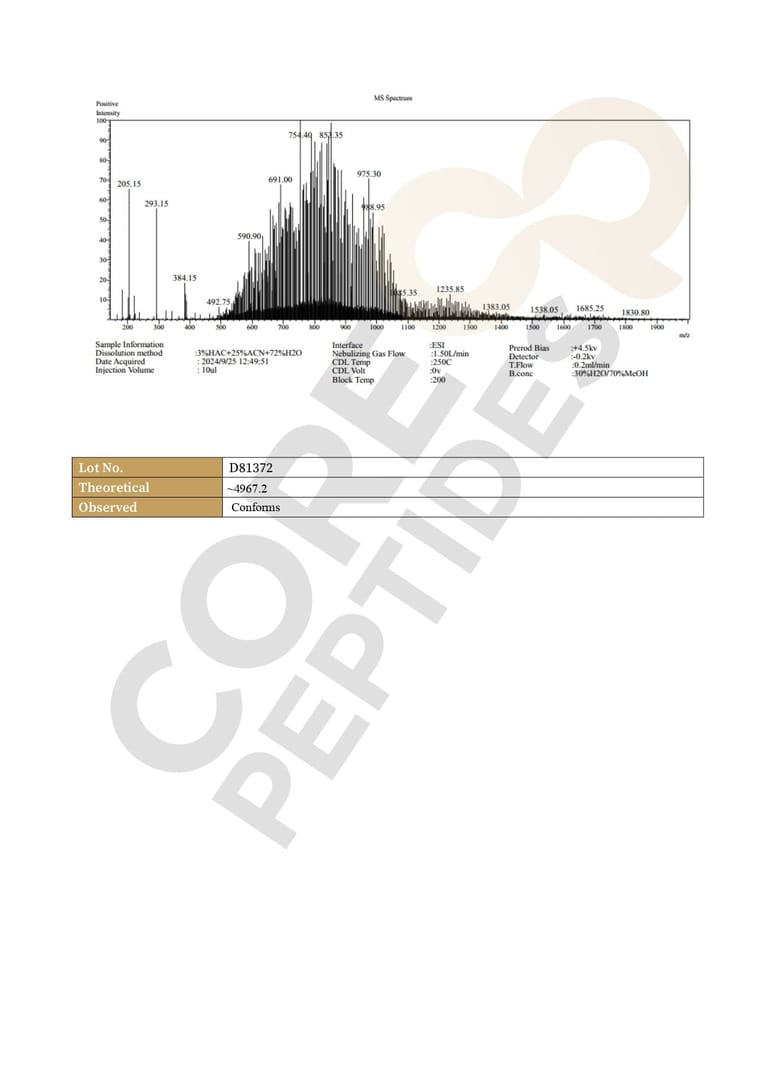
Molecular Weight | N/A |
Other Known Titles | PEG-MGF-E, PEG-MGF-Ct24E |
Research and Clinical Studies
Muscle & Bone
Research suggests that muscle resistance activities can activate MGF mRNA in muscle tissues, indicating MGF's potential role in the body's natural response to muscle damage. A study on murine models with muscle contusion reported that MGF appeared to induce muscular repair, reduce fibrosis, and decrease the expression of inflammatory cytokines (6).
The peptide is also being researched for its potential in bone repair. A study on rabbits with bone defects found that MGF-exposed tissues appeared to exhibit a superior healing process compared to control tissues and even those exposed to IGF-1. This suggests that MGF may have a distinct mechanism of action, potentially halting the cell cycle at specific stages and activating the MAPK-Erk1/2 signaling pathway to enhance cell proliferation (8).
Cardioprotection & Neuroprotection
PEG-MGF's potential in protecting other tissues is also being explored. A study on rats with induced hypoxia (low oxygen) reported that MGF appeared to induce the migration of mesenchymal stem cells to the heart, which may lead to the inhibition of cellular apoptosis (programmed cell death). This suggests that MGF may have cardioprotective qualities by modulating cellular mechanisms that prevent cell death (7).
In the context of the brain, a study on mice bred to constitutively overproduce MGF in the hippocampus showed that the peptide appeared to result in elevated levels of BrdU (a marker for proliferating cells) and neurogenesis (the formation of new neurons) (9). This indicates a potential role for MGF in supporting neuronal proliferation and growth.
Muscle Tissue Hypertrophy
A pivotal study on MGF's potential on muscle cells of varying ages suggested that it may enhance cell proliferation and promote muscle hypertrophy, characterized by an augmented cell size. The study noted that MGF appeared to enhance the fusion of muscle cells into myotubes and increase the expression of muscle-specific contractile proteins, which could improve muscle function (10).
Disclaimer: PEG-MGF is available for research and laboratory purposes only.