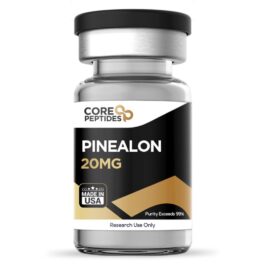
Pinealon (20mg)
$82.00$75.00
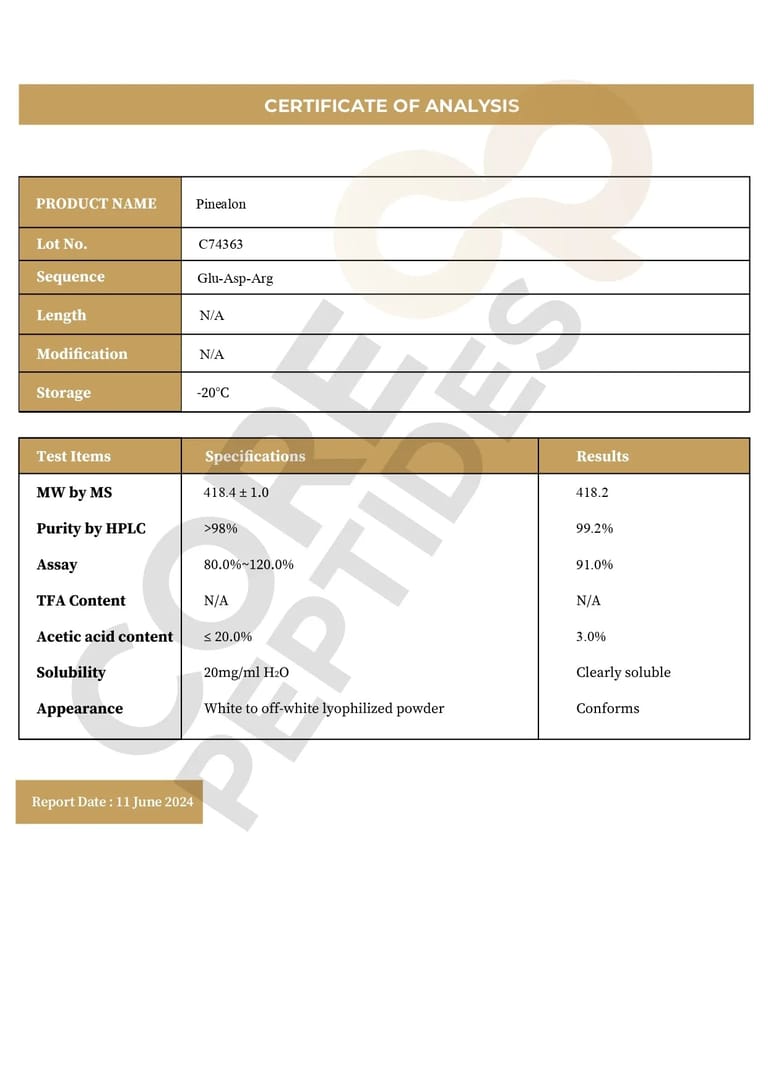
Pinealon is a short synthetic tripeptide with the sequence Glu-Asp-Arg (EDR). It is being investigated for its potential to impact the central nervous system by protecting neurons from oxidative stress and modulating behavior. Research also suggests it may interact directly with DNA molecules and have concentration-dependent effects.
Product Information
Specification | Details |
SKU | P-PINEALON-20 |
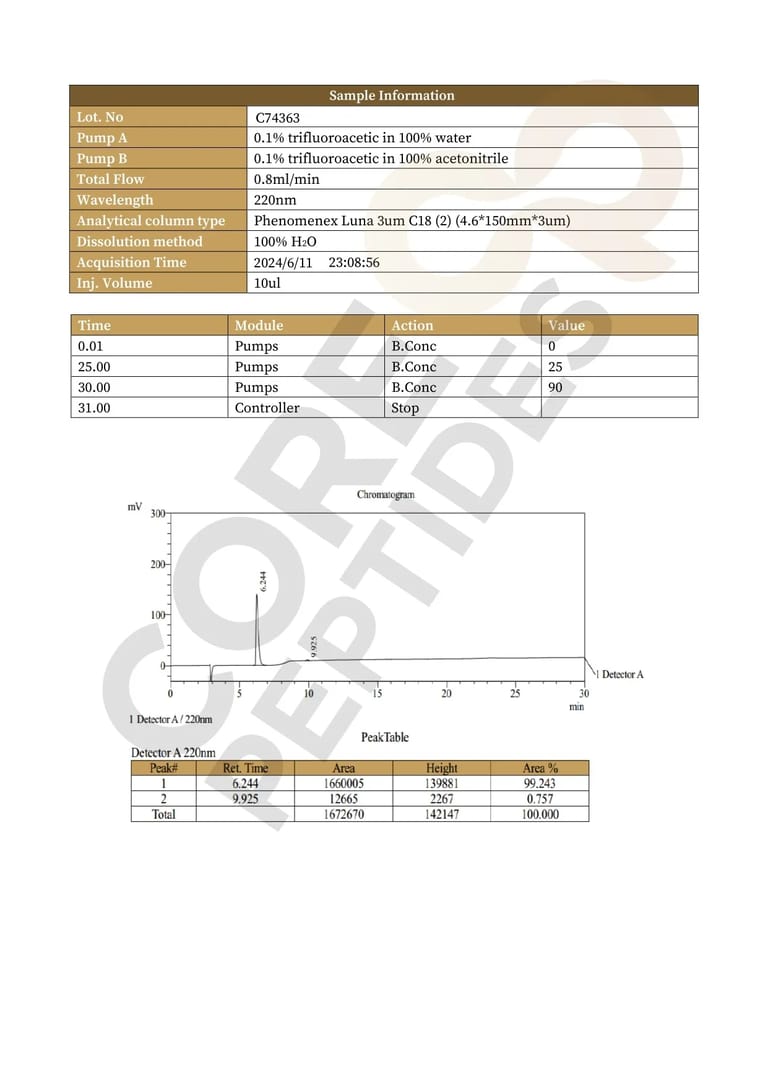
Purity | >99% |
Form | Lyophilized powder |
Size | 20mg |
Contents | Pinealon (20mg) |
Pricing
Quantity | Discount | Price (USD) |
Single Unit | N/A | $75.00 |
5 - 8 | 5% | $71.25 |
9+ | 10% | $67.50 |
Chemical Makeup
Specification | Details |
Molecular Formula | C_15H_26N_6O_8 |
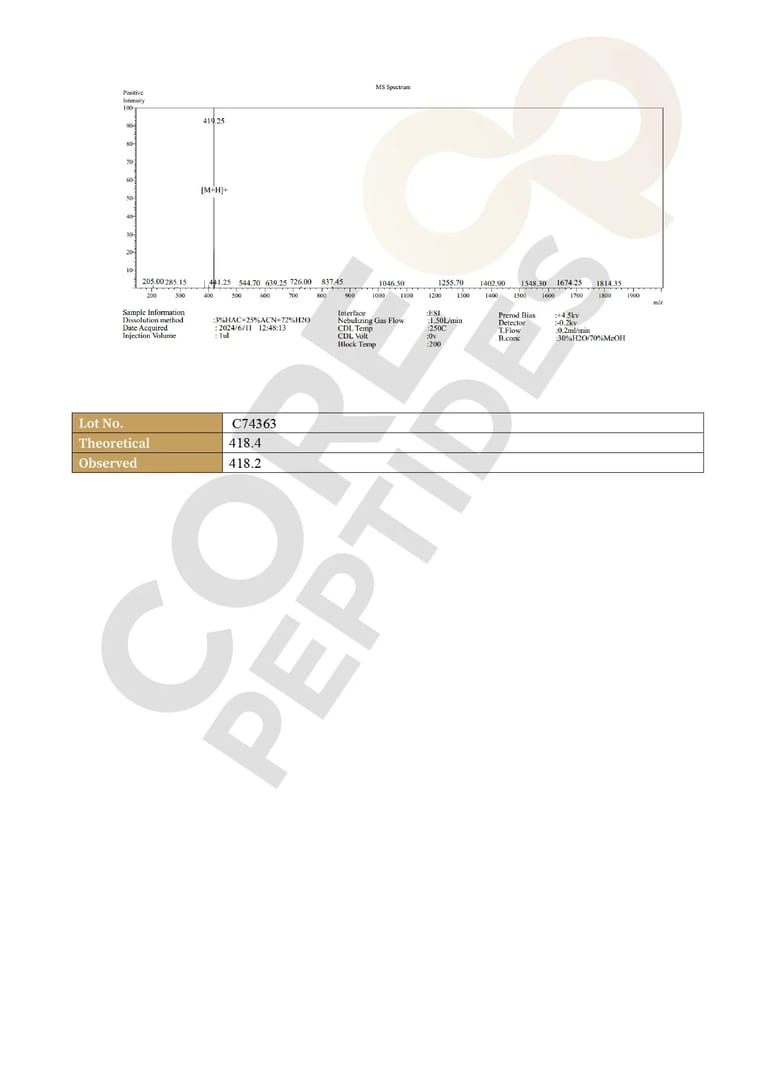
Molecular Weight | 418.4 g/mol |
Other Known Titles | EDR, Glu-Asp-Arg |
Research and Clinical Studies
Neuroprotection & Anti-apoptotic Potential
Pinealon is being investigated for its neuroprotective and anti-apoptotic potential. Studies on murine models of ischemic stroke suggested that the peptide appeared to modulate the levels of the caspase-3 enzyme, an initiator of programmed cell death (apoptosis). This action reportedly reduced hypoxia and neuroinflammation, which may contribute to brain resilience against oxygen deprivation. The peptide's action in suppressing caspase-3 was also observed in skin cells, suggesting it may promote cellular proliferation and regeneration (11, 12).
The peptide's anti-apoptotic potential is hypothesized to be exerted via the MAPK/ERK signaling pathway. Research suggests that Pinealon may reduce the synthesis of reactive oxygen species (ROS), which can act as a messenger to these pathways and lead to cellular stress and cell death. By reducing ROS, the peptide may help prevent cellular stress and cell death (2).
Serotonin Expression
Research on isolated brain cell cultures suggested that Pinealon may stimulate serotonin expression. A notable increase in serotonin synthesis was reported in younger cell cultures after exposure to the peptide. The proposed mechanism behind this action involves Pinealon's potential to bind to a specific DNA sequence in the promoter region of the gene that codes for 5-tryptophan hydroxylase, a critical enzyme for serotonin synthesis. This interaction may enhance gene transcription and, subsequently, increase serotonin production (9).
Prenatal Hyperhomocysteinemia
A study on pregnant female murine models with prenatal hyperhomocysteinemia (excess homocysteine) suggested that while Pinealon did not appear to reduce homocysteine levels in the offspring, it may have led to a reduction in the compound's toxic action. The offspring of the experimental models appeared to exhibit increased cognitive processing, indicating a potential neuroprotective role against the effects of hyperhomocysteinemia (8).
Disclaimer: Pinealon peptide is available for research and laboratory purposes only.