PNC-27 (5mg)
$145.00$138.00
PNC-27 is a 27-amino acid peptide derived from a segment of the tumor-suppressing protein p53. It's being investigated for its potential to selectively target and induce necrosis (cell death) in a variety of cancer cell lines, including those from pancreatic, ovarian, and leukemia cancers.
Product Information
Specification | Details |
SKU | PNC-27 |
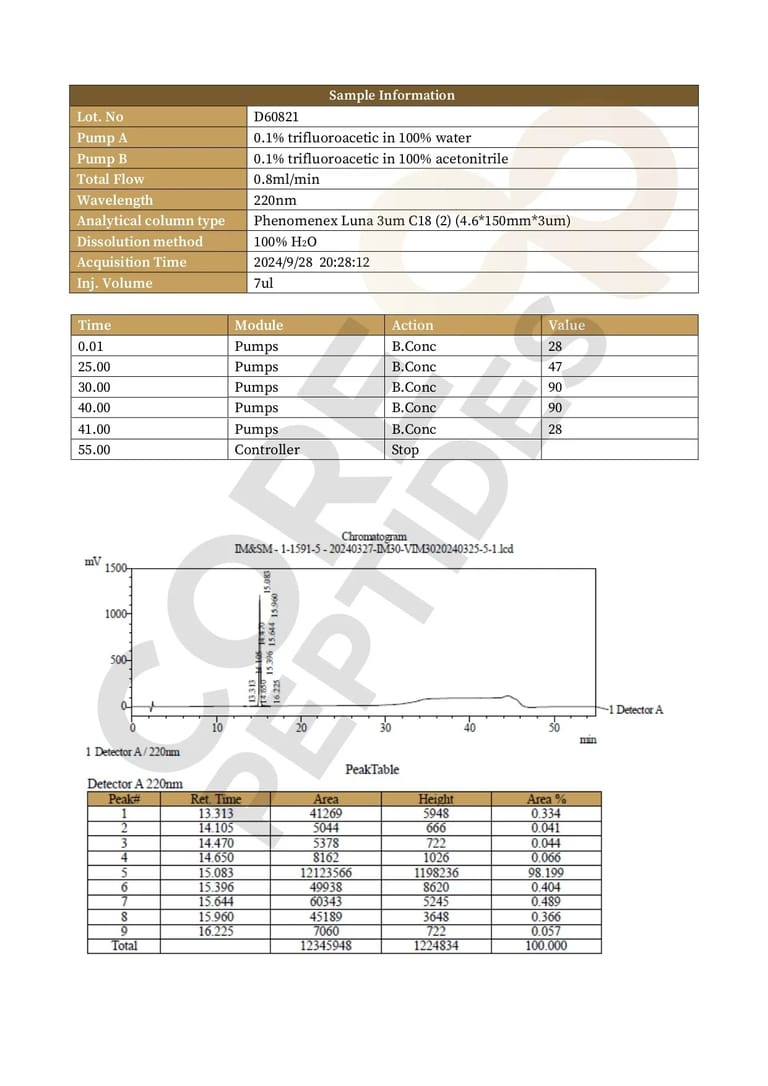
Purity | >99% |
Form | Lyophilized powder |
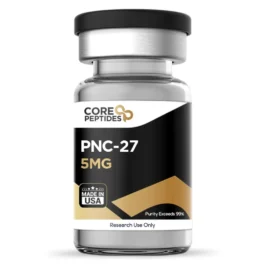
Size | 5mg |
Contents | PNC-27 |
Pricing
Quantity | Discount | Price (USD) |
Single Unit | N/A | $138.00 |
5 - 8 | 5% | $131.10 |
9+ | 10% | $124.20 |
Chemical Makeup
Specification | Details |
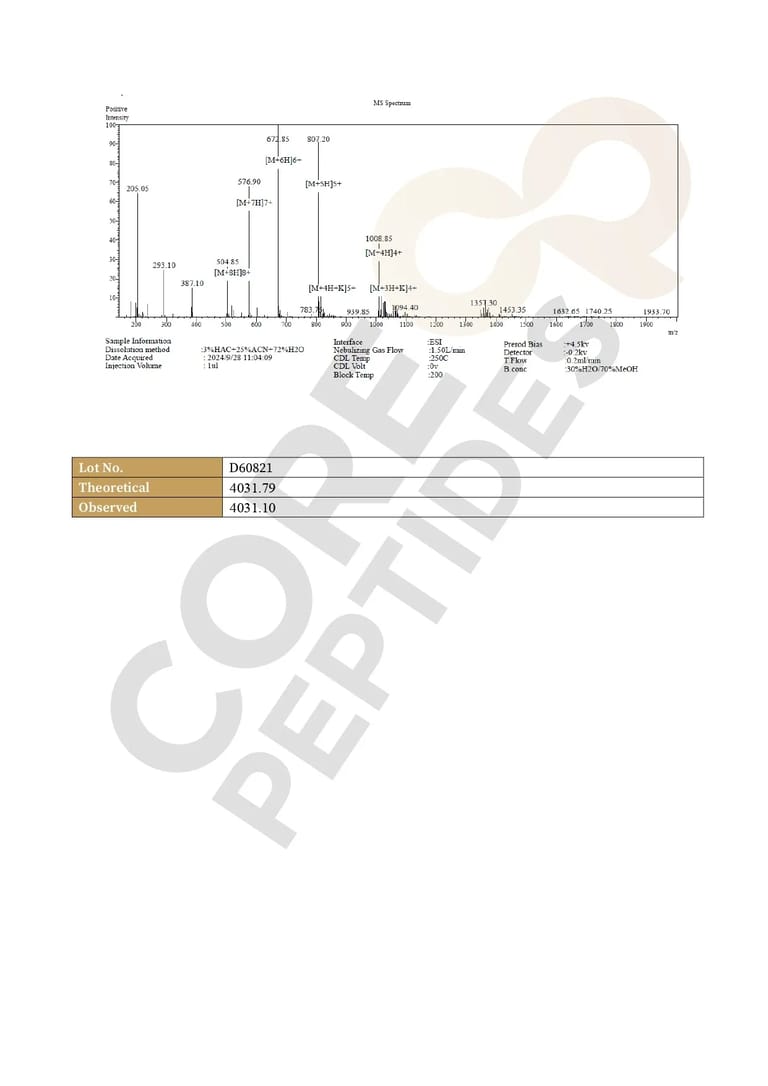
Molecular Formula | C_188H_293N_53O_44S |
Molecular Weight | 4031.7 g/mol |
Research and Clinical Studies
Selective Cell Death & Mechanism of Action
Researchers hypothesize that PNC-27 may work by binding to the HDM2 protein, which is found in the membranes of cancer cells. This interaction is thought to perforate the cell membrane by forming pores, leading to the influx of ions and the efflux of cellular contents, ultimately causing necrosis rather than apoptosis (programmed cell death).
A study from 2009 suggested that PNC-27 appears to selectively target cells that express the HDM2 protein, which is typically found in cancer cells but not in healthy cells. This potential selectivity was further supported by an experiment where normal cells were modified to express HDM2, and PNC-27 subsequently showed an affinity for them (2).
In a 2010 study, researchers used a dual-labeling technique with green and red fluorescence to track the peptide's integrity. The study reported that PNC-27 remained intact during its interaction with the cancer cell membrane, suggesting that the full peptide structure is crucial for its membranolytic activity (3).
Targeting Non-Solid Tumor Cells
Research has also investigated the potential of PNC-27 on non-solid tissue tumor cells, such as those from leukemia cell lines. A 2014 study suggested that non-solid tumor cells also expressed HDM2 and that PNC-27 appeared to exhibit selectivity towards these cells. The study concluded that the peptide's action in these cells was similar to that observed in solid tumor cells, which also resulted in the formation of transmembrane pores and cell death (4).
Potential in Cancer Research
In addition to solid and non-solid tumors, a related peptide, PNC-28, which is similar in structure and function to PNC-27, was evaluated for its anti-tumor activity against ovarian cancer cells. The study suggested that PNC-28 appeared to inhibit the growth of ovarian cancer cells and reduce tumor size in mouse xenograft models (5).
Disclaimer: PNC-27 peptide is available for research and laboratory purposes only.