PT-141 (Bremelanotide) (10mg)
$51.00$43.00
PT-141, also known as Bremelanotide, is a cyclic synthetic peptide that is being investigated for its potential to influence sexual function. It is a derivative of another peptide, Melanotan II, and is thought to act as an agonist for melanocortin receptors, specifically MC3R and MC4R, which are found in the central nervous system. The activation of these receptors is hypothesized to lead to increased sexual arousal in murine models.
Product Information
Specification | Details |
SKU | P-PT141-10 |
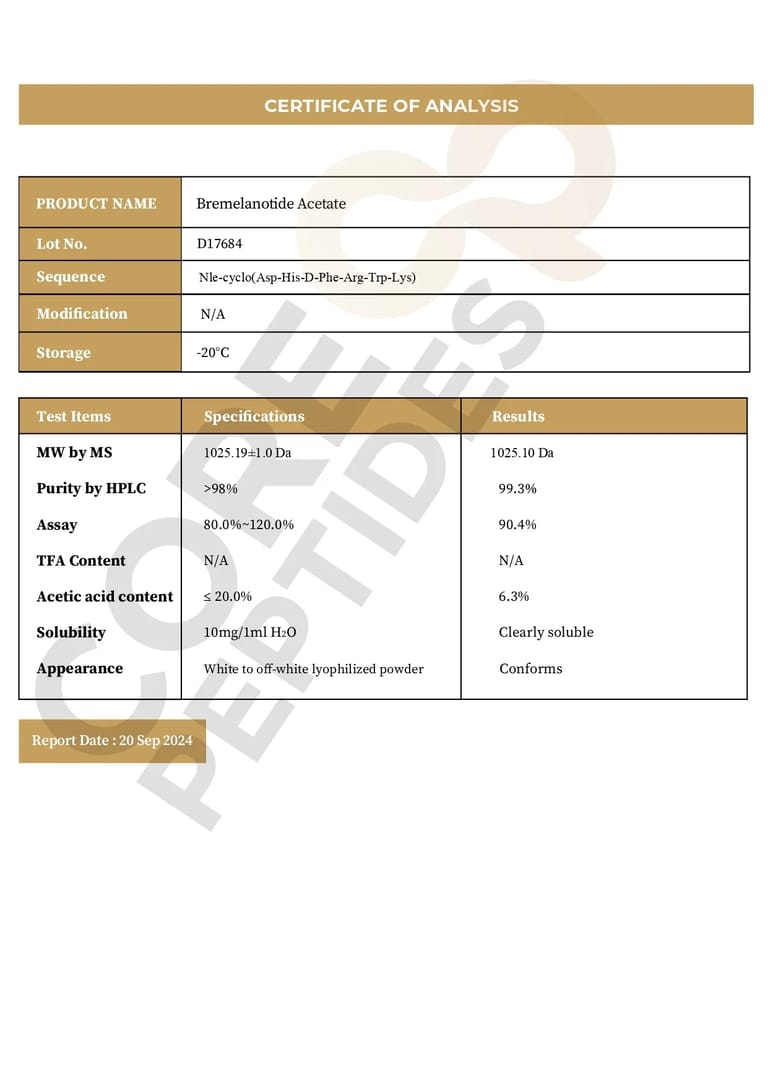
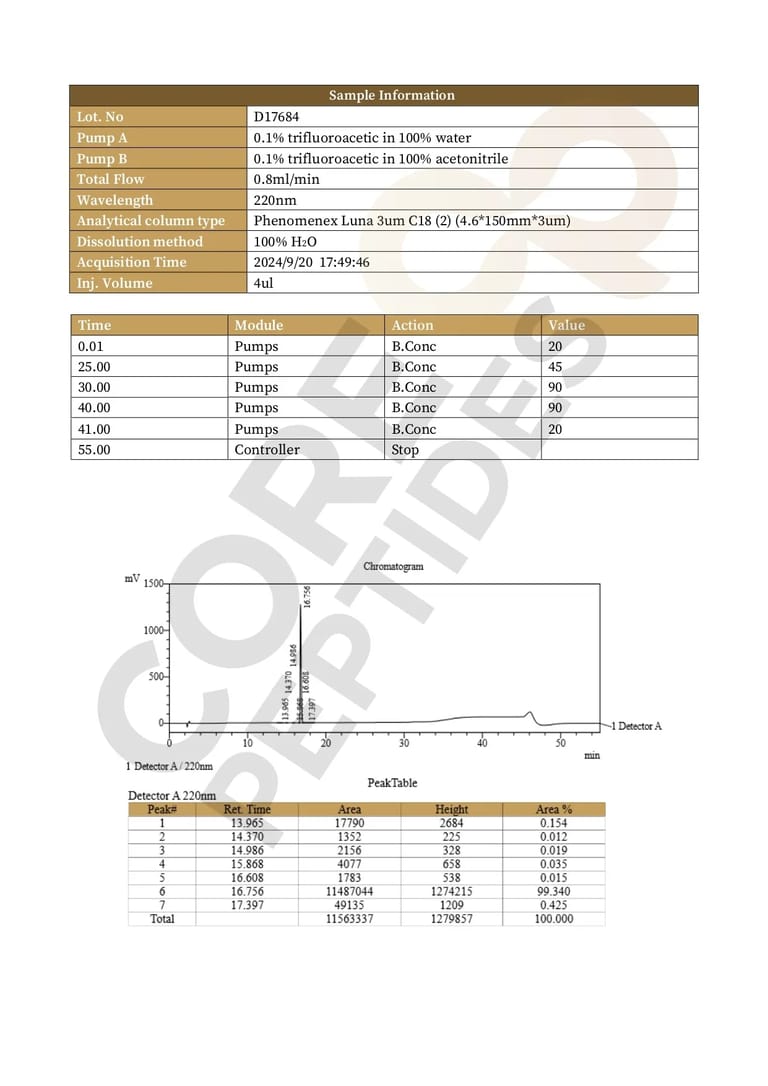
Purity | >99% |
Form | Lyophilized powder |
Size | 10mg |
Contents | PT-141 (Bremelanotide) (10mg) |
Pricing
Quantity | Discount | Price (USD) |
Single Unit | N/A | $43.00 |
5 - 8 | 5% | $40.85 |
9+ | 10% | $38.70 |
Chemical Makeup
Specification | Details |
Molecular Formula | C_50H_68N_14O_10 |
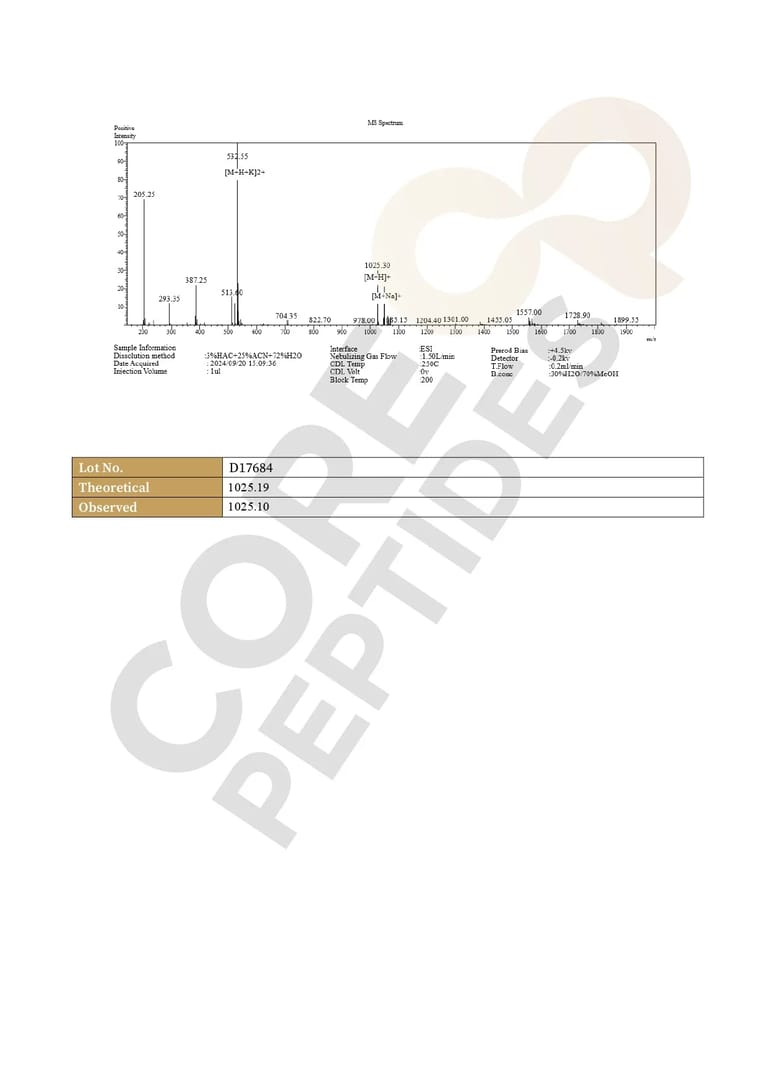
Molecular Weight | 1025.18 g/mol |
Other Known Titles | Bremelanotide |
Research and Clinical Studies
Mechanism of Action & Arousal
Studies suggest that PT-141 may bind to and activate melanocortin receptors MC3R and MC4R, which are involved in energy homeostasis and appetite control, as well as reproductive function. This activation is thought to stimulate neurons in the hypothalamus and surrounding central nervous system regions, leading to increased arousal (3, 4).
Research also suggests that the activation of MC4R by PT-141 may upregulate the production of nitric oxide (NO) in penile tissues. NO is a vasodilator, and its increased production is thought to potentially lead to improved erection potential (6). A study reported that melanocortin agonists may increase cavernosal pressure through the neuronal release of NO (6).
Behavioral & CNS Effects
Early studies in female murine models reported that PT-141 appeared to enhance sexual desire without affecting general motor activity. Researchers suggested that the peptide may have a selective pharmacological impact on the central nervous system (5).
Further research has aimed to understand the peptide's effects on the central nervous system and specific brain regions. A study in female murine models with rich reproductive hormones reported that PT-141 appeared to increase appetitive sexual behaviors. The actions of the peptide were noted after both peripheral and direct introduction into the medial preoptic area (mPOA), a region that may be significant for displaying appetitive sexual behaviors (7).
A clinical study using functional neuroimaging suggested that MC4R agonists like PT-141 might amplify activity in the cerebellar and supplementary motor areas while subjects were exposed to erotic stimuli. It also reportedly boosted the functional connectivity between the amygdala and the insula, suggesting that it may augment sexual brain processing (8).
Disclaimer: PT-141 peptide is available for research and laboratory purposes only.