
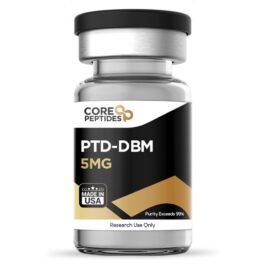
PTD-DBM (5mg)
$96.00$89.00
PTD-DBM (Protein Transduction Domain-fused Dishevelled Binding Motif) is a synthetic peptide being investigated for its potential to stimulate hair follicle growth and tissue regeneration. It is hypothesized to work by disrupting the interaction between the CXXC5 protein and Dishevelled (Dvl) proteins, which may enhance the activity of the Wnt/β-catenin signaling pathway. This pathway is considered to be critical for cell growth and differentiation.
Product Information
Specification | Details |
SKU | PTD-DBM |
Purity | >99% |
Form | Lyophilized powder |
Size | 5mg |
Contents | PTD-DBM |
Pricing
Quantity | Discount | Price (USD) |
Single Unit | N/A | $89.00 |
5 - 8 | 5% | $84.55 |
9+ | 10% | $80.10 |
Chemical Makeup
Specification | Details |
Molecular Formula | C_124H_223N_61O_28S_2 |
Molecular Weight | 3080.7 g/mol |
Other Known Titles | Hair growth peptide |
Research and Clinical Studies
Hair Follicle & Bone Growth
The Wnt/β-catenin signaling pathway is a key player in hair follicle development. Research suggests that the peptide PTD-DBM may activate this pathway by disrupting the binding of CXXC5 (a negative regulator) to Dvl proteins. This action is thought to promote the anagen phase (the growth phase) of hair follicles and may even induce wound-induced hair follicle neogenesis (WIHN) (1, 4).
PTD-DBM is also being researched for its potential in bone regeneration. A study on murine models suggested that inhibitors of Dvl–CXXC5 interaction, including PTD-DBM, may induce the formation of new bones. This is a potential area of research for conditions like osteoporosis, where there is a loss of bone mass (5).
Tissue Damage & Wound Healing
PTD-DBM's potential to facilitate regenerative wound healing is also being explored. By activating the Wnt/β-catenin pathway, the peptide may enhance cellular processes crucial for wound healing, such as cell proliferation, differentiation, and migration (6). A study on mice with cutaneous wounds reported that a combination of PTD-DBM and valproic acid (VPA) appeared to significantly enhance reepithelialization and collagen deposition, which are essential for structural rebuilding of damaged tissue (7).
Disclaimer: PTD-DBM peptide is available for research and laboratory purposes only.