
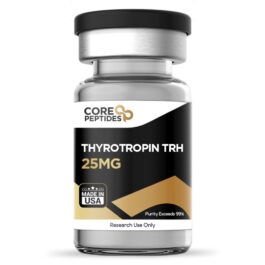
Thyrotropin TRH (25mg)
$82.00$73.00
Thyrotropin, also known as Protirelin, is a synthetic tripeptide and an analog of the naturally occurring thyrotropin-releasing hormone (TRH). It is being researched for its potential to stimulate the pituitary gland to release thyroid-stimulating hormone (TSH), which in turn regulates the production of thyroid hormones. The peptide is also being investigated for its possible effects on the central nervous system.
Product Information
Specification | Details |
SKU | P-THYROTRP-25 |
Purity | >99% |
Form | Lyophilized powder |
Size | 25mg |
Contents | Thyrotropin |
Pricing
Quantity | Discount | Price (USD) |
Single Unit | N/A | $73.00 |
5 - 8 | 5% | $69.35 |
9+ | 10% | $65.70 |
Chemical Makeup
Specification | Details |
Molecular Formula | C_16H_22N_6O_4 |
Molecular Weight | 362.39 g/mol |
Other Known Titles | Protirelin |
Research and Clinical Studies
Endocrine System & Pituitary Gland
Thyrotropin is being researched for its potential to bind to TRH receptors in the pituitary gland, which are mediated by G proteins. This binding is hypothesized to trigger a cascade of intracellular signals that ultimately stimulate the pituitary to release TSH. This feedback loop is essential for maintaining metabolic balance. A study on subjects who underwent the "Thyrotropin test" suggested that the peptide may be able to indicate improper functioning of the thyroid gland (12).
Central Nervous System & Behavioral Research
Studies have investigated Thyrotropin's potential to modulate neurotransmitter systems. It has been shown to inhibit the release of excitatory neurotransmitters like glutamate and aspartate during heightened neuronal activity. Researchers are exploring its potential as a neuromodulator to mitigate symptoms of Amyotrophic Lateral Sclerosis (ALS) (7, 9).
In a clinical trial on models with depressive symptoms, the peptide was directly introduced into the spinal fluid. Researchers reported that five out of eight subjects exhibited an apparent 50% or more reduction in depressive behavior. The peptide's potential action is thought to be linked to its interactions with serotonin and dopamine pathways, which play significant roles in mood regulation (10).
Cardiovascular Effects
Research has also explored Thyrotropin's potential impact on blood pressure and heart rate. In a clinical study on post-operative heart surgery models, the peptide reportedly increased blood pressure rates on all three days it was examined. Further research suggests that these cardiovascular changes may be mediated by various autonomic nervous system regulations, depending on the brain region exposed (13, 14).
Disclaimer: Thyrotropin peptide is available for research and laboratory purposes only.