
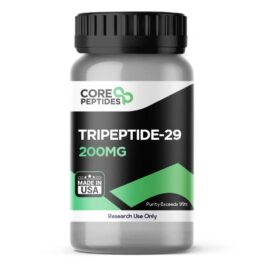
Tripeptide-29 (200mg)
$185.00$176.00
Tripeptide-29, also known as Glycylprolylhydroxyproline, is a small, naturally occurring peptide and a fundamental building block for collagen protein. It is being researched for its potential to stimulate collagen synthesis, improve collagen stability, and possibly act as a competitive inhibitor of the enzyme dipeptidyl peptidase-IV (DPP-IV).
Product Information
Specification | Details |
SKU | P-Tripeptide-29 |
Purity | >99% |
Form | Lyophilized powder |
Size | 200mg |
Contents | Tripeptide-29 |
Pricing
Quantity | Discount | Price (USD) |
Single Unit | N/A | $176.00 |
5 - 8 | 5% | $167.20 |
9+ | 10% | $158.40 |
Chemical Makeup
Specification | Details |
Molecular Formula | C_12H_19N_3O_5 |
Molecular Weight | 285.3 g/mol |
Other Known Titles | Glycylprolylhydroxyproline |
Research and Clinical Studies
Collagen & Anti-Aging Potential
Tripeptide-29 is being researched for its role in maintaining collagen integrity. Studies suggest that it is a major component of hydrolyzed Type 1 collagen and may contribute to its stability. In dermal fibroblast cell cultures, a hydrolysate containing Tripeptide-29 showed potential in reducing oxidative stress and the build-up of advanced glycation end products (AGEs), which are believed to contribute to cellular aging. Researchers have hypothesized that Tripeptide-29 may also inhibit the activity of matrix metalloproteinases (MMPs), enzymes that degrade the skin matrix (4).
Glucose Control
Research indicates that Tripeptide-29 may act as a peptidic inhibitor of the enzyme dipeptidyl peptidase-IV (DPP-IV) (5). This enzyme is known to inactivate hormones like glucagon-like peptide-1 (GLP-1) and glucose-dependent insulinotropic polypeptide (GIP), which are involved in regulating glucose homeostasis. By inhibiting DPP-IV, Tripeptide-29 may help to increase the levels of these hormones, potentially leading to increased insulin secretion, reduced glucagon levels, and lower blood glucose (8).
Platelet Aggregation
Tripeptide-29 is also being researched for its potential to activate platelets. The non-cross-linked form of the peptide may induce tyrosine phosphorylation in platelets, which could ultimately stimulate platelet aggregation. Studies suggest that the presence of the Tripeptide-29 motif is sufficient to activate the platelet collagen receptor GPVI, potentially leading to the formation of blood clots to prevent excessive bleeding (9).
Disclaimer: Tripeptide-29 peptide is available for research and laboratory purposes only.